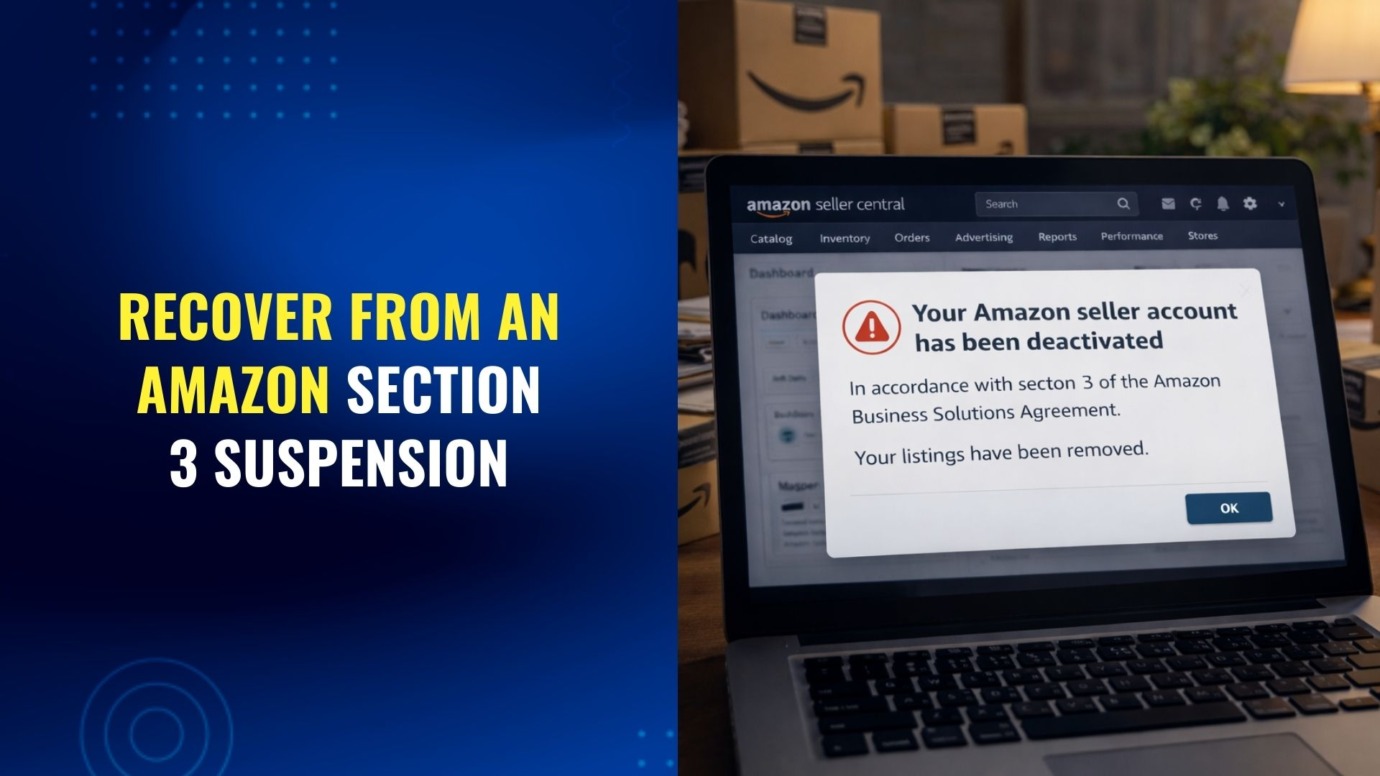
The most disorienting thing about anAmazon Section 3 suspension isn’t the loss of listings or frozen inventory – it’s the Lack of clarity. The notice arrives, your account goes dark, and the explanation is often vague enough to leave you unsure where to even begin.
We’ve represented Amazon sellers in suspension and enforcement matters for years, and Section 3 cases are among the most common situations we handle.
This article will help you understand what triggered your suspension, how to respond effectively, and what to do to protect your account going forward.
What Is an Amazon Section 3 Suspension?
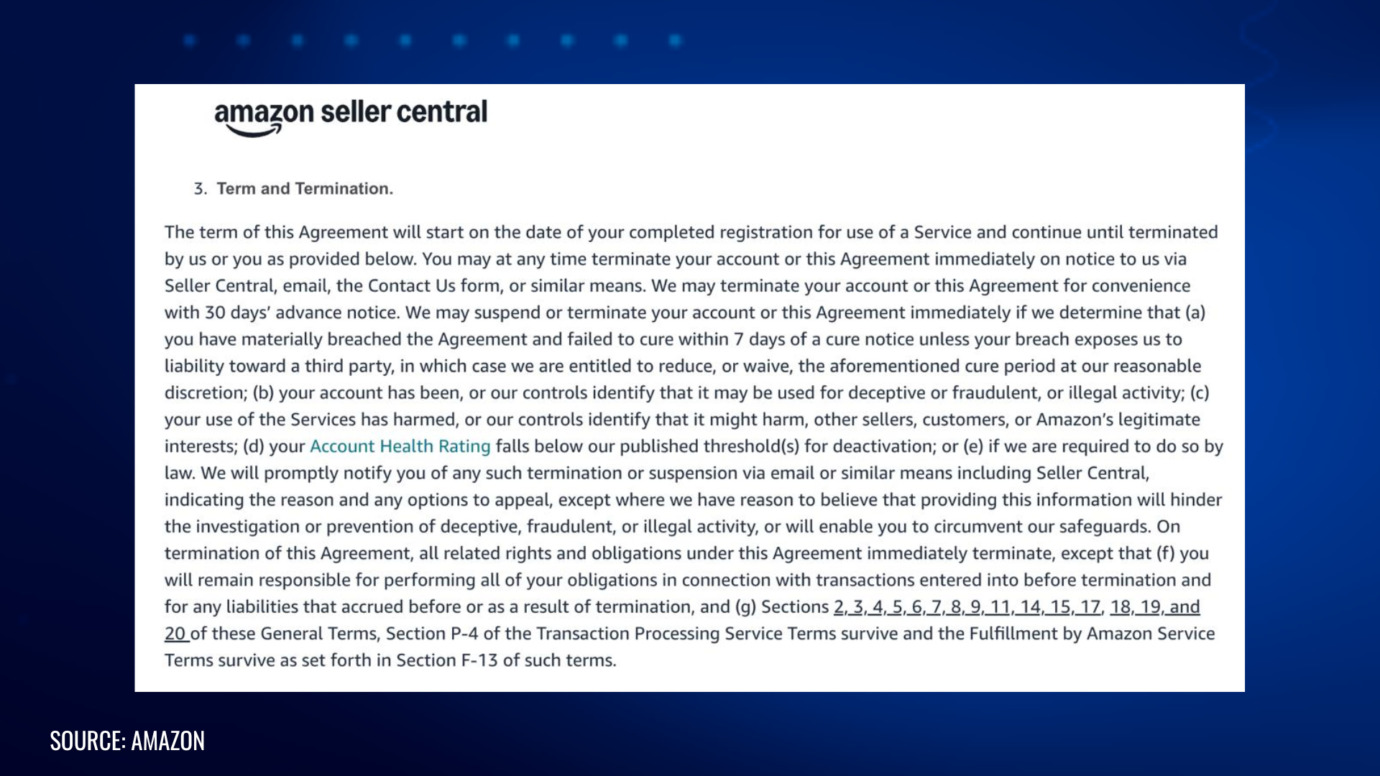
Section 3 refers to a specific clause in Amazon’s Business Solutions Agreement – the contract you accepted when you first opened your seller account. Under this clause, Amazon reserves the right to suspend or terminate selling privileges when they believe a seller has violated policies or created risk within the marketplace.
What makes Section 3 particularly frustrating is how broad it is. Amazon frequently cites it as the legal basis for almost any account-level enforcement action. Your suspension notice may reference policies like Unsuitable Inventory Investigations, the Seller Code of Conduct, deceptive practices, or other vague compliance concerns.
The key thing to understand: Section 3 is not the violation itself. It is the legal mechanism Amazon uses to enforce its policies. The real question you need to answer is what actually triggered it.
The Most Common Section 3 Triggers
Based on the cases we handle, these are the most frequent causes:
Authenticity and Supply Chain Documentation Issues
When Amazon receives complaints suggesting products may be inauthentic, they typically suspend first and investigate later. Even legitimate inventory can become a problem if your invoices or authorization letters don’t meet Amazon’s formatting and traceability standards. Having the right products is not enough – you need documentation that meets Amazon’s specific requirements.
Restricted or Regulated Products
Certain categories require prior approval, specific certifications, or compliant labeling. Listing regulated products without proper authorization – even unknowingly – can lead to immediate enforcement.
Intellectual Property Complaints
Multiple unresolved intellectual property complaints – whether for trademark, copyright, or patent issues – can escalate to an account-level suspension. This includes complaints submitted directly by rights holders, as well as violations flagged by Amazon’s own systems. Even a single complaint left unresolved can become a problem over time.
Review Manipulation or Marketplace Abuse
Offering incentives for reviews, using third-party review services, or directing buyers to alter or remove reviews can trigger suspension. Amazon permits compliant review requests through its approved channels only – anything that influences outcomes outside those channels is high-risk.
Verification and Identity Issues
Mismatches in business information, tax records, or identity documents – or repeated failed verification attempts – can result in suspension pending clarification. Amazon’s verification process is partially automated, and small discrepancies can cause significant problems.
Related Account Flags
If Amazon’s systems link your account to a previously suspended account, your account may be deactivated under Section 3 – even if the connection is a false positive. These cases require a different approach than standard appeals: you need to both disprove the association and address any underlying concerns that may have led Amazon to make the connection in the first place.
How to Recover: A Step-by-Step Approach
Step 1 – Read Your Suspension Notice Carefully
Start in Seller Central under Performance Notifications. Look for references to specific ASINs, policy categories, or complaint types. Sometimes the trigger is explicit; other times it requires internal digging. Review recent authenticity complaints, IP notices, listing changes, supplier changes, and any account updates made shortly before the suspension.
If Account Health support is unable to give you clear answers – which is common – document the conversation and move on to building your appeal.
Step 2 – Build Your Plan of Action
The Plan of Action (POA) is the centerpiece of your appeal, and its quality will largely determine whether your account is reinstated. A strong POA contains three parts:
Root Cause Identify the actual operational failure – not just Amazon’s language rephrased back to them. Explain what broke in your internal process. Was it a documentation gap? A supplier who couldn’t provide proper invoices? A policy area you weren’t aware required special approval? Be specific. Vague or generic root cause statements are one of the most common reasons appeals fail.
Corrective Actions Describe what you have already done in response – removed problematic listings, audited your inventory, replaced a supplier, updated compliance procedures. These should be completed actions, not future intentions.
Preventive Measures Outline the structural changes you’ve made to prevent recurrence: new review procedures, documented compliance checks, supplier vetting protocols, clearer internal accountability. Be concrete rather than general.
Keep the document professional and ideally under two pages. Avoid emotional language. Amazon’s reviewers are looking for evidence of process improvement, not apologies.
Step 3 – Gather Supporting Documentation
Depending on the nature of your suspension, you may need:
Supplier invoices showing your business name, supplier details, product descriptions, quantities, and dates
Authorization letters from brand owners or distributors
Compliance certificates or regulatory approvals
Business registration documents
Written confirmations resolving any outstanding IP complaints
Documents should be organized, clearly labeled, and directly relevant to the issues cited in your suspension notice. The easier your case is to review, the better your chances.
Step 4 – Submit Your Appeal Through Seller Central
Submit your appeal under Performance Notifications. Amazon typically responds within several days, though timelines vary depending on complexity.
Submit once and wait. Repeated submissions in a short period can slow down the review process and signal to Amazon that your approach is disorganized.
If your appeal is denied, do not simply resubmit the same document. Review Amazon’s response carefully – they will often indicate what was missing or insufficient – and revise your POA before resubmitting.
How to Reduce the Risk of Future Section 3 Suspensions
Recovery is possible, but prevention is always preferable. Rather than simply avoiding the triggers listed above, the goal is building account management habits that make those risks unlikely in the first place.
Keep documentation organized and accessible at all times.
Supplier invoices should clearly show all relevant business and product details. If Amazon requests verification, you want to be able to respond within hours, not days.
Source from verifiable suppliers only.
If you cannot clearly trace your supply chain, your exposure to authenticity complaints increases significantly. Grey market or unauthorized sources put your entire account at risk, not just individual listings.
Confirm compliance before listing in sensitive categories.
Health products, children’s items, supplements, and electronics often carry specific regulatory requirements. Verify these before listing, not after a complaint arrives.
Even if you stop selling a product immediately, an unresolved complaint stays on your account. Address every complaint promptly, and keep records showing you did so.
Use only Amazon’s approved review request methods.
Avoid third-party services and incentives entirely. Amazon’s detection systems are more sophisticated than most sellers assume.
Keep your account information consistent.
Bank details, business registration, and tax records must match exactly across all documentation in Seller Central.
Check your Account Health dashboard daily.
Early warnings often appear well before a full suspension. Catching them early gives you the opportunity to resolve issues before they escalate.
When to Get Professional Help with Section 3
Professional assistance becomes particularly relevant when:
Your appeal has already been denied and you’re unsure why
The suspension involves multiple policy areas simultaneously
You lack required documentation from your supply chain
The allegations involve fraud, deception, or other serious conduct
Your account represents significant revenue and extended downtime is costly
Take Action on Your Suspension Today
A Section 3 suspension is stressful – but in most cases it is recoverable when approached correctly. The key is understanding the real cause, building an accurate and well-structured Plan of Action, supporting it with proper documentation, and putting the right processes in place so the issue doesn’t return.
If you’re currently suspended and want to discuss your options, you’re welcome to Contect us.
Legal Disclaimer: The articles published on our platform are for informational purposes only and do not constitute legal advice in any form. They are not intended to be a substitute for professional legal counsel. For any legal matters, it is essential to consult with us or a qualified attorney who can provide advice tailored to your specific situation. Reliance on any information provided in these articles is solely at your own risk.

 Mar 30, 2026