Adding a trending song to your Instagram Reel or Facebook ad seems innocent enough. The platform provides the music library, your competitors are doing it, and it makes your content more engaging. But for businesses, this common practice has become a legal minefield.
Major brands across the United States are now facing copyright infringement lawsuits with damages potentially reaching millions of dollars. Record labels, including Sony Music and Warner Music, have launched an aggressive enforcement campaign targeting companies that use popular songs in social media marketing without proper licenses. Our firm has represented clients navigating these exact copyright challenges, and the stakes have never been higher.
The message from these lawsuits is clear: using platform music tools may not protect your business from copyright liability. Whether you’re a Fortune 500 retailer or a small e-commerce brand working with influencers, unlicensed music in commercial content can trigger serious legal consequences.
Important note: This article focuses on U.S. copyright law. Laws in other jurisdictions may differ significantly.
Recent High-Profile Music Copyright Cases
DSW Lawsuit: When Social Media Marketing Meets Copyright Enforcement
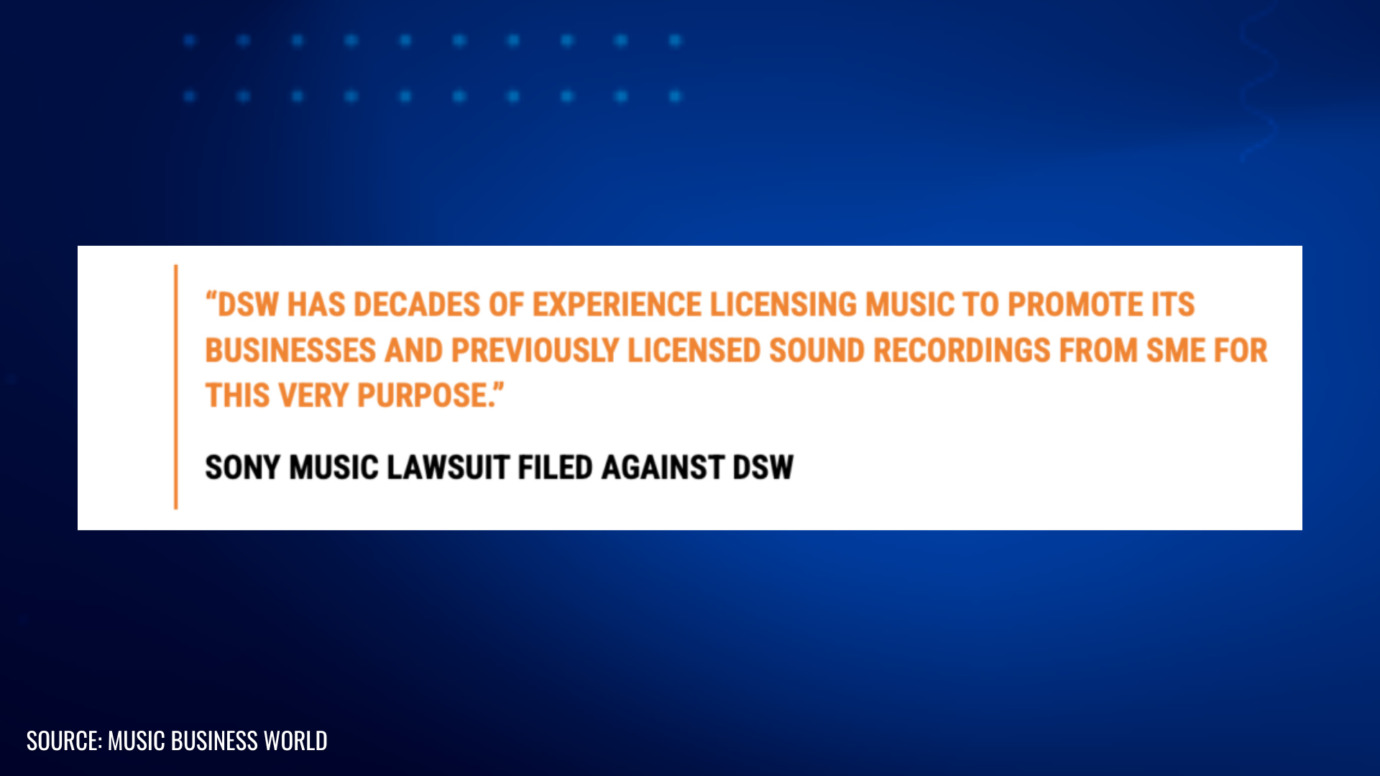
In 2025, major record labels filed copyright infringement lawsuits against DSW, one of America’s largest shoe retailers. The allegations centered on DSW’s use of popular songs in social media advertisements and influencer marketing campaigns without obtaining proper licenses.
The record labels argued that DSW created or sponsored content featuring protected music across Facebook and Instagram, treating it as commercial advertising rather than personal expression. This distinction matters under U.S. copyright law.
University and Brand Cases Expand the Scope
Sony Music also brought claims against the University of Southern California for allegedly using copyrighted music in promotional social media posts. In another notable case, ABKCO sued paint manufacturer Behr over the company’s use of “Paint It, Black” in an Instagram advertisement.
These cases represent more than isolated incidents. They reveal an enforcement strategy where music rights holders are targeting organizations with resources to pay substantial damages, focusing specifically on commercial social media content.
The Drew Barrymore Case: Personal Accounts Aren’t Always Personal
In early 2026, actress and entrepreneur Drew Barrymore faced a copyright lawsuit over an Instagram Reel promoting her FLOWER Beauty brand. Although posted on her personal account, the complaint characterized the content as commercial advertising.
This case demonstrates how social media posts can be characterized as brand marketing when they promote products or services. The legal distinction between personal and commercial use isn’t necessarily determined by which account posts the content, but may depend on the content’s purpose and effect.
Does Facebook or Instagram’s Music Library Protect Against Copyright Claims?
Many businesses assume that using music through Facebook’s or Instagram’s built-in music libraries provides legal protection. This assumption requires careful examination.
How Music Copyright Works Under U.S. Law
Under U.S. copyright law, music copyright protection involves multiple rights controlled by different parties:
Sound recording rights: Typically owned by record labels, covering the specific recorded performance
Musical composition rights: Usually owned by songwriters or music publishers, covering the underlying song
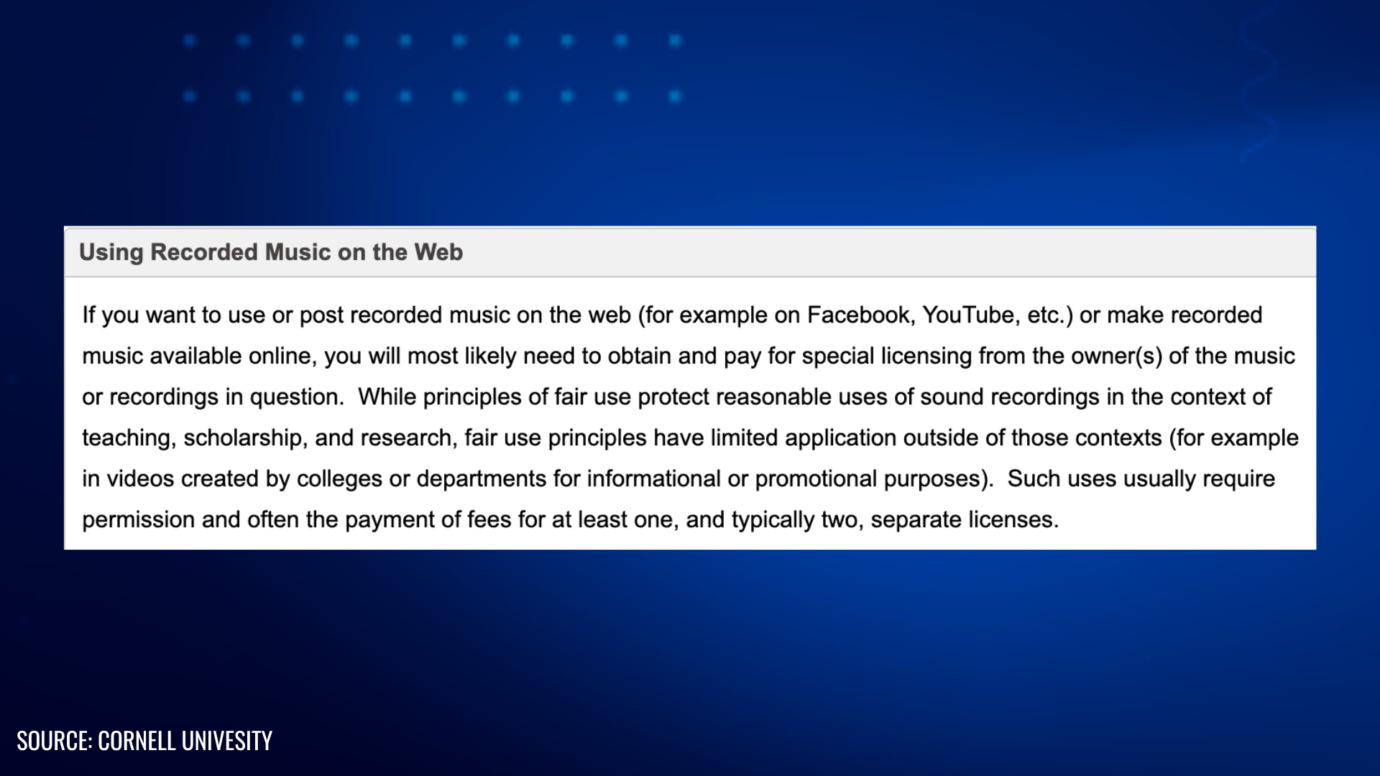
When your business uploads a social media post featuring a popular song, you may be creating a reproduction and public performance of both the sound recording and the musical composition. Each use typically requires specific licenses from the respective rights holders.
Understanding Platform Licenses
Facebook and Instagram negotiate licensing agreements with music rights organizations. However, the scope and application of these licenses can be complex:
Some platform licenses may be designed primarily for personal, non-commercial use
Meta has introduced tools like the Commercial Music Library with different licensing terms for certain business uses
Platform terms of service and licensing agreements change over time
The specific rights granted may depend on account type, content type, and intended use
The critical issue: The availability of music through a platform tool doesn’t automatically mean every type of business use is licensed. The specific terms applicable to your account and content type matter.
The Commercial Use Question
Recent lawsuits have focused on whether content serves a commercial or promotional purpose. Courts and rights holders may examine whether the content:
Promotes products or services
Builds brand awareness
Drives sales or conversions
Supports marketing campaigns
Features sponsored content or partnerships
The classification isn’t always clear-cut, and different cases may be evaluated differently depending on specific facts and circumstances.
Brand Liability Questions in Influencer Marketing
One concerning aspect of recent copyright cases involves potential brand liability for content posted by influencers and partners.
Why Rights Holders Target Brands for Influencer Content
In several lawsuits, including the DSW case, the allegedly infringing content wasn’t posted directly by the brand. Instead, influencers created and shared the videos as part of marketing partnerships.
Rights holders have argued that brands may be liable because they:
Benefit financially from the content
Exercise creative direction or approval over campaigns
Provide compensation or products in exchange for posts
Have relationships with the influencers posting content
Have greater resources to obtain proper licenses
The Legal Landscape Is Still Developing
It’s important to understand that brand liability for influencer-posted content isn’t a settled legal principle. Courts are still working through these questions:
What level of control or involvement creates liability?
Does merely compensating an influencer establish responsibility?
How do platform licenses interact with influencer partnerships?
What defenses might brands have in specific circumstances?
The lawsuits filed to date represent claims by rights holders, but many of these legal theories haven’t been fully tested in court.
Structuring Influencer Agreements to Address Risk
While the law continues to develop, businesses can take steps to address potential copyright concerns in influencer partnerships. For broader guidance on influencer marketing compliance, see our resource on influencer marketing legal considerations.
Influencer contracts might include provisions that:
Address music usage expectations and requirements
Establish content approval or review processes
Define responsibilities for obtaining necessary rights
Include representations about content ownership and clearances
Allocate responsibility for potential claims
The appropriate contract terms depend on your specific business model, relationship structure, and risk tolerance.
The Evolving Enforcement Landscape
The recent wave of lawsuits suggests sustained attention from music rights holders to social media commercial uses. Brands should be aware that:
Rights holders are using technology to identify commercial music use
The legal landscape continues to develop through ongoing litigation
Platform policies and licensing terms may change
Courts haven’t yet resolved all the legal questions these cases raise
What to Do If You Receive a Copyright Infringement Notice
If your business receives a copyright infringement claim related to social media music use:
Consult an attorney before taking action: The appropriate response depends on specific circumstances
Document everything: Preserve copies of relevant content, licensing information, and communications
Avoid making definitive statements about liability without legal counsel
For assistance with copyright infringement matters, our firm provides strategic guidance and defense services.
Protect Your Business from Music Copyright Concerns
Social media music copyright has evolved into a complex area of law with significant implications for brands. With record labels actively enforcing their rights and unresolved legal questions, businesses need to carefully consider their music usage practices.
Whether you’re developing influencer partnerships, creating in-house content, or managing social media campaigns, understanding the copyright landscape and potential risks is increasingly important.
Our intellectual property attorneys help businesses evaluate their social media practices, understand licensing requirements, and address copyright concerns.
Need guidance on social media music copyright issues?
Contact us for a consultation. We’ll review your situation, discuss potential concerns, and help develop an appropriate strategy for your business.
Legal Disclaimer: The articles published on our platform are for informational purposes only and do not constitute legal advice in any form. They are not intended to be a substitute for professional legal counsel. For any legal matters, it is essential to consult with us or a qualified attorney who can provide advice tailored to your specific situation. Reliance on any information provided in these articles is solely at your own risk.

 Mar 30, 2026