
Book a FREE 15-minute consultation with an expert – Book Now

In partnership with intelliRank
Product Testing Campaigns: How to Validate Your Product Before a Big E-Commerce Launch
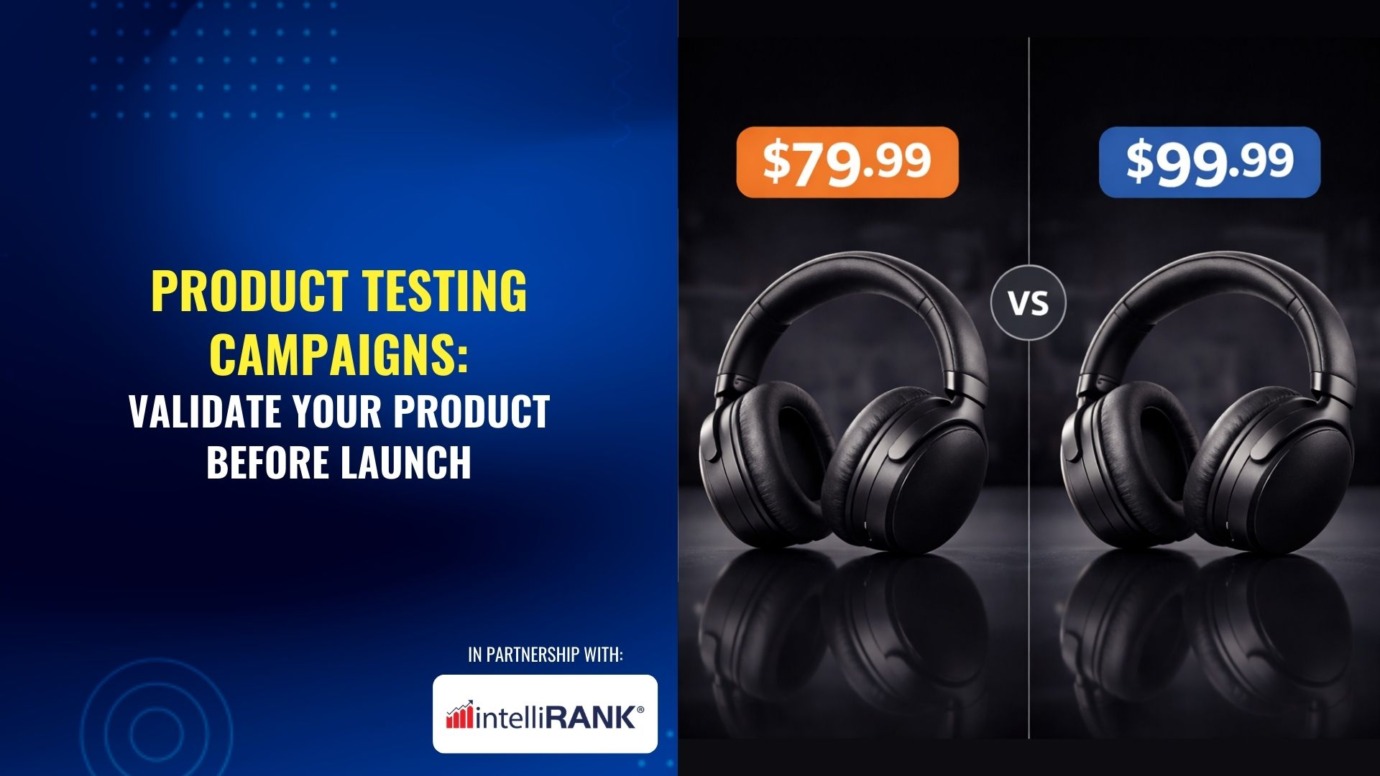
Launching a new product on Amazon, Walmart, or any e-commerce platform can be exciting, but it comes with risk. Even products with strong demand can underperform if they fail to connect with the right audience. Skipping proper testing often leads to wasted inventory, disappointing conversions, and negative reviews.
Product Testing Campaigns provide a structured way to evaluate a product with real customers before a full launch. By testing early, sellers can identify potential issues, optimize listings, and make informed decisions based on actual buyer behavior rather than assumptions.

Understanding Product Testing Campaigns
A Product Testing Campaign is a structured evaluation that measures how customers respond to a product before it reaches the broader market. Instead of guessing what buyers will value, sellers gather data on conversions, engagement, and feedback, allowing them to refine their product and listing for maximum impact.
For example, a seller might launch a small batch of a kitchen gadget on Amazon to observe buying patterns, pricing sensitivity, and listing performance. Another approach could involve sending product samples to a select group of loyal customers or influencers to collect feedback on usability, features, or presentation. The core idea is to learn how real buyers perceive a product before committing fully to production and promotion.
Why Product Testing Matters
Product testing helps reduce uncertainty and increase the likelihood of a successful launch. Insights from early buyers often lead to improved conversion rates because listings, visuals, and pricing are refined based on real feedback. Testing also identifies potential problems early, reducing the risk of negative reviews or returns that can affect revenue and brand reputation.
Beyond these operational benefits, testing provides actionable intelligence. Sellers learn what drives buyer decisions, whether that’s features, pricing, or messaging. This information can guide future launches, marketing campaigns, and inventory planning.
How to Conduct an Effective Product Test
1. Set Clear Goals
Identify what you want to learn, such as understanding price sensitivity, testing product features, or evaluating listing effectiveness. Having a defined objective ensures that the data you gather is actionable.
2. Choose the Right Channels
Limited launches on Amazon or Walmart can provide early sales data, while outreach to loyal customers, social communities, or niche groups can generate qualitative feedback. Some sellers also collaborate with trusted reviewers to understand product perception and usability.
3. Determine the Right Sample Size
A group that is too small may not produce meaningful insights, while a group that is too large may increase costs unnecessarily. Typically, testing with a few dozen to around a hundred participants can provide sufficient data to identify trends.
4. Focus on Key Metrics and Analysis
During the test, focus on metrics such as conversion rates, customer feedback, returns, and engagement with the listing. These indicators reveal not only whether a product is appealing but also why buyers make certain decisions. Analyzing these patterns allows sellers to refine their product, listing, or marketing approach before a wider launch.
Structured tools and resources can support this process by helping manage survey design, data collection, and analysis. For example, intelliRANK offers guidance on conducting Product Testing Campaigns and analyzing results to inform product decisions.
Common Mistakes to Avoid
Even well-intentioned campaigns can fall short if certain factors are overlooked. Testing without clear objectives can produce inconclusive results. Gathering feedback from the wrong audience may misrepresent actual buyer behavior. Some sellers focus only on sales metrics, ignoring qualitative feedback that could reveal usability issues or improvements. Others run tests that are too small to detect meaningful trends. Avoiding these mistakes ensures that the insights collected truly inform product strategy.
A Real-World Example
Consider a seller preparing to launch a new accessory. They ran a small Product Testing Campaign with a select group of early buyers. Feedback highlighted confusion about one feature and suggested improvements to product images. The seller updated the listing and visuals before the broader launch. As a result, conversions were higher, returns were lower, and reviews reflected a better understanding of the product’s value. This example demonstrates how structured testing allows sellers to make informed, data-driven adjustments before scaling.
Final Thoughts
Product Testing Campaigns are a strategic tool for e-commerce sellers looking to reduce risk and optimize launches. Early testing provides valuable insights on pricing, messaging, and product features, helping sellers make informed decisions that improve conversion and reduce costly mistakes.
A structured approach ensures that feedback is meaningful and actionable, setting the stage for a successful full-scale launch. Learn how a well-designed Product Testing Campaign can support your next launch.
Legal Disclaimer: The articles published on our platform are for informational purposes only and do not constitute legal advice in any form. They are not intended to be a substitute for professional legal counsel. For any legal matters, it is essential to consult with us or a qualified attorney who can provide advice tailored to your specific situation. Reliance on any information provided in these articles is solely at your own risk.
Read the latest from Cabilly & Co.

What Is The Cost Of An Arbitration Lawyer?
KEEP READING
 Mar 15, 2026
Mar 15, 2026 Amazon Brand Registry – Discover for Free if You’re Eligible
Increase Your Chance of Getting a
Trademark to 96%


STAY UPDATED
Subscribe to Our Newsletter
Sign up to receive valuable information on E-Commerce and intellectual property