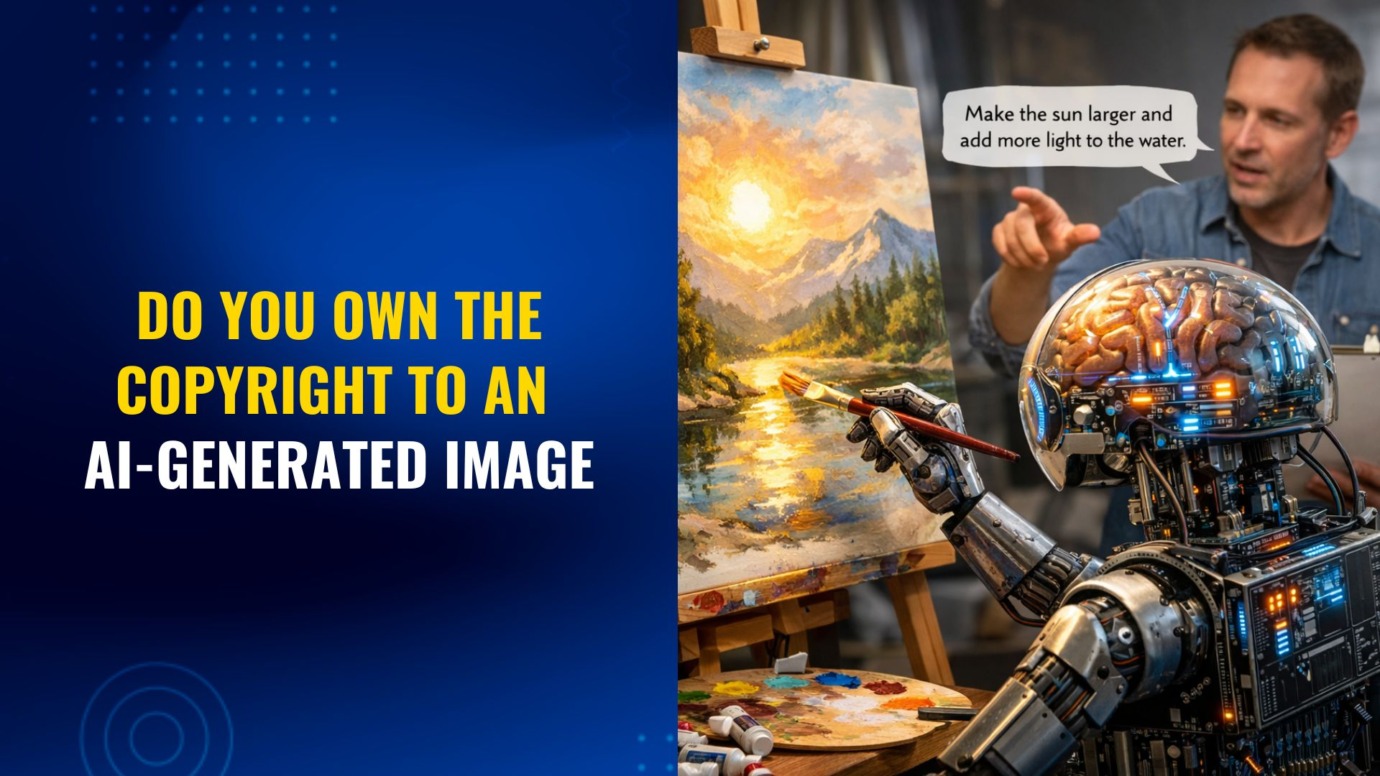
You spent hours creating the perfect image using AI. You wrote detailed prompts, made countless adjustments, and finally got exactly what you wanted. So who owns the copyright to that image?
You? The AI company? Or… no one?
If you’re using AI to create content for your business, this isn’t just a theoretical question. It determines whether your work can be protected and whether you’re exposing yourself to legal risks you’re not aware of.
AI has completely transformed how people create content. Images, videos, articles, branding materials – millions of new pieces are generated every single day. But here’s the problem: the law has not caught up. That means there’s a massive gray area around who actually owns AI-generated content.
At Cabilly & Co., we work with clients facing intellectual property challenges involving AI-generated content, and questions around ownership and protection continue to evolve rapidly. In this article, we’ll break down the current rules, the court cases shaping this new field, and what you must know to protect yourself.
The Human Authorship Requirement in Copyright Law
In January 2025, the U.S. Copyright Office released a major reportanswering a critical question: Can AI-generated content be copyrighted?
The answer is clear: if AI creates the expressive elements on its own, the work cannot be copyrighted in the United States.
The reason is simple. Copyright law has always required human authorship. This isn’t a new policy – courts have relied on this principle for decades.
Copyright law assumes the existence of a human person: someone who can sign documents, inherit property, assign rights, and eventually die. AI cannot do any of these things. Therefore, AI cannot be an author. Only people can.
The Thaler v. Perlmutter Precedent
In March 2025, the D.C. Circuit Court of Appeals reaffirmed the human authorship requirement in Thaler v. Perlmutter.
Dr. Stephen Thaler attempted to register a copyright for an artwork created entirely by his AI system, “Creativity Machine.” He listed the AI as the author. The Copyright Office rejected it. Thaler sued and lost, multiple times.
The court’s reasoning was straightforward: copyright law requires a human creator who can exercise legal rights and responsibilities. Since AI systems cannot fulfill these requirements, they cannot be recognized as authors under current U.S. law.
This ruling established a clear precedent: AI-generated content without sufficient human creative input cannot receive copyright protection.
How Much Human Input Is Enough for Copyright Protection?
Here’s where things get complicated and where most creators get confused.
The court made it clear that using AI tools is allowed. The question is how much human involvement is required for copyright protection.
The current framework is:
If the AI does all the expressive work, there’s no copyright.
If you, as a human, control and shape those expressive elements, you may be able to claim authorship.
Here’s what we know today:
If you take a photo and use AI to clean it up, sharpen it, or remove background noise, the authorship is yours.
If you write something yourself and use AI to reorganize ideas or correct grammar, you’re still the author.
But if your entire creative contribution is just writing prompts and choosing from the AI’s outputs, the Copyright Office says that is not enough.
The key distinction is whether your creative decisions appear in the final output in a meaningful way, not just in the prompt itself.
The Jason Allen Midjourney Case: Testing the Boundaries
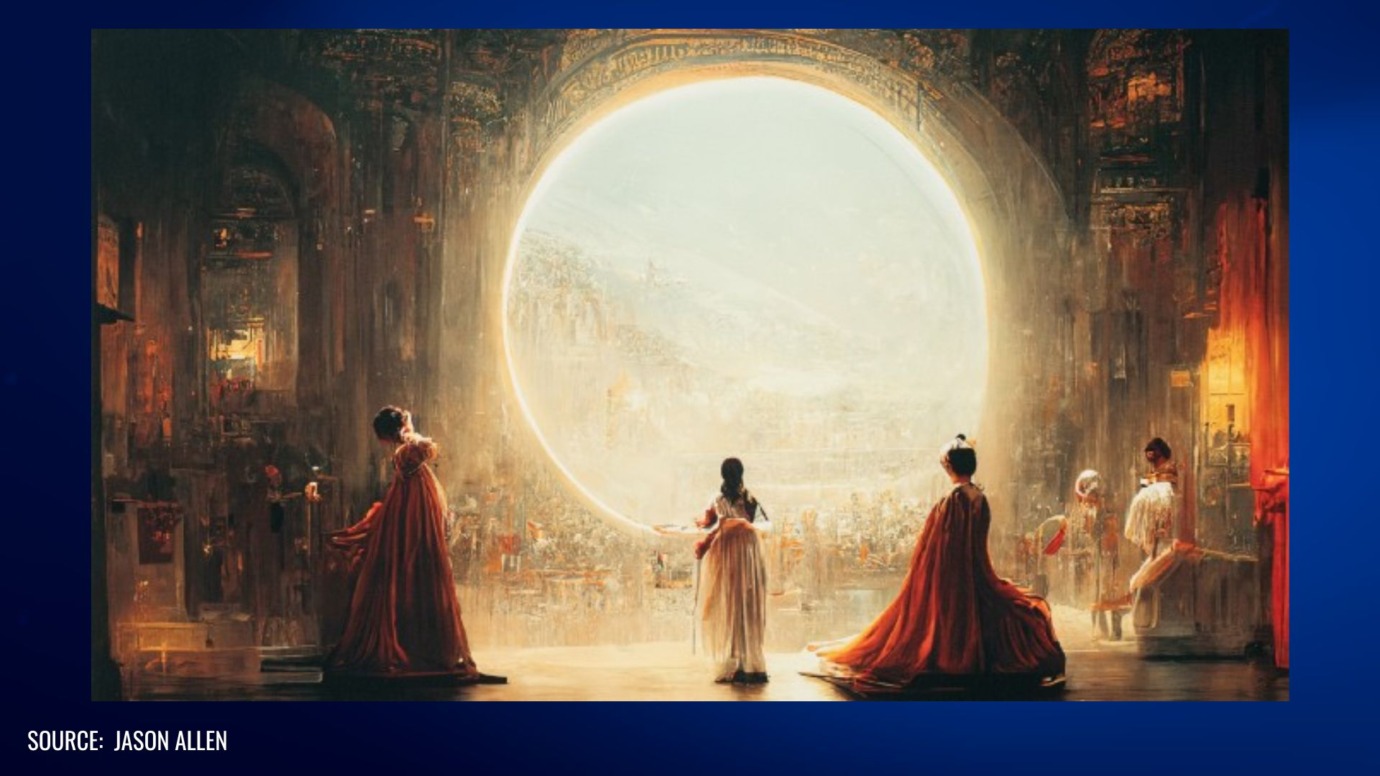
This principle was tested in what’s become known as the Jason Allen case.
Allen created an award-winning Midjourney image using over 600 prompts and an iterative workflow. He argued that the effort and creativity behind his prompts should count as authorship.
The Copyright Office rejected his application.
Allen sued, and while the case is still ongoing, the Copyright Office’s position remains firm: selecting from AI outputs is not the same as creating the expressive elements yourself.
To claim copyright, your creative decisions must appear in the final output in a substantial, meaningful way. Prompt engineering alone, regardless of how sophisticated, does not constitute sufficient human authorship under current interpretations.
The Training Data Controversy: A Legal Battleground
Authorship is only half the story. The other half is the biggest legal fight in the AI world: training data.
What happens if AI systems were trained on copyrighted material without permission? This issue is at the center of multiple lawsuits that could reshape the entire AI industry.
The New York Times v. OpenAI
The New York Times v. OpenAI represents one of the most significant copyright battles in AI history.
Each willful infringement can carry statutory damages of up to $150,000. With millions of works involved, the potential liability is enormous.
In March 2025, a federal judge allowed the Times’ main copyright claims to proceed, meaning this case will continue toward trial.
OpenAI argues that training is protected by fair use because the system isn’t republishing Times articles. It’s learning patterns to generate new text. The Times argues that when ChatGPT outputs text nearly identical to their articles, that is not transformative use.
This debate is far from settled, and the outcome will have profound implications for the entire AI industry.
Getty Images v. Stability AI
A similar battle occurred in the UK between Getty Images and Stability AI. Getty argued that millions of its photos were used to train Stable Diffusion without permission.
While the case was complex and Stability AI ultimately prevailed on the remaining copyright issues, the larger legal question remains unresolved worldwide.
In the meantime, major AI companies have started entering licensing agreements with publishers to avoid future lawsuits. This trend alone suggests the industry expects significant legal evolution in this area.
For creators, this matters because your own work may already be part of a training dataset, and right now, there is very limited legal recourse unless courts decide otherwise.
What This Means for Content Creators and Businesses
If you’re using AI tools for content creation, here are the practical implications you need to understand:
1. Pure AI-Generated Content Has No Copyright Protection
If you create an image entirely through prompts, anyone can copy it, reuse it, or sell it. You cannot stop them legally.
2. Meaningful Human Input Is Required for Protection
Your creative decisions must appear clearly in the final work, not just in the prompt. Document your creative process, including:
Original sketches or concepts
Manual edits and modifications
Selection criteria and creative decisions
Layers of human-directed changes
3. Document Your Creative Process
If you ever need to prove authorship, keep evidence of your human contributions. Save drafts, document your workflow, and maintain records of your creative decisions.
4. Exercise Caution with Commercial Use
If your business relies on AI-generated content, understand that your work may not be legally protectable. This has significant implications for:
This area is changing rapidly. The rules today may not be the rules three years from now. Stay informed about new court decisions, Copyright Office guidance, and legislative developments.
Global Perspectives on AI Copyright
Other countries are taking different approaches to AI copyright:
China has allowed copyright protection for at least one AI-assisted work, suggesting a more flexible interpretation of authorship requirements.
The European Union is drafting regulations that touch on these issues but don’t fully resolve them yet. The EU AI Act focuses more on AI safety and transparency than copyright ownership.
The United Kingdom has debated exceptions for AI training but hasn’t implemented comprehensive rules. The UK approach remains largely aligned with traditional copyright principles.
If you do business internationally, the answer to “Who owns AI-generated content?” may vary significantly depending on jurisdiction. This creates additional complexity for businesses operating across borders.
Protecting Your Business in the AI Era
Understanding AI copyright law isn’t just about compliance. It’s about protecting your business assets and competitive position.
Here’s the bottom line: AI is an extraordinary tool, but it does not replace the human creator. If you want copyright protection, your creative contribution must be real, substantial, and visible in the final product.
Whether you’re concerned about:
Protecting your AI-assisted creative works
Understanding your rights when AI platforms use your content for training
Professional legal guidance can help you understand what protections you do and do not have under current law.
Get Expert Legal Guidance on AI Copyright Issues
The intersection of AI and copyright law continues to evolve, creating both opportunities and risks for businesses and creators. Don’t wait until you face a legal challenge to understand your rights and obligations.
At Cabilly & Co., we specialize in intellectual property protection for content creators, brands, and online businesses. Our team stays current with the latest developments in AI copyright law and can help you navigate these complex issues with confidence.
Whether you need guidance on protecting your AI-assisted content, understanding your rights regarding training data, or developing compliant business strategies, we’re here to help.
Contact us to discuss your specific situation and protect your creative assets in the AI era.
Legal Disclaimer: The articles published on our platform are for informational purposes only and do not constitute legal advice in any form. They are not intended to be a substitute for professional legal counsel. For any legal matters, it is essential to consult with us or a qualified attorney who can provide advice tailored to your specific situation. Reliance on any information provided in these articles is solely at your own risk.

 Mar 30, 2026