Book a FREE 15-minute consultation with an expert – Book Now

What to Do When Your OpenAI or ChatGPT Account Is Deactivated
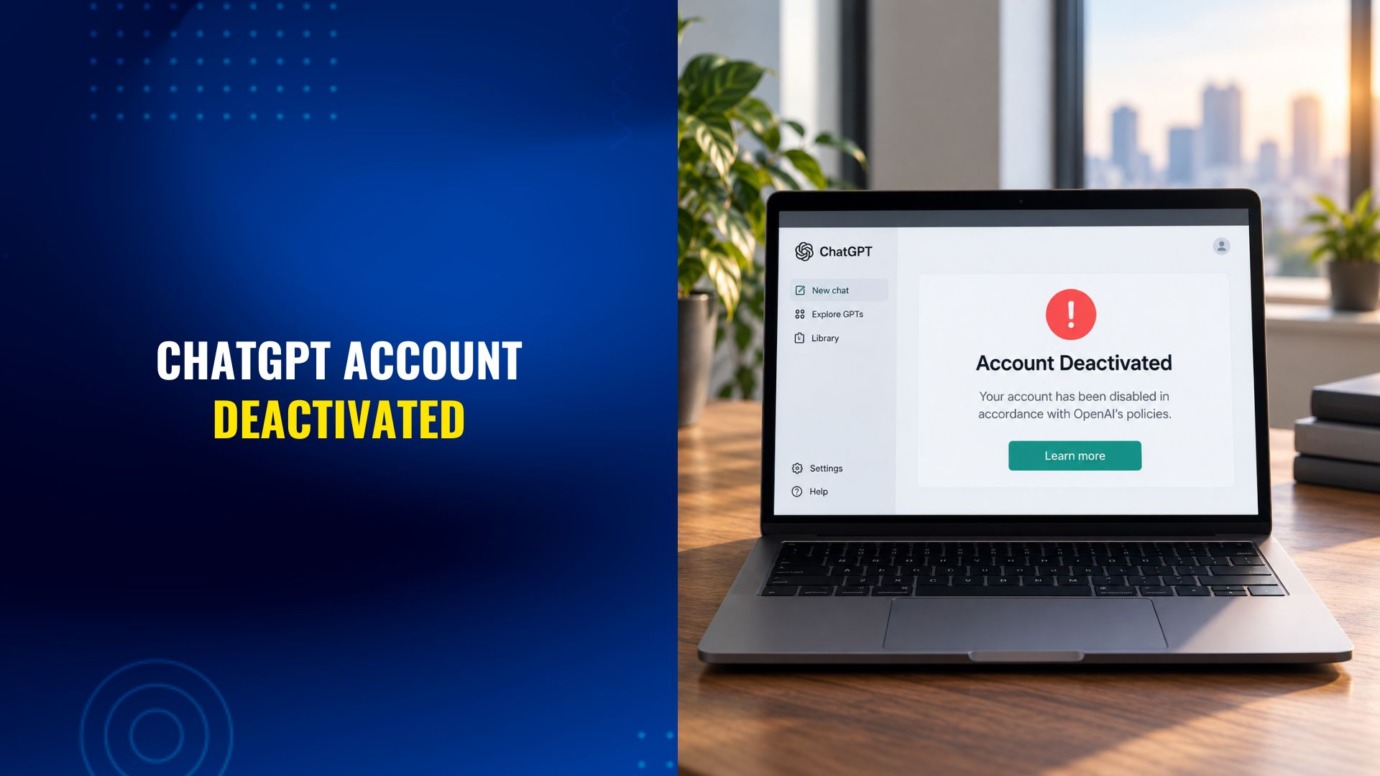
Losing access to your ChatGPT or OpenAI account can be disruptive, especially when it happens without warning and you rely on the tool for work. One day you log in as usual, and the next you are met with a message that your account has been deactivated, often with little explanation of why.
This guide walks through why OpenAI deactivates accounts, what your appeal options are, and how to give your appeal the best possible chance. Our team regularly advises creators, businesses, and professionals who suddenly lose access to platform accounts they depend on, and the patterns are often more predictable than they first appear.
A quick note before we start: account deactivation is a private platform decision governed largely by the terms you agreed to when you signed up. It is not a criminal matter, and in most cases it is not something a court will step in to reverse. That shapes what a realistic path forward looks like.
Why Was My OpenAI Account Deactivated?
OpenAI ties account deactivations to violations of its published rules, primarily its Usage Policies and its Terms of Use. According to OpenAI’s own help documentation, deactivations generally fall into a handful of categories.
Common reasons include:
- Usage Policy violations. Content that OpenAI classifies as prohibited, such as sexual content, child exploitation, violence or self-harm material, deceptive or fraudulent activity, harassment, or other content it treats as inappropriate or illegal.
- Terms of Service breaches. Actions like circumventing security or access restrictions, sharing your account or API keys with others, or using the service in ways that could harm others or disrupt the platform.
- Security concerns. If OpenAI’s systems detect suspicious activity suggesting your account was compromised, it may suspend the account to limit misuse.
- Repeated violations after warnings. OpenAI states that it sometimes issues warnings first, and that failing to correct the behavior in time can lead to deactivation.
- Failure to complete identity or age verification. Some users are asked to verify their identity or age, and not completing that step can result in the account being disabled. Some requirements are region-specific, so the exact timeline can vary depending on where you are.
It is worth knowing that automated systems play a large role in flagging accounts. That means a deactivation is not always the result of deliberate misuse. Mistaken flags, misread context, and false positives do happen, which is part of why an appeals process exists in the first place.
If you want to see the specific conduct rules for yourself, OpenAI publishes its current Usage Policies online, including the effective date and a changelog of past revisions.
How AI Monitors AI: The Automated Systems Behind Account Flags
One detail that often surprises users is how their account got flagged in the first place. In most cases, no person reviewed your activity before the deactivation landed. Automated systems did.
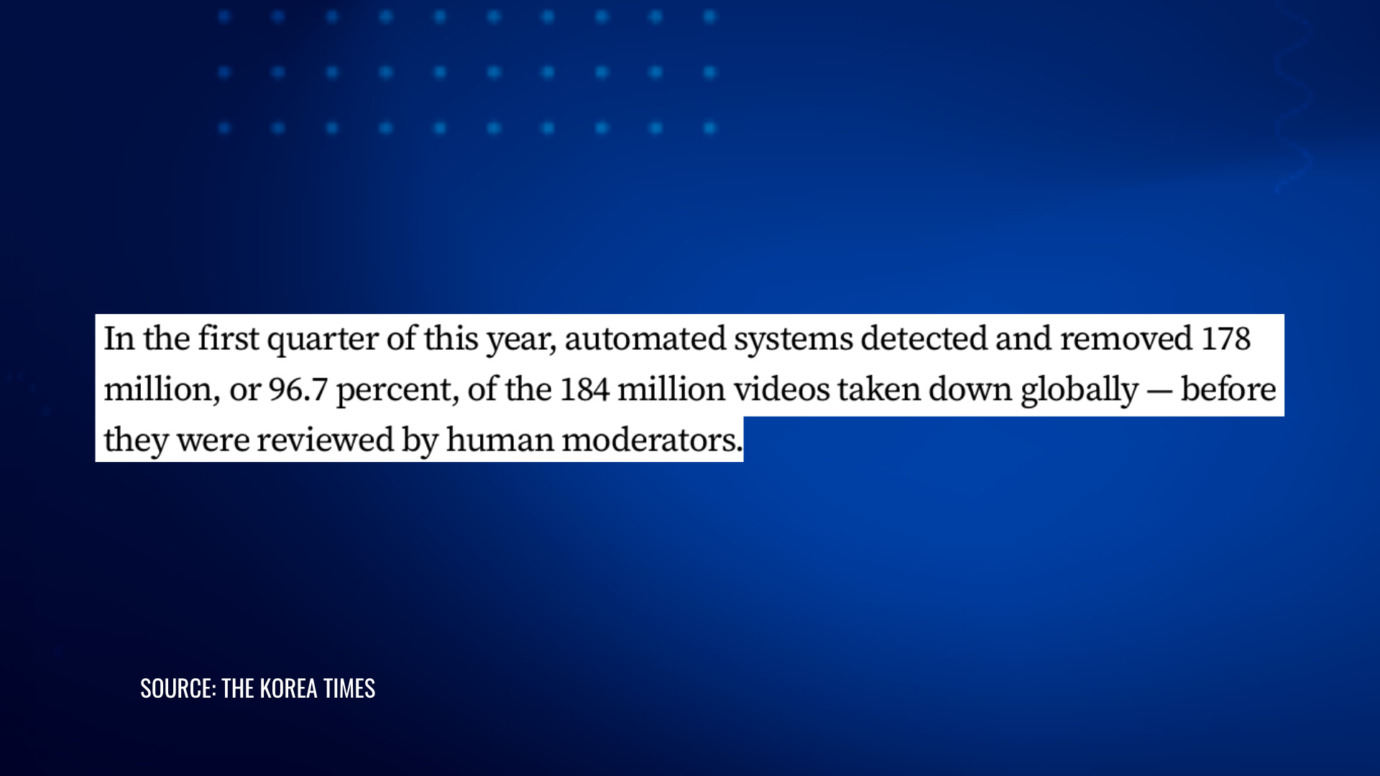
This is now standard across the major platforms. TikTok reports that the large majority of content it removes for guideline violations is identified automatically, before anyone files a report. Meta has said publicly that it relies heavily on automated systems to detect and act on violations at scale, reserving significant human review for appeals and high-impact content.
Amazon has built automated abuse-detection systems, such as hash-matching and classifiers, into AI services like Amazon Bedrock to flag policy violations largely without human review of the underlying content, though human review of flagged traffic does apply in some cases depending on the model provider. OpenAI, for its part, describes systems that detect suspicious activity on accounts.
There is something worth pausing on here. OpenAI is an AI company, and like Anthropic’s Claude and the other platforms above, it uses AI to police its own AI service. Machine-learning systems are increasingly the first, and sometimes only, reviewer of whether a person keeps access to a tool they rely on.
For users, the practical takeaways are straightforward:
Speed cuts both ways. Automated enforcement can act within minutes or hours, far faster than manual review, which is why some deactivations feel abrupt and unexplained.
False positives are a known limitation. Even the companies running these systems acknowledge that automated moderation makes mistakes, which is exactly why an appeal, where a human can take a second look, matters.
A calm, factual appeal is your counterweight. If a model flagged you, a clear, human-readable explanation of your actual usage is often the most useful thing you can put in front of a reviewer.
Deactivation, Suspension, and Deletion Are Not the Same Thing
These terms get used loosely, but they carry different consequences.
A suspension or deactivation typically means your access has been cut off, sometimes temporarily, while OpenAI reviews the situation or waits for you to take an action such as verification. Account deletion, by contrast, is generally permanent and cannot be undone.
The distinction also affects whether you can start over. According to OpenAI’s current documentation, if you delete your own account, you can generally create a new account using the same email address after about 30 days. But an account disabled for a terms or policy violation is treated differently. OpenAI’s own guidance is narrower than the deletion path: reusing an email requires the prior account to have been fully deleted, not merely deactivated, and OpenAI does not describe any route to reactivate an email tied to a policy-based deactivation. In other words, spinning up a fresh account is not always an available or advisable route.
Understanding which situation you’re in matters, because it affects whether an appeal is even the right tool.
Can I Appeal an OpenAI Account Deactivation?
Yes. OpenAI provides a formal appeals process for users who believe their account was deactivated in error.
Based on OpenAI’s current help documentation, there are a few routes depending on your circumstances:
Use the link in your notification email. If OpenAI emailed you about the deactivation, that email usually contains a dedicated appeal link. OpenAI recommends using it because it helps route and review your request more efficiently.
File through the intake form. If you cannot access that email, OpenAI directs users to its appeal intake form to submit a request directly.
Reach out through Help Center chat. If you never received an email but have lost access, OpenAI suggests contacting support through its Help Center chat.
There is no publicly guaranteed timeline for a response, and outcomes vary. Some users report reinstatement, while others report that the original decision is upheld. An appeal is a genuine opportunity to be heard, not a guarantee of reversal.
What Information to Include in Your Appeal
The quality of your appeal matters. A vague “please restore my account” message gives the reviewer little to work with. OpenAI’s guidance suggests including specific details, and a well-organized submission tends to be easier for a human reviewer to act on.
Consider including, where relevant:
- Your User ID and Organization ID for the affected account.
- A clear, factual explanation of how you actually use the service.
- The date range of any suspected account compromise, if security is the issue.
- Details of any unauthorized charges you noticed, such as dates, amounts, the last four digits of the card, the card brand, the issuing bank, and the billing ZIP code.
- A description of the steps you have already taken to address the problem, such as changing your password or rotating API keys.
Keep the tone measured and factual. Reviewers respond better to a calm, specific account than to frustration, however understandable that frustration may be.
What to Do Before and While You Appeal
A few practical steps can protect your position while your appeal is pending.
Secure Your Account and Credentials
If there is any chance your account was compromised, treat security as the first priority. OpenAI’s own recommendations for suspicious activity include changing your password and, for developers, rotating your API keys. Doing this promptly also demonstrates good faith if security concerns triggered the deactivation.
Preserve Your Records
Before anything is lost, save what you can:
Screenshots of the deactivation notice and any emails from OpenAI.
Records of your subscription, billing, and payment history.
Any prior warnings or policy notices you received.
A written summary of your own account of events while it is fresh.
If your account holds work you cannot afford to lose, note that OpenAI’s documentation describes data being deleted within roughly 30 days after account deletion, subject to legal exceptions. That is another reason not to delay.
Review the Rules You Agreed To
It is worth reading OpenAI’s Usage Policies and Terms of Use with your specific situation in mind. Identifying which rule may have been implicated helps you write a focused, credible appeal rather than a generic denial of wrongdoing.
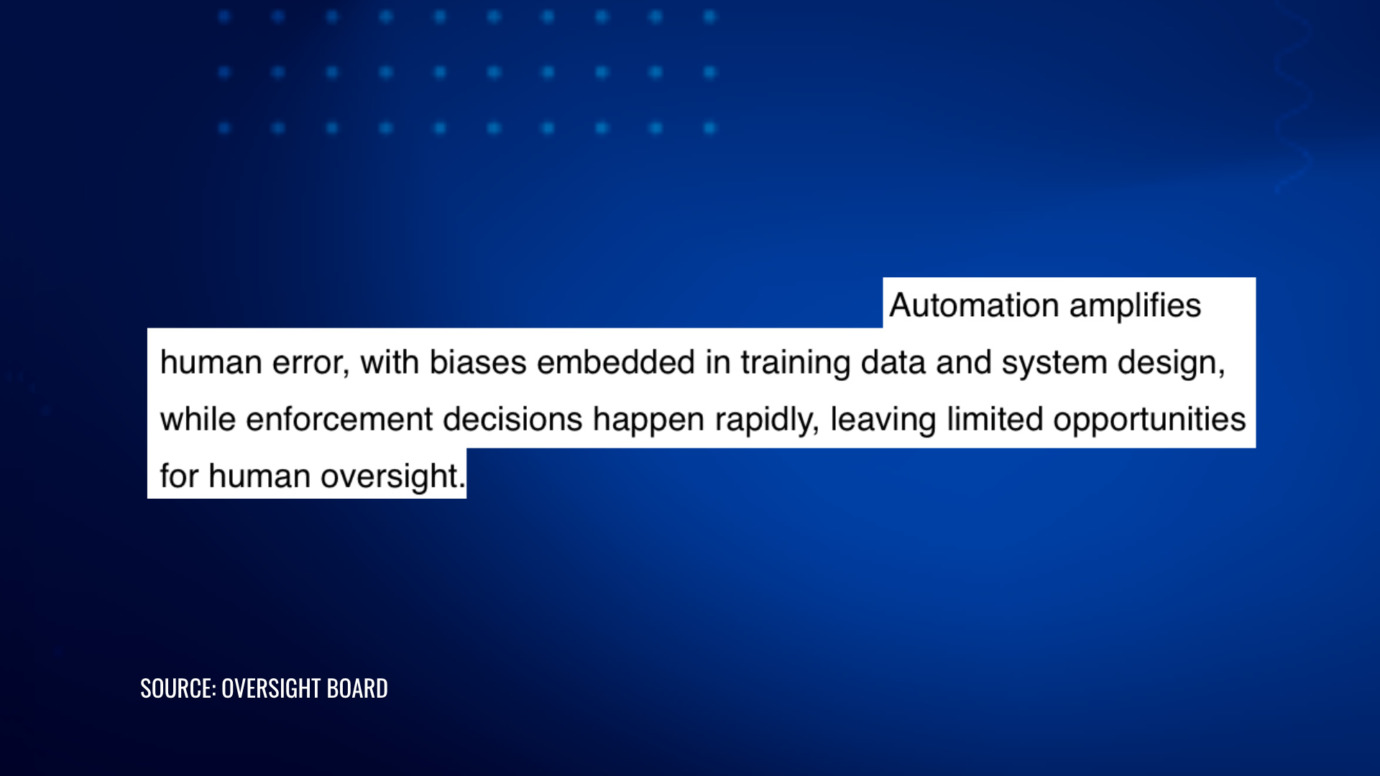
It’s also why a careful, well-documented appeal is worth the effort: independent reviewers of platform moderation have flagged the same pattern that OpenAI’s own appeal process is built to catch.
When Account Deactivation Becomes a Legal Matter
For many individual users, the appeal process is the whole story. But deactivation can carry real commercial weight, and in some situations legal input is worth considering.
This is more likely when:
- The account is tied to a business that depends on it for revenue or operations.
- There are paid subscriptions, prepaid API credits, or commercial commitments at stake.
- The deactivation raises questions about your intellectual property, your data, or contractual obligations to your own customers.
- You have appealed, been denied without a clear explanation, and believe the decision was mistaken.
It’s important to be candid about what the law can and cannot do here. In the United States, platforms have broad contractual latitude to suspend or terminate accounts under their terms of service, and courts are generally reluctant to force a private company to reinstate a user.
The legal questions surrounding platform accountability, terminated accounts, and users’ rights are still developing, and outcomes vary considerably depending on the facts, the governing terms, and the jurisdiction. Anyone promising a guaranteed reversal through legal channels should be viewed with caution.
What a lawyer can often help with is different and more concrete: understanding the terms that actually govern your account, framing a stronger and better-documented appeal, addressing related issues like billing disputes or data recovery, and assessing whether any contractual or consumer-protection angle realistically applies to your situation.
Because these disputes sit at the intersection of platform policy, contract law, and digital business operations, they overlap heavily with the social media and platform account work our firm handles day to day. The reinstatement playbook we use for creators facing suspensions on other platforms, such as account and content reinstatement on X, rests on the same core skills: reading the platform’s terms closely, building a factual record, and presenting a disciplined, policy-based case.
Should You Hire a Lawyer for a ChatGPT Account Deactivation?
For most people, the honest answer is no. If ChatGPT is a personal tool, something you use for writing help, studying, everyday questions, or hobby projects, a lawyer is usually not worth the cost. Your best path is to work OpenAI’s own appeal process carefully: file promptly, explain your actual usage clearly, and include the details the reviewer needs. Many individual cases are resolved, or not, on the strength of that appeal alone.
The calculation changes when the account is tied to how you earn a living. If your business depends on ChatGPT or the OpenAI API to generate revenue, for example, to produce client work, power a product or feature you sell, or run operations your customers rely on, then a deactivation is not just an inconvenience. It can interrupt income, put you in breach of your own commitments to customers, and raise questions about your data and intellectual property.
In that situation, legal input is more likely to be worthwhile. A lawyer can help you understand the terms governing your account, build a stronger and better-documented appeal, and address the commercial fallout, such as billing disputes, prepaid credits, or obligations to your own clients.
To be clear, this does not guarantee reinstatement. Under U.S. law, platforms retain broad discretion over their accounts. But when real money and business continuity are at stake, having someone assess your options carefully is often a reasonable investment rather than an overreaction.
A simple way to think about it: the higher the financial and operational stakes riding on the account, the more sense it makes to get advice before you rely on the appeal process alone.
Talk to a Firm That Handles Platform Account Disputes
If your deactivated OpenAI or ChatGPT account is connected to your business, your revenue, or important data and intellectual property, you do not have to navigate the appeal alone. Cabilly & Co. works with creators, brands, and digital businesses facing platform suspensions and account disputes, and we can help you assess your terms, sharpen your appeal, and understand your realistic options.
Contact Cabilly & Co. to discuss your OpenAI or ChatGPT account deactivation and what steps make sense for your situation.
PROTECT YOUR BRAND. GROW YOUR BUSINESS.
Rated 4.9 by 80+ clients on Google Reviews

Top 20
Trademark lawyer in the US*
Top 3
Service providers for Amazon sellers*
96%
Success rate for TM registrations
8000+
Clients Worldwide
Legal Disclaimer: The articles published on our platform are for informational purposes only and do not constitute legal advice in any form. They are not intended to be a substitute for professional legal counsel. For any legal matters, it is essential to consult with us or a qualified attorney who can provide advice tailored to your specific situation. Reliance on any information provided in these articles is solely at your own risk.
Frequently Asked Questions
How long does an OpenAI appeal take?
OpenAI doesn’t publish a guaranteed timeframe, and reported experiences vary. Some users hear back within days, others wait considerably longer. Submitting a complete, well-documented appeal the first time can help avoid delays caused by follow-up requests.
Can I just make a new account instead?
It depends on how you lost access. OpenAI’s documented email-reuse path, a new account with the same email after about 30 days, applies to accounts you deleted yourself, and does not apply to accounts that were deactivated rather than deleted. OpenAI’s help documentation doesn’t describe a route to reuse an email tied to a policy-based deactivation, and creating a new account to evade enforcement may itself breach the terms. Sorting out which category you are in should come before you try to sign up again.
Will I get a refund for my subscription or API credits?
That’s not automatic and depends on OpenAI’s policies and the circumstances of the deactivation. If money is at stake, raise it clearly in your appeal, and keep your billing records. In some cases, a billing dispute is a separate conversation from the reinstatement question.
Does OpenAI have to tell me exactly why my account was deactivated?
Not necessarily in the detail you might want. Many users report receiving only a general reason. OpenAI’s policies do reference an appeals process, but the level of specificity you receive can vary. This is one reason a focused, well-reasoned appeal is valuable even without a precise explanation.
Was my account flagged by a person or by AI?
In most cases, an automated system made the initial flag. OpenAI and other major platforms rely heavily on machine-learning detection, and human review typically enters the picture only during an appeal. That is part of why filing a clear, factual appeal is worthwhile: it may be the first time a person actually looks at your situation.
Do I need a lawyer to appeal a ChatGPT deactivation?
Usually not for a personal account. The appeal process is designed to be used directly, and most individuals can handle it themselves. Legal help becomes more worthwhile when the account is central to a business that earns income, because the stakes, and the related contractual and financial questions, are higher.
Can a lawyer force OpenAI to reinstate my account?
Generally, no one can promise that. Under U.S. law, platforms have significant discretion under their own terms of service, and courts rarely compel reinstatement. A lawyer’s realistic role is to help you understand the governing terms, strengthen your appeal, and address related legal or commercial issues, not to guarantee an outcome.
Read the latest from Cabilly & Co.
 Oct 5, 2026
Amazon Brand Registry – Discover for Free if You’re Eligible
Increase Your Chance of Getting a
Trademark to 96%


STAY UPDATED
Subscribe to Our Newsletter
Sign up to receive valuable information on E-Commerce and intellectual property
Have a legal question?