Book a FREE 15-minute consultation with an expert – Book Now

Amazon Brand Registry Hijacking: The Black Hat Attack That Can Wipe Out Your Catalog Overnight
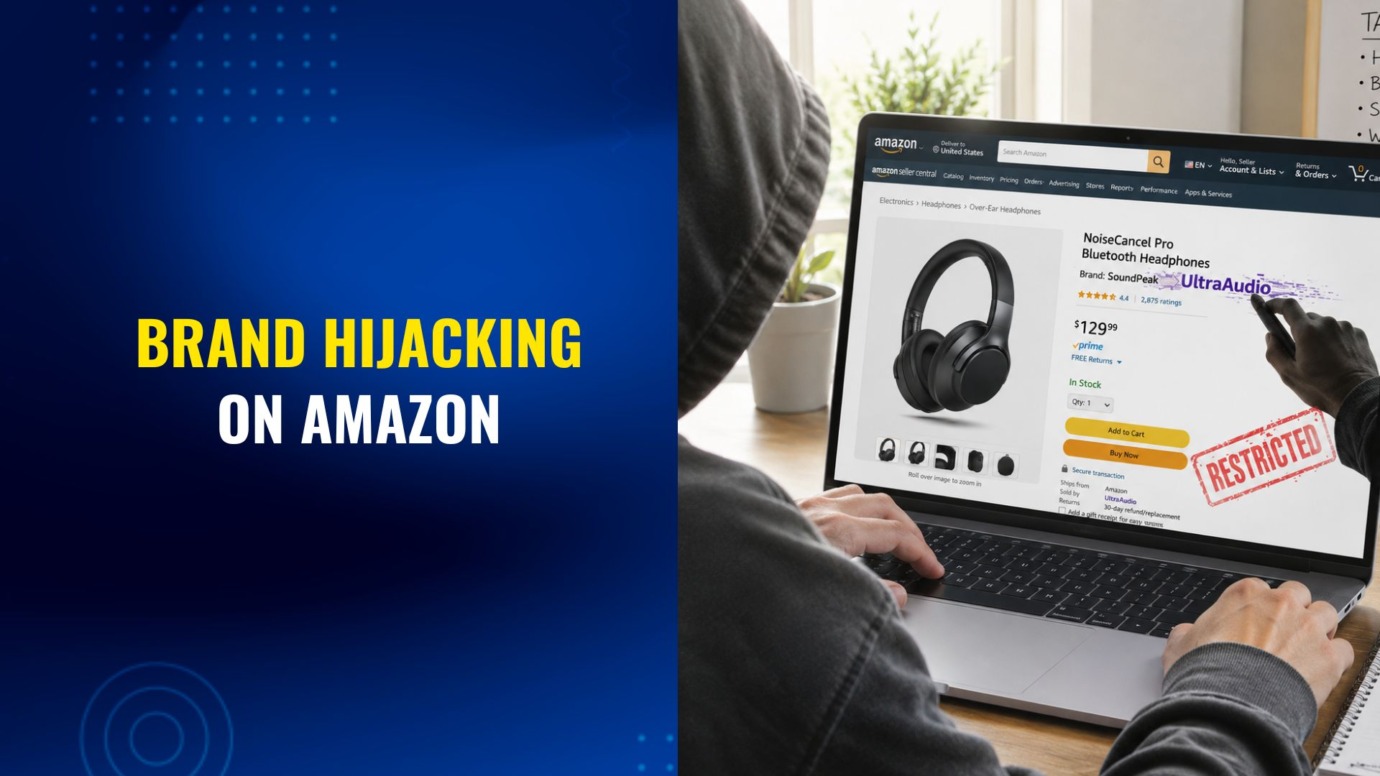
If you woke up one morning and nearly every product in your Amazon catalog was suddenly restricted, misclassified or miscategorized, with no warning, no violation notice, and no clear explanation, you may have been hit by one of the most sophisticated attacks in the Amazon ecosystem today: Brand registry Hijacking.
This isn’t a glitch. It isn’t a routine suspension. And it almost certainly won’t be solved by a quick call to Amazon or opening a standard Seller Support ticket. If Amazon suddenly seems to be treating you like a reseller, rather than the brand owner, this can indicate a serious change in how your brand and its ownership is seen by Amazon’s systems.
While there are many types of brand hijacking, if your brand management tools start behaving differently to normal, your listings details start to change, you have lost the ability to change your own listings, or you flat out lose the ability to access your brand registry altogether, brand hijacking could be a prime candidate.
Here’s what it is, how it works, and what you need to do if it happens to you.
What Is Brand Hijacking?
Brand hijacking is when an unauthorized person gains access to Amazon’s catalog to take control of your product listing’s backend attributes, removes your brand from your own brand registry or adds themself as a new user in your brand registry, or directly takes control of your brand and falsely positions themself as the “brand owner”.
There are various ways this can happen, but generally this involves “disconnecting”, or completely removing the brand from the brand owner’s brand registry, so that Amazon’s systems no longer consider you to be the owner. The hijacker then has control of your listings and can take any nefarious actions they wish. They can change product images, titles, etc., causing Amazon’s system to reassign your listings to an incorrect product category.
They can add problematic backend search terms or content to the listing that causes the system to flag the listing as restricted (often these malicious contributions are related to drugs, adult products, or medical devices that require compliance testing and registrations), or they can alter the listing and then make counterfeit complaints against you, as if they were the brand owner themselves.
This is a double whammy – not only are your listings hijacked and removed, but you have also lost the ability to report the attack via your brand registry!
It can be difficult to put the pieces together initially, and these attacks are often done in stages – if the hijacker sees that you are unable to act quickly to resolve the first changes they make, they will be emboldened to continue to more serious acts, up to and including disconnecting your brand from your brand registry.
Amazon refers to this as a “Brand ID Stamp error”. Essentially, the term “Brand ID Stamp” refers to Amazon’s internal backend identifier that links your catalog to your registered brand. Think of it as a digital ownership tag. When it’s working correctly, Amazon recognizes you as the legitimate brand owner and lets you manage your listings accordingly.
When that stamp gets corrupted or overwritten, whether by a system error or by deliberate manipulation, Amazon’s systems can begin treating you as an unauthorized reseller of your own products. Your listings get restricted. Your catalog goes dark. And from Amazon’s automated perspective, everything looks technically “correct”.
The damage can happen overnight. We’ve seen cases where private label sellers lost tens of thousands of dollars in daily revenue within hours of an attack, with close to their entire catalog taken down at once.
The Black Hat Attack: How It Actually Works
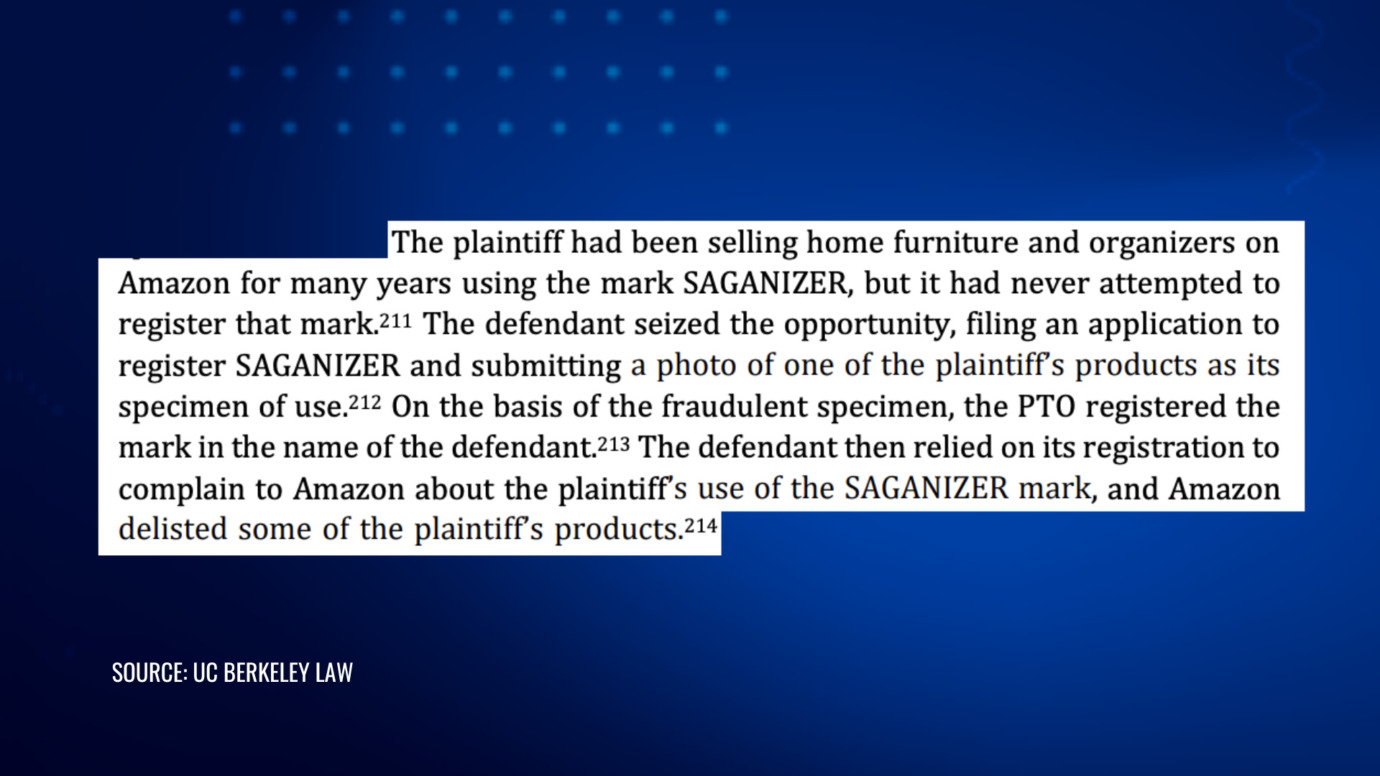
This problem isn’t usually the result of a simple technical error. In some documented cases, a competing brand registers under the same or similar brand name in a different regional marketplace, such as the EU or UK, and their Brand Registry enrollment ends up linked to the original brand’s catalog in Amazon’s backend system.
Once that link is established, Amazon’s systems can get confused about who the legitimate owner is. Bad actors with access to Amazon’s catalog infrastructure have been known to overwrite brand names on listings, file false infringement reports to trigger deactivations, and then redirect those catalog pages to their own products.
The result is that the legitimate brand owner starts appearing in Amazon’s system as an unauthorized seller, someone trying to sell products they don’t actually own. If the bigger picture is not identified early, brand owners can waste precious time and resources fighting the symptoms – Amazon’s requests for supply chain verification documents, or compliance testing, rather than the cause. If not identified and reported correctly, the entire brand catalog can be restricted, and the legitimate seller is effectively locked out of their own brand.
This is a coordinated attack. It’s designed to look like routine enforcement so that you waste days or weeks chasing the wrong solution.
Why Standard Support Won’t Help You
This is the part that frustrates sellers the most, and it’s also the most important thing to understand.
Standard Seller Support, Account Health representatives, and even Brand Registry teams often lack the training or internal access to identify backend catalog manipulation of this kind. The catalog team can’t communicate with Seller Performance, and Seller Performance frequently doesn’t understand how the catalog works.
When you call Account Health and describe your situation, they’re looking at a surface-level account view. They don’t see that there’s a phantom brand registry entry in the UK creating a conflict. They don’t know what a Brand ID Stamp is. They’ll escalate you to the wrong team, close the case, or send a copy-paste response.
If the abuse prevention team isn’t taking meaningful action, sellers need to push Amazon to prevent unauthorized changes to listings by outside parties, not just wait for reinstatement.
The clock is ticking while you’re going in circles with frontline support. Every day you spend on standard channels is a day your competitors know you’re offline.
Recognizing the Signs
Not every catalog restriction is a Brand ID Stamp attack, but there are specific patterns that should put you on high alert:
Sudden, large-scale catalog restrictions with no clear policy violation.
If a single listing gets taken down, that’s usually something else. If 80 to 100% of your catalog gets restricted overnight, that’s a backend issue.
Amazon treating you like an unauthorized reseller of your own brand.
If you’re getting messages suggesting you don’t have rights to sell products you’ve been selling for years under your own trademark, something is wrong at the brand identity level.
Support telling you to “apply for brand approval” for your own brand.
This is a telltale sign that Amazon’s system no longer recognizes you as the brand owner, and when you try to re-add your brand to your brand registry, you get an error message saying that the “trademark is already enrolled” and to contact the brand owner
The issue persisting despite correct documentation.
You’ve submitted your trademark certificates, your Brand Registry confirmation, everything, and nothing changes. That’s because the problem isn’t a documentation gap; it’s a backend structural conflict.
In some cases, the same brand name has been registered by two separate entities in different regions, and Amazon’s system hasn’t properly separated the two. The result is a nightmare scenario for brands trying to protect their IP and follow Amazon’s rules.
What a Proper Resolution Looks Like
If you suspect you’re dealing with a Brand ID Stamp attack, here’s the framework for resolving it:
- Stop relying on frontline support immediately. Standard seller support cases will not resolve this. You need to get to senior-level internal teams who understand Amazon’s catalog architecture.
- Identify and document the conflict. The goal is to find the duplicate or phantom brand registration that’s causing the conflict. You need to identify which marketplace it’s registered in, what brand ID it carries, and how it’s linked to your catalog. This requires technical knowledge of how Amazon’s Brand Registry backend works.
- Use precise technical language in your escalations. Generic appeals don’t work here. Your communications with Amazon need to identify the Brand ID Stamp status specifically and request the decoupling of the conflicting brand from your catalog. Vague language gets routed to the wrong teams.
- Provide bulletproof documentation. Include your trademark registration certificate showing that the legal entity of your account is the brand owner, the original email you (or your attorney) received from Amazon when you applied for brand registry, including the verification code, and the email from Amazon to the email address associated with your account confirming approval to brand registry. Anything that supports the case that something has clearly gone very wrong inside Amazon regarding the ownership status of the brand should be provided.
- Escalate through the primary account email. Do not use the standard case management interface for this. Senior escalations at Amazon are typically handled through direct communication with leadership-level contacts, and they need to come from the primary account email on your seller account to carry the appropriate weight.
- Pursue a multi-channel approach simultaneously. If standard support isn’t responding or your issue persists, escalate both your appeals for listing reinstatement and the abuse reports at the same time. Don’t ease up on one because you’re making progress on the other.
The good news: when handled correctly and escalated to the right level, cases like this can be resolved. The bad news: “correctly” is a high bar that requires real expertise.
How to Protect Yourself Before an Attack Happens
Prevention is far easier than recovery. Here are the steps every private label brand should be taking:
Register in all major marketplaces, not just the US
One of the most common vectors for this attack is a bad actor registering your brand in a marketplace you’ve left unprotected, whether that’s Europe, the UK, or Canada. Registering your brand in one marketplace and leaving others unprotected is one of the most common mistakes brand owners make. Lock down your brand identity everywhere you sell, and ideally in the major marketplaces where you don’t sell yet.
Have GS1 UPCs registered to your Legal Entity and enroll in Amazon’s Transparency program
GS1 registered UPCs allow you another way to show Amazon that you are the brand owner. Transparency assigns unique codes to each unit of your products, which can be instrumental in reducing the impact of listing manipulation and other black hat techniques. It creates an additional layer of verification that makes your catalog harder to hijack.
Monitor your catalog daily
Use tools like Helium 10, Sellerboard, or Amazon’s Brand Catalog Manager to catch content changes early. Keep records of brand registration, ownership, access permissions, and case history. The faster you identify that something has changed in your catalog, the faster you can act.
Maintain clean records of your brand ownership
Trademark certificates, USPTO registrations, Brand Registry enrollment confirmations, screenshots of your catalog history, keep all of it. Amazon’s enhanced Brand Registry tools now give brand owners access to detailed seller data associated with each ASIN, including country of origin and storefront history. Use these features actively.
Build relationships before you need them
Sellers who have established escalation pathways and know who to contact at Amazon are at a significant advantage when an attack occurs. Don’t wait for a crisis to figure out your options.
The Bigger Picture
Brand ID Stamp attacks represent a sophisticated evolution of black hat competition on Amazon. These tactics disrupt the fair competitive environment, mislead consumers, and damage the targeted seller’s reputation and sales. They’re designed to be confusing, to waste your time, and to drain your resources while your competitor either clears the field or swoops in to capture your sales.
The sellers who recover fastest are the ones who recognize what they’re dealing with early, are ready with proof of brand ownership and a carefully documented itemization of the actions taken by the malicious third-party,, and pursue aggressive, technical escalations with the right language and to the right teams.
If your catalog goes dark overnight with no clear explanation, don’t panic, but don’t delay either. Get expert help immediately.
PROTECT YOUR BRAND. GROW YOUR BUSINESS.
Rated 4.9 by 80+ clients on Google Reviews

Top 20
Trademark lawyer in the US*
Top 3
Service providers for Amazon sellers*
96%
Success rate for TM registrations
8000+
Clients Worldwide
Legal Disclaimer: The articles published on our platform are for informational purposes only and do not constitute legal advice in any form. They are not intended to be a substitute for professional legal counsel. For any legal matters, it is essential to consult with us or a qualified attorney who can provide advice tailored to your specific situation. Reliance on any information provided in these articles is solely at your own risk.
Read the latest from Cabilly & Co.
 Oct 5, 2026
Amazon Brand Registry – Discover for Free if You’re Eligible
Increase Your Chance of Getting a
Trademark to 96%


STAY UPDATED
Subscribe to Our Newsletter
Sign up to receive valuable information on E-Commerce and intellectual property
Have a legal question?