Book a FREE 15-minute consultation with an expert – Book Now

How to Fix Amazon Product Misclassification
You did everything right. Your product is fully compliant, you followed the rules, and then one morning you wake up to find your listing gone: flagged, removed, or restricted. The most frustrating part is that no one can tell you exactly why.
Product misclassification is a growing problem for Amazon sellers, and it often hits the sellers who are doing everything by the book. The good news is that these flags can usually be understood, and frequently reversed, once you know what triggered them.
Note: This is a broad overview of Amazon misclassification. For a specialized case, see our dedicated piece on Amazon’s misclassification of medical devices.
Our law firm works with Amazon sellers facing this exact situation every day. We’ve handled cases where a fully compliant product was wrongly classified as restricted, including one where a federal agency formally confirmed in writing that the product was not regulated, and Amazon still refused to change its classification until our attorneys engaged the company’s legal department directly. That kind of experience is what informs the guidance below.
How Amazon’s Automated Systems Flag Products
To manage hundreds of millions of listings, Amazon relies heavily on AI, algorithms, and automated bots to flag anything it believes might be regulated or restricted. These systems are aggressive by design.
In its 2024 Brand Protection Report, Amazon stated that its proactive controls blocked more than 99 percent of suspected infringing listings before a brand ever had to report them. In other words, the vast majority of enforcement happens automatically, before a human ever reviews it.
That works well when the system is catching counterfeiters. The problem is that Amazon uses similar automation to scan listings for indicators of restricted or regulated products, and those tools are far from perfect. They cast a very wide net, which means many perfectly compliant listings get caught alongside the genuinely problematic ones.
Once the algorithm decides a product belongs in a restricted category, the burden shifts to you. You now have to appeal and demonstrate that Amazon’s classification is wrong. This is the same dynamic that drives most Amazon account and listing reinstatement work: the seller has to prove compliance, not the other way around.
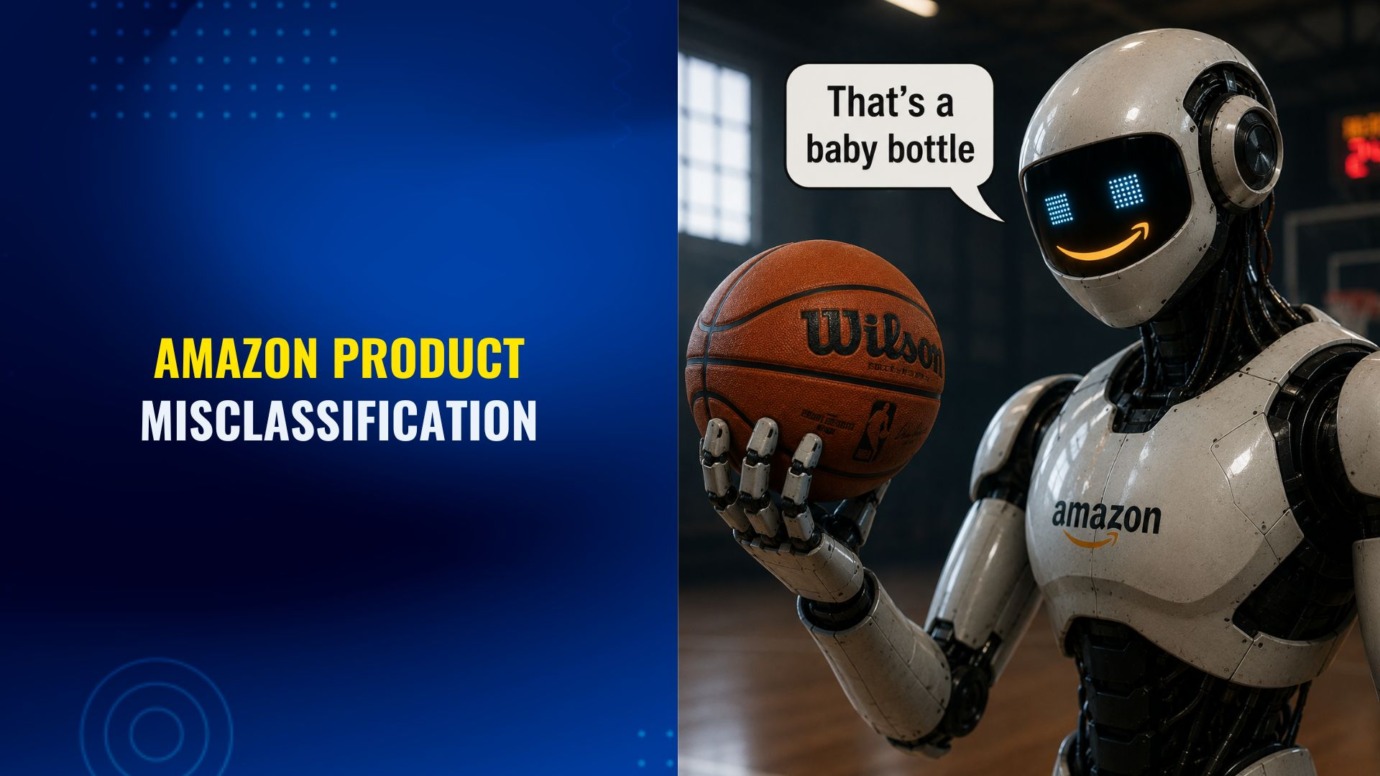
How wide is the net? Wide enough that we have seen Amazon flag skin-color felt-tip pens as human body parts. That is the kind of mistake an over-aggressive algorithm can make.
The Two Types of Misclassification
In practice, these cases tend to fall into one of two categories.
1. Pure Misclassification
This is when your product is completely fine, but the algorithm simply got it wrong. There is nothing wrong with your packaging, your listing, or your claims. The system made an error and decided your product belongs in a restricted category. These cases can be easier to resolve, though it is often still frustrating to get a frontline support agent to understand the issue.
2. Misclassification Triggered by Your Content
This one is more complicated and more common than many sellers realize. Here, something in your own listing causes the flag. It might be a claim in one of your product images, a back-end search term that points to a different type of product, or a single line of text on your packaging.
What makes this scenario so dangerous is that it is often invisible to you. A minor listing update, one new back-end keyword, or a single phrase in a graphic can be enough to get your product reclassified as restricted or as something that suddenly requires special testing, compliance documentation, or registration with a federal body.
Why Your Exact Wording Matters So Much
This is where many sellers get into trouble without realizing it. The specific words you use can determine how your product is classified.
Consider the difference between a product being treated as a cosmetic versus a drug, a general wellness product versus a medical device, or a baby support cushion versus a restricted infant sleep product. These distinctions carry very different regulatory consequences, and sometimes it comes down to a single word. Describing a product as something you “sterilize” rather than “sanitize,” for example, can change how it is classified.
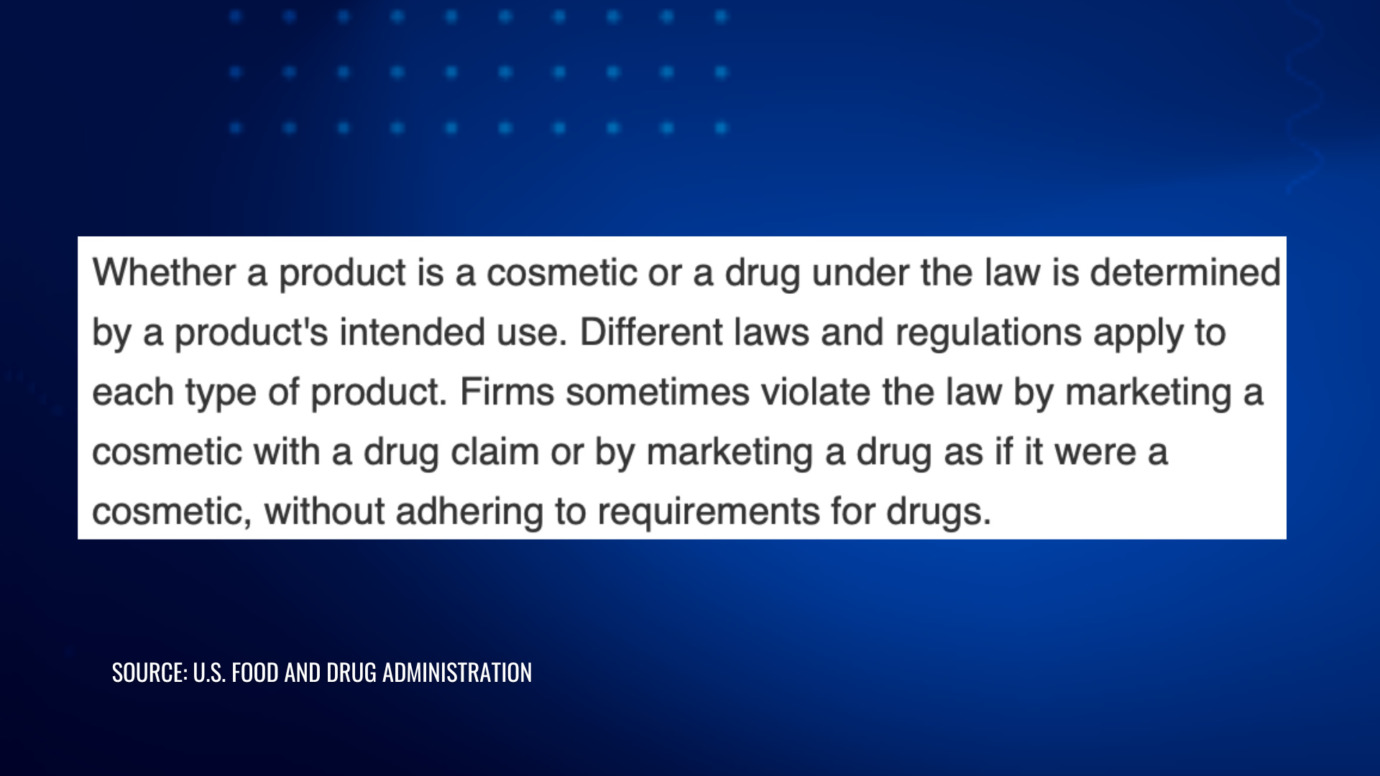
Here is a clearer example. In the United States, it may be acceptable to market a beauty product as “improving the appearance of the skin.” But the moment you say it “reduces wrinkles” or “helps reduce acne,” you may have crossed into making a drug claim. Without the appropriate FDA clearance, that can be enough to get your listing pulled.
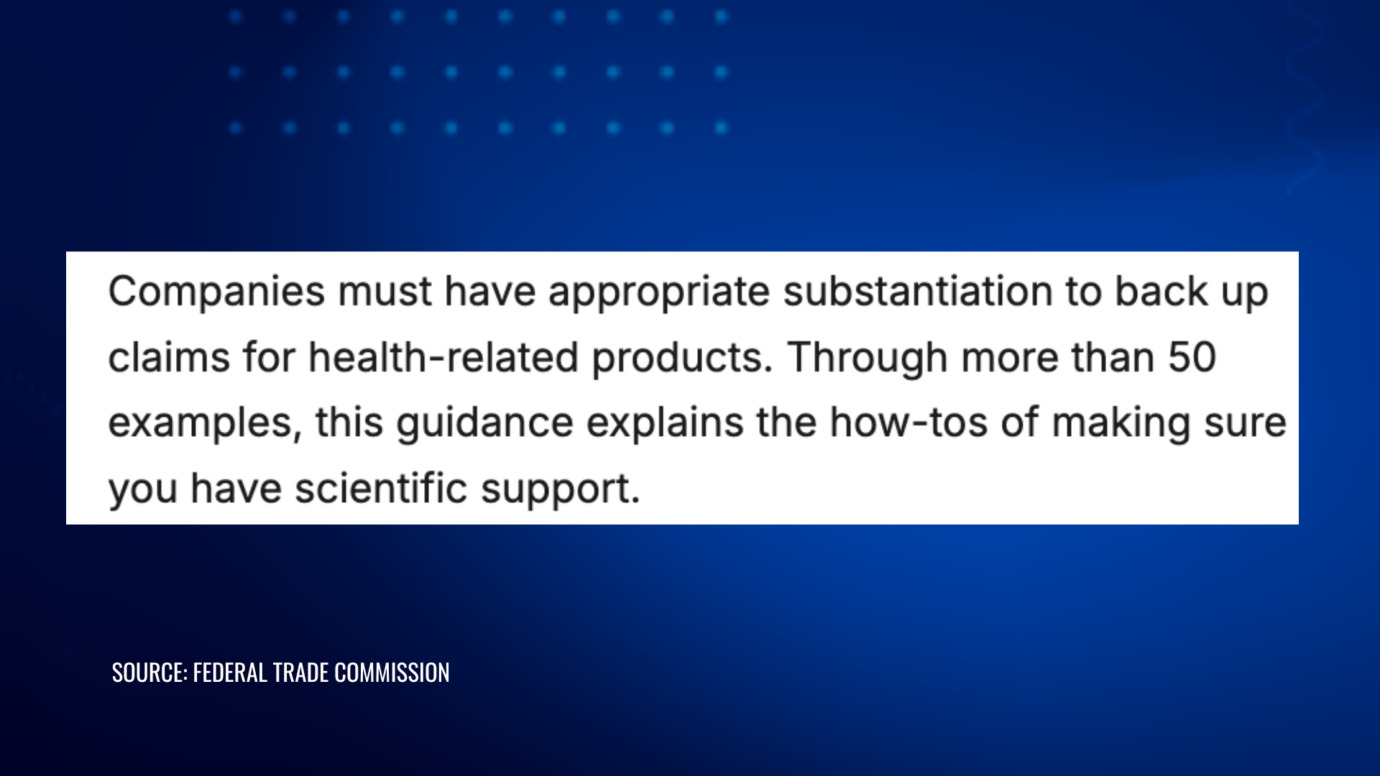
It is also worth knowing that beauty, health, food, supplements, and children’s products tend to receive heavier scrutiny than other categories. If you sell in those spaces, it is especially important to understand the applicable rules before you launch. Our overview of Amazon compliance and regulation explains how product claims, labeling, and ingredient disclosures factor into these reviews.
Why These Cases Are So Hard to Fix
When you appeal, Amazon usually opens a new case where you can communicate about the issue. The trouble is that it is very easy to get stuck in a loop of template responses that never actually address your specific problem.
The agents replying to you are generally a bridge between you and the team conducting the review. Arguing back and forth in the case log, explaining over and over why the decision is wrong, often leads nowhere past a certain point.
What many of these cases actually require is a direct escalation to senior, specialist teams, supported by an expert assessment and clear documentation from credible outside sources. Even then, Amazon can be cautious to the point of stubbornness. Its instinct is safety first, which means its default move is to remove the listing and then wait for clear evidence of compliance. The burden of proof sits with the seller.
In the more difficult cases, when standard appeals have stalled, a formal legal approach may be warranted. Our Amazon legal intervention work involves engaging Amazon’s legal departments directly, which is sometimes what it takes to resolve a classification that should never have happened.
How to Protect Yourself (and What to Do If You’re Already Flagged)
By far the best strategy is prevention. Before you go into production, have your product, packaging, labeling, and marketing reviewed by a specialist who can confirm exactly which claims and language are permitted for your specific product. Getting this right from the start can save you from recalls, border seizures, and listing closures, along with the costs of removing non-compliant inventory, correcting it, shipping it back, and paying storage fees the entire time.
The U.S. Food and Drug Administration’s guidance on the difference between cosmetics and drugs is a useful illustration of how a single claim can change a product’s regulatory status.
If your listing has already been flagged, the approach that tends to move these cases forward is a combination of three things: a full review by an expert to identify what actually triggered the problem, corrective actions taken the right way, and a strong appeal supported by an expert letter. This mirrors how a well-built Plan of Action (POA) is structured: identifying the root cause, documenting the corrective steps, and setting out preventive measures.
What you want to avoid is getting stuck in an endless cycle of template replies, slowly losing sales while nothing changes.

Your Listing Is Your Livelihood
When a compliant product is wrongly flagged, every day it stays down is real revenue lost, and these situations rarely resolve themselves. If your product has been flagged or restricted and you are not making progress on your own, this is exactly the kind of work our team handles.
We understand how these classifications work, how to build an appeal that actually gets reviewed, and how to escalate when that is what the situation requires.
If you need help getting your listing reinstated, contact our team to discuss your case.
PROTECT YOUR BRAND. GROW YOUR BUSINESS.
Rated 4.9 by 80+ clients on Google Reviews

Top 20
Trademark lawyer in the US*
Top 3
Service providers for Amazon sellers*
96%
Success rate for TM registrations
8000+
Clients Worldwide
Legal Disclaimer: The articles published on our platform are for informational purposes only and do not constitute legal advice in any form. They are not intended to be a substitute for professional legal counsel. For any legal matters, it is essential to consult with us or a qualified attorney who can provide advice tailored to your specific situation. Reliance on any information provided in these articles is solely at your own risk.
Read the latest from Cabilly & Co.
 Oct 5, 2026
Amazon Brand Registry – Discover for Free if You’re Eligible
Increase Your Chance of Getting a
Trademark to 96%


STAY UPDATED
Subscribe to Our Newsletter
Sign up to receive valuable information on E-Commerce and intellectual property
Have a legal question?