Book a FREE 15-minute consultation with an expert – Book Now

Passed Lab Testing but Still Blocked on Amazon? Here’s Why
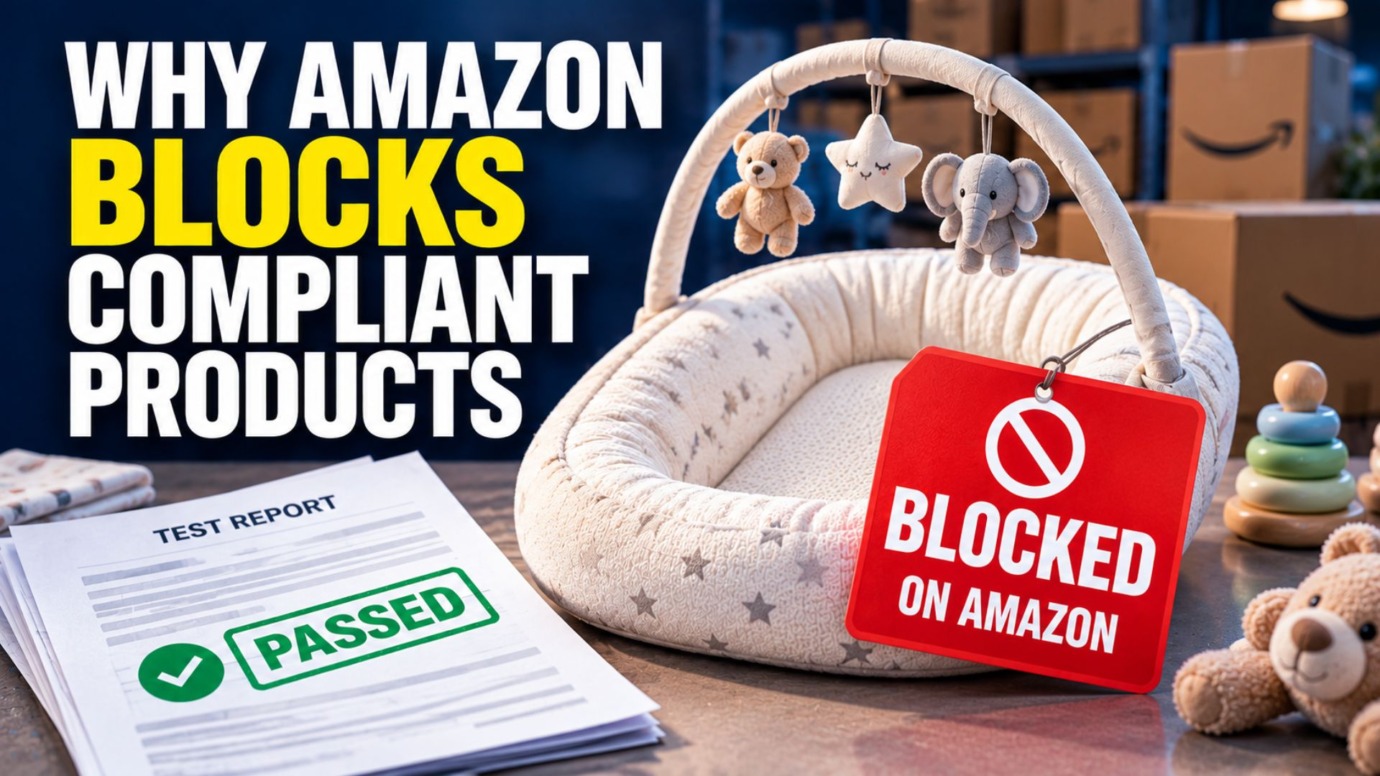
A growing number of Amazon sellers, especially in the baby and children’s categories, are running into the same frustrating situation. They submit test reports from a CPSC-accepted laboratory, Amazon reviews them, and the listing stays blocked anyway.
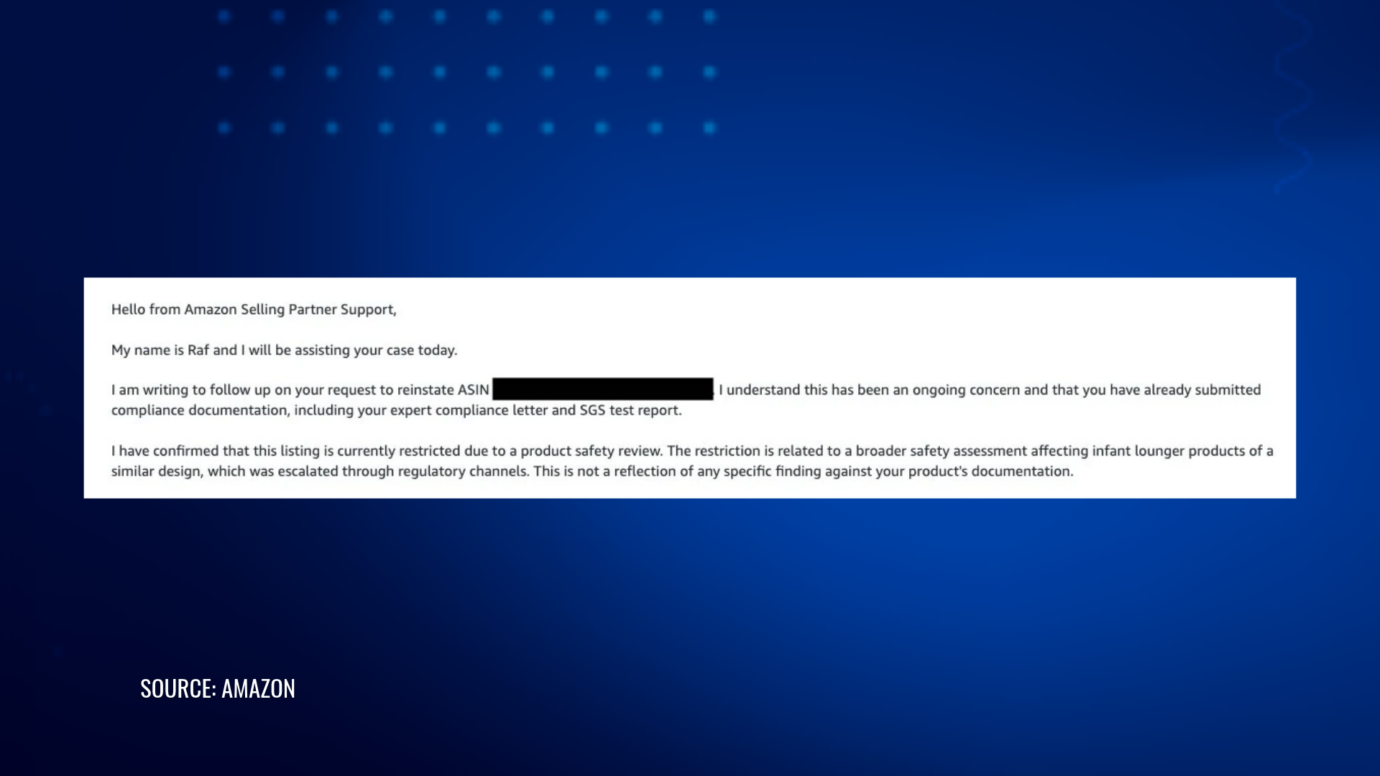
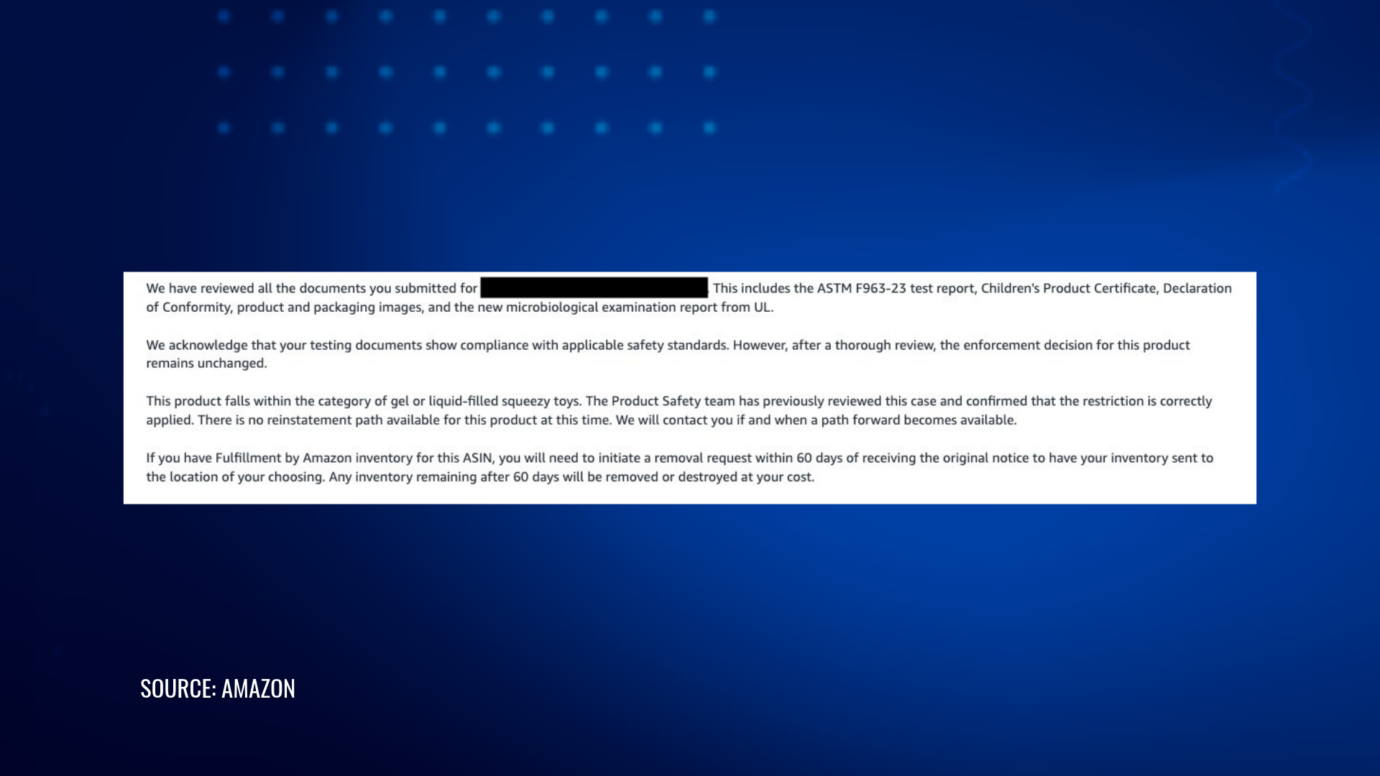
In some cases, Amazon has even acknowledged that the documents show compliance with every applicable standard. The block remains because the restriction is no longer about the individual product. It applies to the entire product type.
We have recently handled several of these matters for sellers of infant loungers, baby support cushions, and children’s toys, and the pattern is consistent enough that it is worth explaining in detail.
This article covers why Amazon is issuing category-level restrictions, how its new Direct Validation (TIC certification) process works, and what sellers can realistically do while a category is on hold.
Why Is Amazon Blocking Products That Pass Lab Testing?
Amazon has always had stricter rules for children’s products and other higher-risk categories than for most products. What’s changed is how quickly it now moves from reviewing individual listings to restricting a whole product type.
Category-Level Restrictions vs. Listing-Level Enforcement
Traditionally, a compliance block was tied to a specific ASIN. If the seller provided valid documentation, such as a Children’s Product Certificate (CPC) and supporting third-party test reports, the listing could usually be reinstated.
A category-level restriction works differently. Amazon identifies a design, composition, or product type that safety regulators have flagged as risky, then blocks every listing that fits that description. Individual compliance documents may not change the outcome, because the decision is based on the product type rather than the seller’s paperwork.
What Is Driving These Restrictions
Several factors appear to be behind this shift:
- CPSC hazard findings and rulemaking. When the U.S. Consumer Product Safety Commission focuses on a specific product design, Amazon sometimes responds before a formal rule takes effect.
- Liability concerns. Products for infants carry serious injury risks, and Amazon appears to be choosing broad, preventive restrictions over case-by-case review.
- Concerns about document reliability. Approved labs describe Direct Validation as a way to stop altered or fabricated test reports, which suggests Amazon has become less willing to rely on seller-uploaded files.
Infant loungers are a clear example. The CPSC’s final Safety Standard for Infant Support Cushions, published in the Federal Register in November 2024 and effective May 5, 2025, expressly covers loungers, infant pillows, and certain nursing pillows and tummy time products. It sets requirements for surface firmness, a maximum incline of 10 degrees, sidewall angles, and warning labels.
That rule applies under U.S. federal law. Amazon’s own restrictions, however, can go further than what the regulation requires.
What Amazon Is Telling Affected Sellers
In the notices we have reviewed, Amazon’s message generally follows the same outline:
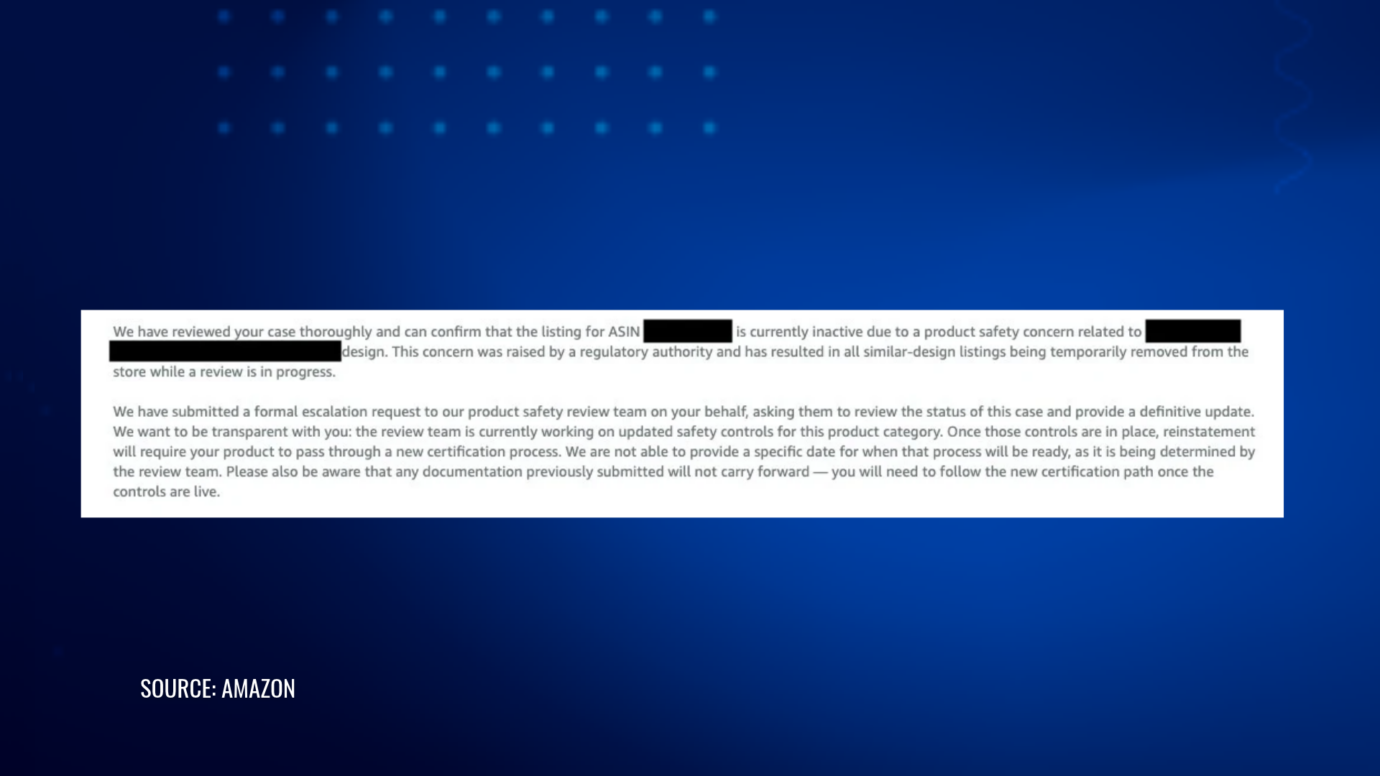
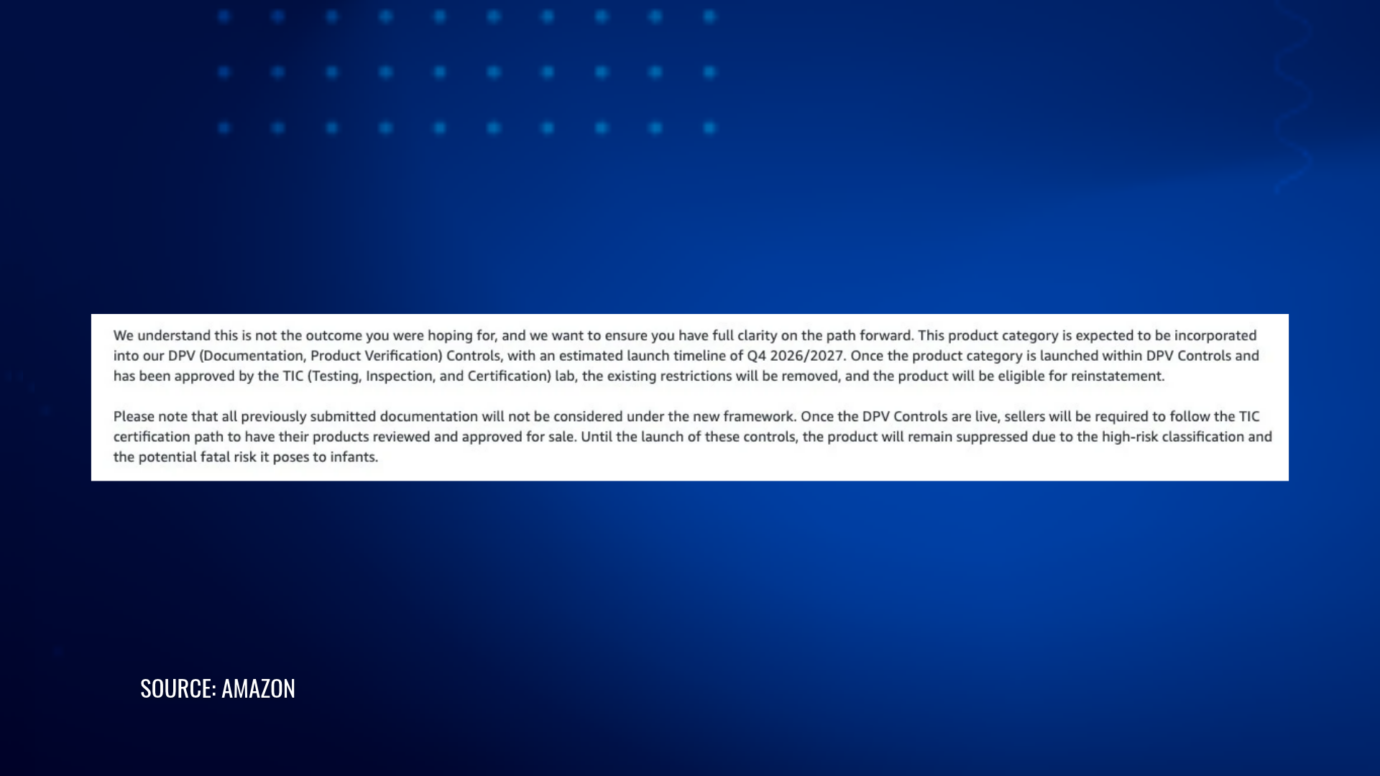
- Amazon is developing updated safety controls for the product category.
- Once those controls are live, reinstatement will require a new certification process.
- No date is given for when the process will be available.
- Documents the seller already submitted will not be carried over, even if they were previously accepted as valid.
The notices refer to new verification controls and direct sellers toward a TIC (Testing, Inspection, and Certification) certification path. For a seller with inventory sitting in FBA, an open-ended timeline is often the hardest part to manage.
What Is Amazon Direct Validation (TIC Certification)?
Direct Validation is Amazon’s program for verifying compliance through approved third-party testing organizations rather than through documents uploaded by sellers.
In categories that fall under the program, sellers generally can no longer upload test reports or certificates through Seller Central themselves. Instead, an Amazon-approved TIC provider reviews the product or its existing records and sends the results directly to Amazon.
The goal, from Amazon’s perspective, is to close off the possibility of forged or edited compliance documents.
How the Direct Validation Process Works
Based on guidance published by approved testing organizations, the process usually looks like this:
- Amazon flags the ASIN. A notification appears in Account Health identifying the products that require validation.
- The seller creates a test request. This is done in Seller Central, typically through the Manage Your Compliance page.
- The seller selects an approved TIC provider. Amazon maintains a list of authorized labs for each category and marketplace.
- The lab chooses a path. It either verifies existing test reports or requests samples for new testing.
- The lab submits results directly to Amazon. The seller does not upload the final documents.
- Amazon updates the listing status. A passing result usually allows the product to remain or return to sale.
Each step can involve delays, additional sample requests, or corrective action, so the timeline varies from case to case.
Which Product Categories Are Covered So Far
According to published updates from approved testing labs, Direct Validation in North America has rolled out in stages:
- Children’s toys (products for children 12 and under), starting around September 2025
- Clothing storage units, such as dressers and chests of drawers, with mandatory verification beginning around March 2026. Amazon’s own seller forum notes that these listings must now be tested or have their test reports verified by an approved lab
- Children’s jewelry, added around September 2026
Testing labs report that Amazon has also added other higher-risk product types, including lithium-ion batteries, laser products, e-mobility devices, and mobility aids such as walkers and rollators, though coverage varies by marketplace.
PROTECT YOUR BRAND. GROW YOUR BUSINESS.
Rated 4.9 by 100+ clients on Google Reviews

Top 20
Trademark lawyer in the US*
Top 3
Service providers for Amazon sellers*
96%
Success rate for TM registrations
8000+
Clients Worldwide
Amazon has not, as far as we can find, published a full public roadmap of future categories. Notices sent to sellers of infant loungers and cushions suggest baby products may be next, but the scope and timing remain unclear. Sellers should treat any category involving infants, young children, or other safety-sensitive products as a likely candidate.
Can Existing Test Reports Still Be Used?
This depends on the situation.
In categories where Direct Validation is already active, an approved lab can often validate existing test reports, provided they are recent, complete, and match the product as currently listed. For North American toys, for example, labs have reported that test reports generally need to be issued within the preceding 12 months.
In categories that are blocked while new controls are being built, Amazon’s notices indicate that previously submitted documents will not count. Sellers in this position should expect to go through the full TIC process once it opens, though a lab may still be able to use existing reports as part of its review.
What Can Sellers Do While a Category Is Blocked?
There is rarely a quick fix for a category-wide restriction. That said, sellers who act early often have more options once reinstatement becomes possible.
Get Clarity on Why the Listing Is Blocked
The first step is understanding which kind of block you are dealing with. A documentation problem and a category-level design restriction call for very different responses.
When contacting Seller Support, ask in writing whether the block is:
- A documentation or validation issue that can be fixed by submitting additional records, or
- A category-wide restriction based on product design or type.
Frontline responses are often templated. If the answers are unclear or contradictory, it is reasonable to ask that the case be escalated to the product safety or compliance team. Keep copies of every notice, case ID, and response, since they may matter later.
Confirm the Product Is Classified Correctly
Sometimes a product is swept into a restricted category because of how it is described, photographed, or keyworded, not because of what it actually is. A nursing pillow with no lounging function, for example, may be treated differently from an infant lounger.
If you believe your product was misclassified, our article on Amazon product classification and misclassification explains how these flags happen and how sellers approach appeals. Approved labs generally cannot override Amazon’s classification, so classification disputes usually need to go through Amazon directly.
Prepare for the New Certification Path Now
Even without a launch date, sellers can get ahead of the process:
- Make sure your CPC is current and accurately reflects the applicable rules.
- Confirm your test reports come from a CPSC-accepted lab and cover every relevant standard.
- Keep production samples that exactly match the listing, in case new testing is requested.
- Review Amazon’s list of approved TIC providers for related categories to understand the likely options.
Approved TIC providers include large international testing firms, but we do not endorse any specific provider. Costs, turnaround times, and requirements vary, and sellers should evaluate providers based on their own products and needs.
For help aligning your documentation with both CPSC requirements and Amazon’s policies, see our Amazon compliance and regulation services.
Protect Inventory and Cash Flow
A blocked category can leave inventory stranded in fulfillment centers with storage fees adding up. Options worth considering include:
- Multi-Channel Fulfillment (MCF). In some cases, FBA inventory can be used to fulfill orders from your own website. Keep in mind that Amazon’s MCF policies may also restrict certain products, so confirm eligibility first.
- Other sales channels. Walmart, Shopify-based stores, and other marketplaces have their own product safety policies, but they may not impose the same category-level restriction. U.S. legal requirements, including the infant support cushion rule, apply no matter where the product is sold.
- Removal orders. If reinstatement looks distant, removing inventory may cost less than paying long-term storage fees.
Consider Whether a Design Change Makes Sense
If a restriction targets a specific feature, such as a raised sidewall, a plush surface, or a particular incline, a redesigned product may fall outside the restricted product type.
This is a significant investment, and there is no guarantee Amazon will treat a redesigned product differently. Any new design should be built around the current CPSC standard first, and tested before launch, rather than designed simply to avoid Amazon’s filters.
How Can Sellers Spot Category Restrictions Before They Happen?
Category-level blocks rarely come out of nowhere. Regulatory activity often signals which product types are drawing attention.
A few sources are worth monitoring regularly:
- CPSC rulemaking and briefing packages. Staff briefing materials often explain which design features regulators consider hazardous.
- The Federal Register. Proposed rules and final rules appear here, often months before enforcement begins.
- Recall announcements. A series of recalls in your category is often an early warning sign.
- SaferProducts.gov. The CPSC’s public database of incident reports can show whether complaints are building up around a product type. Businesses can also register to receive notifications about reports involving their own products.
None of these sources will tell you exactly when Amazon will act. They can, however, give you time to adjust sourcing, testing, and inventory planning.
Can a Category-Wide Block Be Challenged?
This is one of the most common questions we hear, and the honest answer is that options are often limited.
Amazon’s Business Solutions Agreement gives it broad discretion over what can be sold on its marketplace. A restriction based on safety concerns, even one stricter than U.S. law requires, is generally within that discretion.
That does not mean every block is final. Misclassification, inconsistent enforcement, or procedural errors may support an appeal. In some situations, legal escalation or arbitration may be worth discussing with counsel, though outcomes vary widely and depend heavily on the facts.
If your account or listings have been affected, our Amazon account and listing reinstatement team can help you assess which path, if any, is realistic.
Key Takeaways
- Amazon is increasingly restricting entire product types, most often in the baby and children’s categories, sometimes regardless of a seller’s test results.
- Direct Validation shifts compliance verification to Amazon-approved TIC labs, which submit results directly to Amazon.
- In blocked categories, previously submitted documents may not carry over once new controls launch.
- Early preparation, accurate classification, and careful inventory planning can reduce the business impact.
- Challenging a category-wide block is possible in limited circumstances, but there is no guaranteed path.
Talk to Us About Your Blocked Amazon Listings
If your infant products, children’s toys, or other products have been blocked on Amazon, or you’ve received a notice about Direct Validation requirements, it helps to understand your position before the new certification path opens.
Our team works with Amazon sellers on product compliance, classification disputes, and listing reinstatement. Contact Cabilly & Co. to review your notices, documentation, and options.
Legal Disclaimer: The articles published on our platform are for informational purposes only and do not constitute legal advice in any form. They are not intended to be a substitute for professional legal counsel. For any legal matters, it is essential to consult with us or a qualified attorney who can provide advice tailored to your specific situation. Reliance on any information provided in these articles is solely at your own risk.
Frequently Asked Questions
What is Amazon Direct Validation?
Direct Validation is Amazon’s program for checking product safety compliance through approved third-party testing labs instead of documents sellers upload themselves. The seller requests validation in Seller Central, picks an Amazon-approved lab, and the lab sends the results straight to Amazon.
Which products require Amazon Direct Validation?
The program started with children’s toys and has grown to cover other product types, including clothing storage units such as dressers, children’s jewelry, and certain other higher-risk products. Amazon hasn’t published a full roadmap, so check Account Health and the Manage Your Compliance page in Seller Central for notices about your own products.
Why is Amazon blocking my product when my test reports pass?
Amazon may be restricting the whole product type, not reviewing your listing on its own. In a category-wide block, Amazon has decided the product type needs extra safety controls, so even valid test reports from an accredited lab may not get the listing reinstated until a new verification process opens.
Can I still upload my own test reports to Amazon?
Not in categories covered by Direct Validation. The approved lab reviews your documents or tests your product and submits the results to Amazon directly. Outside those categories, sellers can generally still upload compliance documents themselves.
Can an approved lab use my existing test reports?
Often, yes, if the reports are recent, complete, and match the product as currently listed. For North American toys and clothing storage units, labs report that test reports generally need to have been issued within the past 12 months. Otherwise, the lab will likely ask for samples and run new tests.
How long does Direct Validation take?
Amazon doesn’t publish a set timeframe. The timing depends on the lab, whether new testing is needed, and whether the product needs corrective action, so start the process as soon as you get a notice.
What can I do while my product category is blocked?
Confirm in writing whether the block is a documentation issue or a category-wide restriction, check that Amazon has classified your product correctly, and get your compliance documents and production samples ready for validation. To limit the cost of stranded inventory, look at other sales channels, Multi-Channel Fulfillment where your product is eligible, or removal orders.
Can I appeal a category-wide block on Amazon?
Sometimes, but options are limited. Amazon’s Business Solutions Agreement gives it broad discretion over what sells on its marketplace. A misclassified product, inconsistent enforcement, or procedural errors may support an appeal, but no path guarantees reinstatement.
Read the latest from Cabilly & Co.
 Oct 26, 2026
Amazon Brand Registry – Discover for Free if You’re Eligible
Increase Your Chance of Getting a
Trademark to 96%


STAY UPDATED
Subscribe to Our Newsletter
Sign up to receive valuable information on E-Commerce and intellectual property
Have a legal question?