
Book a FREE 15-minute consultation with an expert – Book Now

How to Legally Own a Color for Your Brand (Color Trademark Guide)
Many business owners don’t realize that a single color, not a logo, not a word, can function as a trademark. Under U.S. law, a specific shade can serve as a powerful source identifier when consumers have come to associate that color with one company alone.
This article explains what color trademarks are, how they work, what it takes to obtain one, and whether pursuing one makes sense for your business.
What Is a Color Trademark?
A color trademark is a non-conventional trademark in which a specific shade, not a logo, not a word, just a color, serves as an identifier of the commercial origin of a product or service. When consumers see that color, they think of one brand and one brand only.
This is a relatively modern development in trademark law. For most of the 20th century, U.S. courts refused to recognize a single color as protectable intellectual property (IP). That changed in 1985 when Owens-Corning successfully trademarked pink for its fiberglass insulation, becoming the first company to survive a federal appellate challenge on a single-color mark. A decade later, the U.S. Supreme Court settled the matter definitively.
The Case That Changed Everything: Qualitex Co. v. Jacobson Products (1995)
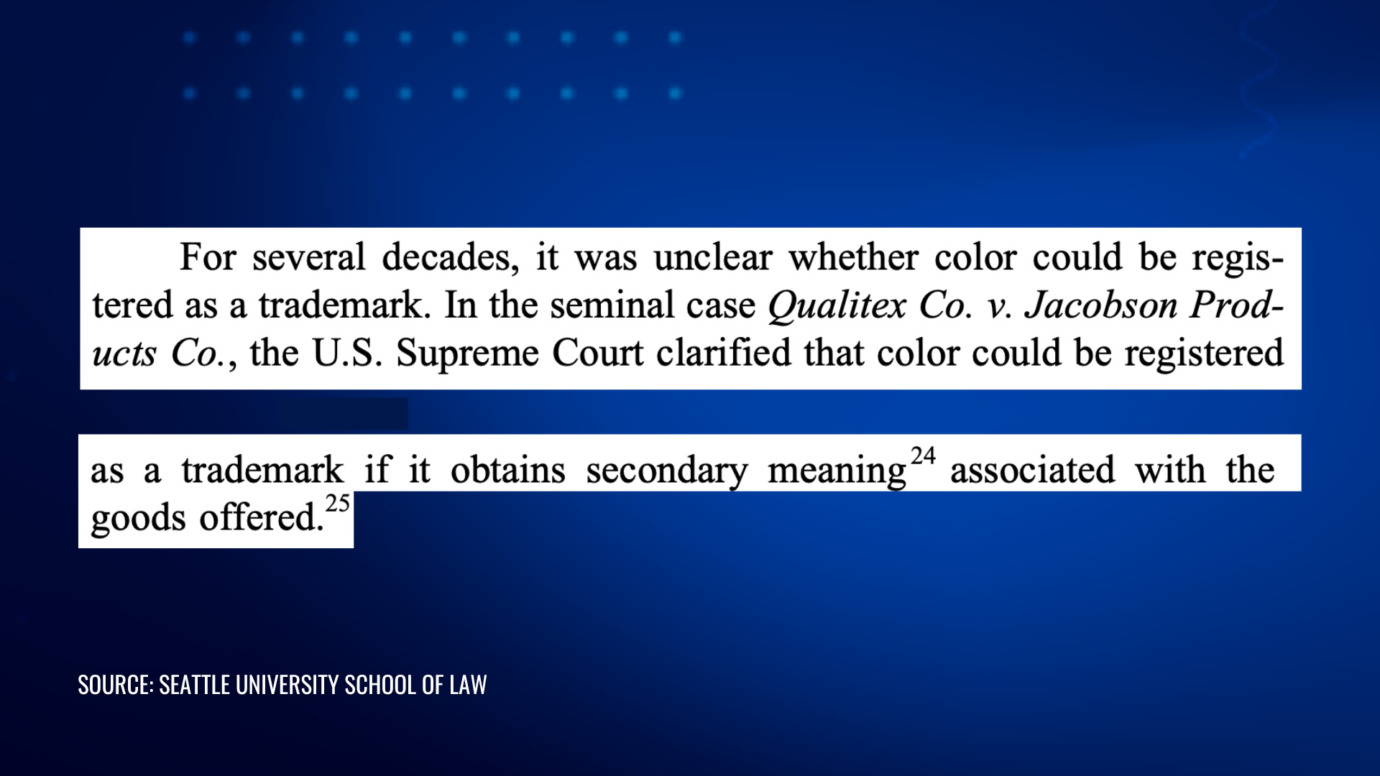
The Supreme Court held that there is no rule absolutely barring the use of color alone as a trademark under the Lanham Act, so long as two conditions are met: the color has acquired secondary meaning, and it is not functional. Qualitex had been using a distinctive green-gold color on its dry-cleaning press pads since the 1950s. When a competitor copied it, Qualitex sued and won. That two-part test remains the governing standard today.
Famous Color Trademarks: Brands That Own Their Shade

You interact with trademarked colors every day, often without realizing it.
Tiffany Blue (Pantone 1837) – Tiffany Blue has been used since 1845 and trademarked in 1998. This robin’s egg blue instantly signals luxury and special occasions to consumers worldwide. The Pantone number 1837 was chosen to commemorate the year the company was founded. No other jeweler can use it.
T-Mobile Magenta – T-Mobile’s magenta has been successfully defended in multiple federal court cases, including a notable victory against AT&T. In 2014, a judge ruled that AT&T subsidiary Aio Wireless couldn’t use magenta because it would confuse T-Mobile customers. The company has sent cease-and-desist letters to businesses in entirely different industries — from tech blogs to insurance startups, for using similar pink-magenta shades.
Christian Louboutin Red Soles – Louboutin’s red lacquered outsoles received such recognition that he registered them with the United States Patent and Trademark Office (USPTO) in 2008. When Yves Saint Laurent began selling shoes with red outsoles, Louboutin sued and won, with an important limitation: the trademark applies only when the red outsole contrasts with a non-red upper. A shoe that is entirely red, including the sole, does not infringe.
UPS Brown (Pullman Brown) – UPS trademarked their Pullman Brown color in 1998, though it has been used since 1916. Limiting the trademark specifically to delivery vehicles and uniforms made their case stronger and more defensible, a lesson in the value of targeted filings.
Other notable examples: Home Depot Orange, Fiskars Orange for scissors, 3M Canary Yellow for Post-it notes, and Owens-Corning Pink, the original, from 1985.
Legal Requirements for a Color Trademark: What You Need to Prove
Color trademarks are among the hardest intellectual property rights to obtain. Applicants must clear two high bars simultaneously.
Secondary Meaning: Proving Consumers Associate the Color with Your Brand
Secondary meaning is the core requirement. Almost all color trademark applications proceed under Section 2(f) of the Lanham Act, which requires proof of acquired distinctiveness, meaning consumers have come to associate the color specifically with your brand as its source, rather than seeing it as merely decorative or generic.
The evidentiary burden under Section 2(f) is significant. The USPTO requires evidence of substantially exclusive and continuous use of the color in commerce over an extended period, “substantially exclusive” is the agency’s own standard, meaning isolated third-party uses may not defeat your claim, but widespread use of the same color by others in your industry almost certainly will. Supporting documentation typically includes advertising expenditure records, sales data, media coverage, and a clear record of how consistently the color has been applied across your branding. The longer and more exclusive the use, the stronger the case.
Non-Functionality: Why Some Colors Can Never Be Trademarked
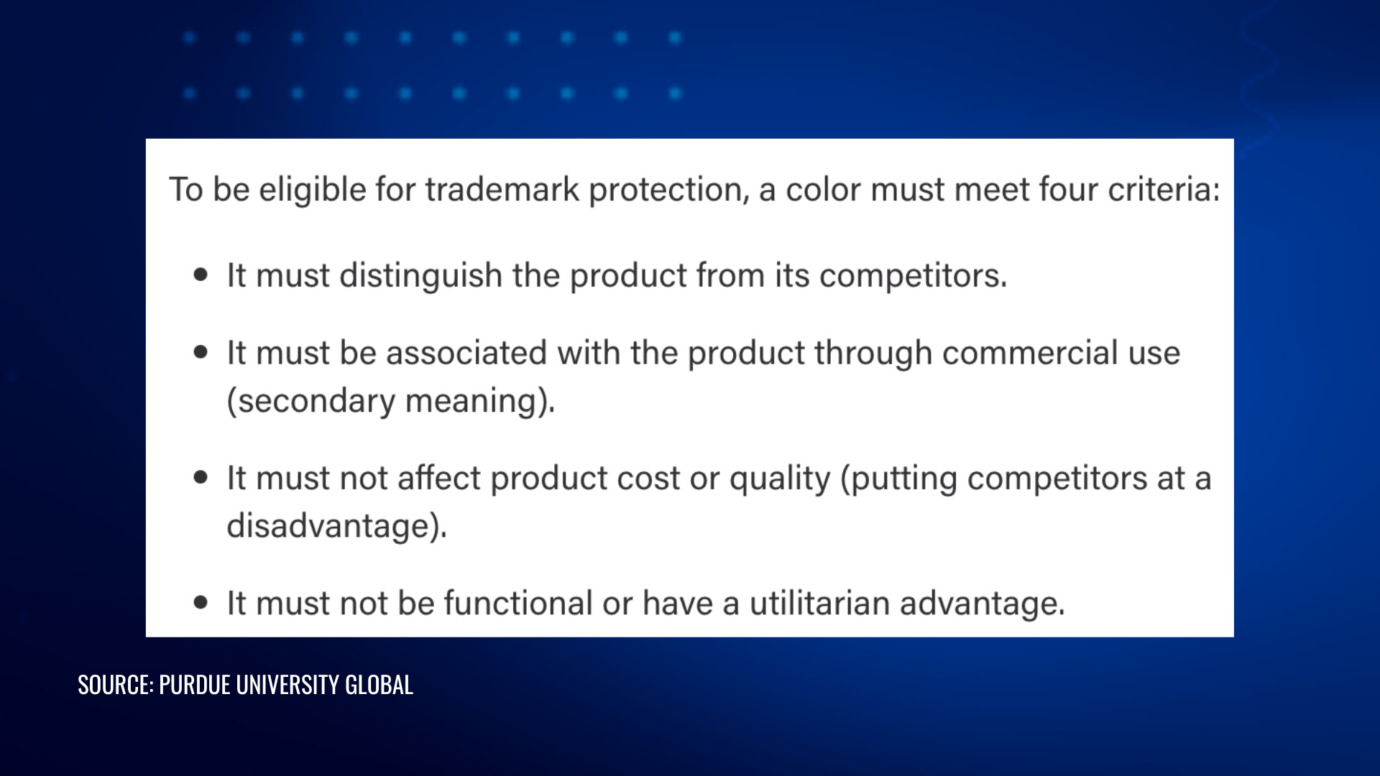
A color that serves a utilitarian purpose cannot be trademarked. Courts ask: Does granting exclusive rights to this color give one company a practical competitive advantage unrelated to brand identity? If yes, the color is functional and therefore ineligible. Examples:
- Orange for safety equipment – functionally required for high visibility
- Yellow for heavy construction machinery – signaling caution and visibility in hazardous environments
- Blue for water filtration products – practically associated with cleanliness and the product’s function
A color really has to be quite arbitrary to be trademarked: it cannot be essential to the production of the product or serve any utilitarian purpose.
How to Trademark a Color: The Step-by-Step Application Process
If you want to trademark a color, the process is more demanding than a standard logo or word mark application, but it’s entirely achievable with the right preparation. Here’s what it involves:
- Run a clearance search first – before you file, check whether another brand has already trademarked a similar color in your industry. If they have, you may be blocked from registering or even face an infringement claim.
- Specify the exact color – a vague description like “blue” will get you rejected. To trademark a color, you need a precise Pantone or equivalent color code. This is non-negotiable.
- Build your Section 2(f) evidence package – advertising spend records, sales data, and documentation of long-term, substantially exclusive use. This is where most applications win or lose.
- Submit a proper specimen – a JPG of the color as it actually appears in commerce. Critically, the specimen must show the color functioning as a source identifier – something that signals to consumers where the product comes from – not merely appearing as decoration or background. A color on packaging that consumers recognize as yours qualifies; a color used purely for aesthetics likely does not.
- Respond to office actions – the USPTO examiner may raise objections. Your attorney will need to respond with legal arguments and additional evidence.
- Clear the opposition window – once published, third parties have 30 days to challenge your application.
Because of the evidentiary demands unique to color marks, the review process typically runs 12 to 14 months – somewhat longer than a standard trademark application. Having thorough documentation and experienced legal counsel in place from the start significantly reduces the risk of delays or rejection.
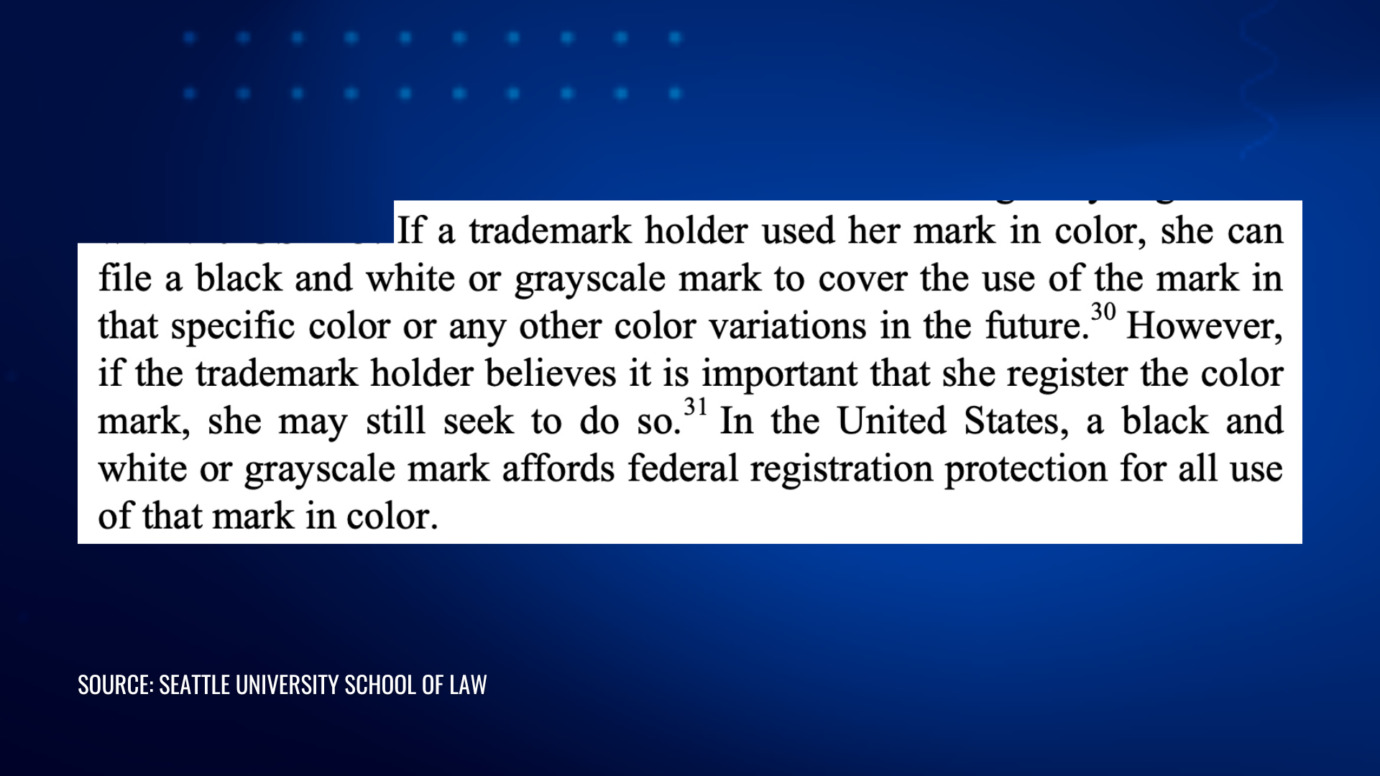
One rule that catches many applicants off guard: once your color mark is submitted, you cannot change the color or materially alter the filing. Getting it right the first time is legally necessary.
How to Keep and Enforce Your Color Trademark After Registration
Registration is not a one-time event. The USPTO requires ongoing maintenance filings to prove you’re still using the mark, and missing a deadline will cancel the registration outright. Between years 5 and 6, you must file a Declaration of Continued Use. Between years 9 and 10, file both a Declaration of Continued Use and a Renewal Application. Every 10 years after that, file the same combined declaration and renewal.
On enforcement, the strength of your claim depends heavily on the quality of your exclusivity evidence. The more documented and consistent your use of the color has been, the harder it is for an infringer to argue that the color is not distinctly yours. One area where color trademark holders often find effective recourse is platform enforcement. On Amazon, for example, a registered color trademark can support brand protection actions and listing disputes even in situations where broader legal enforcement would be more complex and time-consuming.
The Cadbury Lesson: Why Vague Filings Can Cost You Everything
Cadbury used purple on their chocolate packaging for over a century. Yet in a UK proceeding, an earlier registration was invalidated not because of the color itself, but because the description of it was too imprecise; the filing described the color as “predominant” on packaging rather than specifying the exact shade and how it was applied. While this is a UK decision, the core lesson applies universally: your color description must be specific. A precise Pantone code, a clearly defined scope of use, and well-bounded product categories are not optional; they’re what make the registration defensible.
Is Trademarking a Color Right for Your Business?
Strong candidates for a color trademark:
- Brands that have used a distinctive, non-functional color consistently and substantially exclusively for several years
- Brands where color is central to customer recognition
- Brands with documented advertising investment and a clear record of exclusive use
Proceed with caution if:
- Your color is common in your industry and used by many competitors
- You have only recently begun using the color
- The color serves any utilitarian function related to your product
If you’re still in the earlier stages of building your brand and haven’t yet filed a trademark at all, start with our guide on how to choose a brand name that will be approved as a trademark and our full trademark registration guide for e-commerce sellers.
Is Your Brand Color Eligible for Trademark Protection?
A color trademark, when successfully obtained, is one of the most durable forms of competitive protection available. It cannot be easily copied and can be enforced across an entire industry, including on e-commerce platforms where brand protection tools are increasingly powerful.
If you believe your brand color may qualify, the first step is a legal assessment of whether the criteria can be met. Contact us to speak with a trademark attorney about whether your color is protectable.
PROTECT YOUR BRAND. GROW YOUR BUSINESS.
Rated 4.9 by 80+ clients on Google Reviews

Top 20
Trademark lawyer in the US*
Top 3
Service providers for Amazon sellers*
96%
Success rate for TM registrations
8000+
Clients Worldwide
Legal Disclaimer: The articles published on our platform are for informational purposes only and do not constitute legal advice in any form. They are not intended to be a substitute for professional legal counsel. For any legal matters, it is essential to consult with us or a qualified attorney who can provide advice tailored to your specific situation. Reliance on any information provided in these articles is solely at your own risk.
Read the latest from Cabilly & Co.
 Oct 12, 2026
Amazon Brand Registry – Discover for Free if You’re Eligible
Increase Your Chance of Getting a
Trademark to 96%


STAY UPDATED
Subscribe to Our Newsletter
Sign up to receive valuable information on E-Commerce and intellectual property
Have a legal question?