Book a FREE 15-minute consultation with an expert – Book Now

CPSC Certificate eFiling Starts July 8, 2026: What Importers and Sellers Need to Know

If you import regulated consumer products into the United States, the way you submit your compliance paperwork is about to change. Beginning July 8, 2026, the U.S. Consumer Product Safety Commission (CPSC) will require importers to electronically file Certificate of Compliance data at the time of entry for regulated consumer products.
This is a filing and process change, not a change to which products need certification. The products that required a Children’s Product Certificate or a General Certificate of Conformity before will still require one. What is new is that the underlying data must now be transmitted electronically when your shipment enters the country.
Our team regularly advises e-commerce sellers and importers on CPSC, UL, and FCC compliance matters, including test report reviews and import documentation, so we have seen firsthand how small paperwork gaps can turn into costly border holds. This guide breaks down the new requirement, who it affects, and the practical steps to prepare before the deadline.
The information here is general and reflects U.S. requirements as currently announced. It is not legal advice for your specific situation.
What Is Changing on July 8, 2026
Under the new CPSC eFiling requirement, importers of regulated consumer products must submit Certificate of Compliance data electronically at the time of entry into the United States.
A few points are worth emphasizing:
- This changes how you submit certificate data, not which products require certification.
- Shipments already in transit or sitting at the border when the rule takes effect will still need to meet the new requirements.
- The goal, according to CPSC, is to modernize how certificate data moves through the import process and to help target non-compliant goods more efficiently.
You can review the official program details on the CPSC’s eFiling page, which serves as the agency’s central hub for importers, brokers, and software developers.
Key Deadlines
There are two phased deadlines depending on how your goods enter the country:
- July 8, 2026 for regulated consumer products not imported through Foreign Trade Zones (FTZ).
- January 8, 2027 for regulated consumer products imported through Foreign Trade Zones.
If your supply chain runs through an FTZ, you have additional lead time, but it is still worth preparing early rather than treating the later date as a reason to wait.
Does This Apply to Your Products?
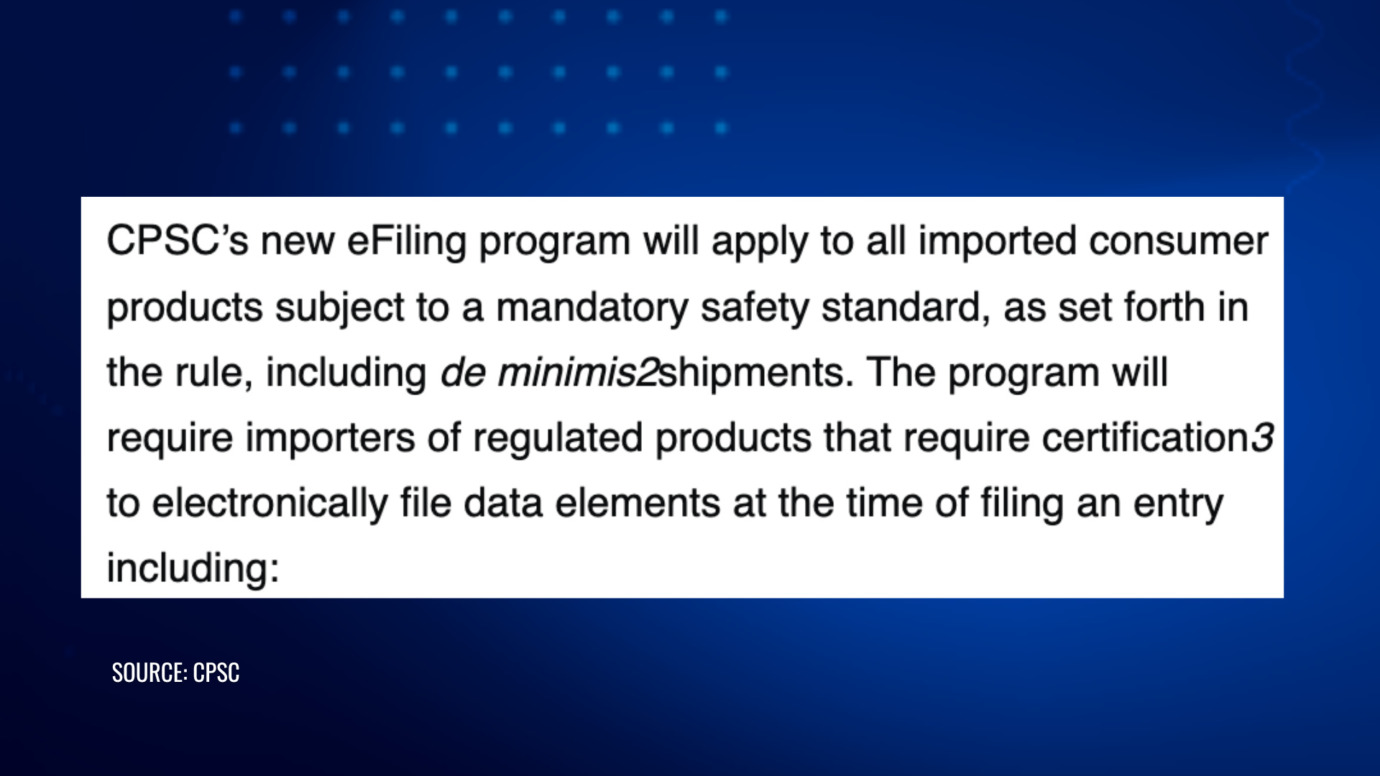
The requirement applies to finished consumer products that are subject to CPSC rules and that you are importing for consumption or warehousing. This is especially relevant for sellers who ship regulated imported products to fulfillment centers in the United States, including Amazon FBA inventory.
Common categories of regulated products include items such as children’s products, toys, and various household goods, but the specific list of regulated products is broad and rule-dependent. Rather than guessing, you can confirm whether your products require certification by using two CPSC tools:
- The eFiling program page, which explains requirements based on your role.
- The Regulatory Robot, an interactive tool that helps identify the rules that may apply to your product.
- The CPSC’s eFiling HTS Flagging List (XLSX download), a spreadsheet listing every product code covered by the eFiling rule.
Every imported product has an HTS code (the number used to classify it at customs). This spreadsheet lists all the codes the rule applies to. If you know your products’ codes, you can look them up on the list to see right away whether they are covered.
Determining whether a particular product is regulated can be more nuanced than it first appears, particularly for multi-component or borderline items. If you are unsure how your catalog maps to CPSC rules, this is an area where reviewing classification carefully ahead of time pays off. Our e-commerce compliance and regulation team works with sellers on exactly these import and certification questions.
What You Need to File: The Seven Data Elements
When importing regulated products, you will need to electronically file the following seven data elements at entry:
- Product ID
- Citation codes (the specific regulations the product is certified against)
- Date of manufacture
- Place of manufacture
- Product test date
- Testing laboratory
- Point of contact
Most of this information should already exist in your certificates and test reports. The practical task is gathering it into a consistent, accessible format so it can be transmitted at the moment of entry rather than scrambled together when a shipment is already at the border.
If your test reports or certificates are incomplete, outdated, or inconsistent across product lines, now is a sensible time to audit them.
How to Submit: Two Filing Options
CPSC’s framework gives importers two main ways to get this data into the system. The right choice depends on your setup, so it is worth confirming with your logistics provider or customs broker which method fits your operations.
Option A: Broker Transmits Directly
Your customs broker transmits the certificate data directly to U.S. Customs and Border Protection (CBP) through the Automated Commercial Environment (ACE) system as part of the entry filing.
This option keeps the data flow within your existing broker relationship, which many importers find simpler.
Option B: File Through the CPSC Product Registry
You enter the data in the CPSC’s Product Registry before entry. The registry then generates certificate identifiers, which you provide to your customs broker so they can reference them at entry.
This option can be useful if you prefer to manage your certificate data centrally, especially across many SKUs or multiple brokers.
Neither option removes the need for accurate underlying certificates. Both simply determine the path your data takes to reach the government.
What Happens If You Do Not Comply
Shipments that do not meet the new electronic filing requirements can expect:
- Border delays and holds, which slow down the time it takes for your products to reach customers or fulfillment centers.
- More examinations, since incomplete or missing data is more likely to flag a shipment for review.
By contrast, CPSC indicates that compliant importers should generally benefit from fewer examinations and faster customs clearance. For sellers operating on tight inventory cycles, particularly those replenishing fulfillment center stock, even a short hold can translate into lost sales or stockouts.
Persistent compliance failures can carry broader consequences as well. Importing non-compliant or improperly certified consumer products can expose a business to enforcement action under U.S. consumer product safety law, and in some cases to disputes or claims. If a compliance issue escalates into a legal matter, our team also handles e-commerce related lawsuits and disputes for online sellers.
Steps to Take Now
You do not need to wait until the deadline approaches. A short checklist can put you in a strong position:
- Confirm whether your products are regulated. Use the eFiling page and the Regulatory Robot to check.
- Review the filing requirements well before July 8, 2026.
- Collect the seven data elements for each regulated product and confirm your certificates and test reports are current.
- Set up electronic filing with CBP through your customs broker, or prepare to file certificate data directly with the CPSC Product Registry.
- Test your eFiling process with your customs broker ahead of the deadline so any issues surface before live shipments are affected.
For case-specific questions about your products, your supply chain, or your certificates, consult your customs broker or qualified legal counsel. If you sell on Amazon, additional support is also available through Amazon’s customs and trade resources and its Service Provider Network, though importers should review any third-party service independently before relying on it.
Official Resources
For the most current and authoritative details, go directly to the source:
- Full program details and resources: the CPSC eFiling page
- Questions or training materials: [email protected]
Because requirements and dates can be updated by the agency, it is always wise to verify against the official CPSC materials before finalizing your compliance plan.
Get Ahead of the Deadline
The July 8, 2026, CPSC eFiling requirement is a manageable change if you start early, but it can become a serious bottleneck if it catches your shipments unprepared. Confirming which of your products are regulated, organizing your certificate data, and aligning with your customs broker now will help you avoid border holds later.
If you import regulated consumer products and want help reviewing your CPSC compliance, test reports, or import documentation, our team is here to assist. Contact us to discuss your situation and prepare for the new requirements with confidence.
PROTECT YOUR BRAND. GROW YOUR BUSINESS.
Rated 4.9 by 80+ clients on Google Reviews

Top 20
Trademark lawyer in the US*
Top 3
Service providers for Amazon sellers*
96%
Success rate for TM registrations
8000+
Clients Worldwide
Legal Disclaimer: The articles published on our platform are for informational purposes only and do not constitute legal advice in any form. They are not intended to be a substitute for professional legal counsel. For any legal matters, it is essential to consult with us or a qualified attorney who can provide advice tailored to your specific situation. Reliance on any information provided in these articles is solely at your own risk.
Read the latest from Cabilly & Co.
 Oct 19, 2026

Amazon Brand Registry – Discover for Free if You’re Eligible
Increase Your Chance of Getting a
Trademark to 96%


STAY UPDATED
Subscribe to Our Newsletter
Sign up to receive valuable information on E-Commerce and intellectual property
Have a legal question?