Book a FREE 15-minute consultation with an expert – Book Now

Meta's Muse Image AI Can Use Your Instagram Photos: What Creators and Brands Need to Know
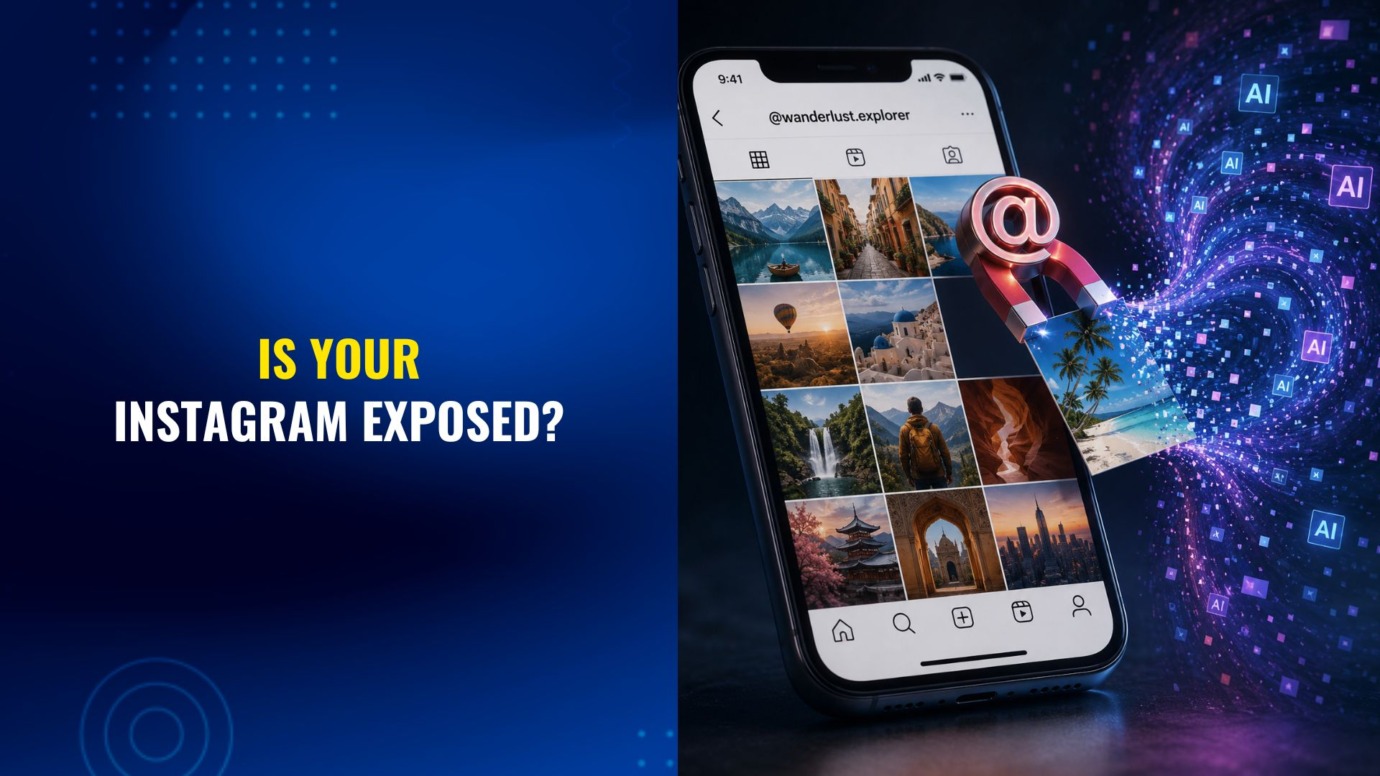
Update, July 15, 2026: Three days after launch, Meta pulled the @-mention feature from Instagram. The change came after backlash from users, privacy advocates, and reports of talent agencies raising consent and copyright concerns. Reporters had also shown they could generate images of people they’d never followed or interacted with, with no consent involved.
Here’s the current state as we understand it:
- On Instagram, the @-mention pathway is off for now. You can no longer tag a public account inside Muse Image to pull their photos into a new image through Instagram.
- It’s not gone everywhere. The same capability still appears to work through WhatsApp and the Meta AI app. If your account is public, that exposure hasn’t disappeared, it’s just moved to a different door.
- Other Instagram features from the same rollout, like Muse-generated filters and effects, are still running. This pullback was specific to the @-mention mechanic, not the whole feature set.
- Meta hasn’t said this is permanent. Their own statement framed it as giving people more control, not scrapping the idea. Treat this as paused, not resolved, and expect it could come back in a modified form.
What this means practically: if you turned off the sharing and reuse toggle already, keep it off. If you haven’t, it’s still worth doing, since the WhatsApp and Meta AI app pathway means the underlying exposure is still live. Everything else in this article, the legal landscape, the EU angle, and the practical steps below, still holds. We’ll keep watching this and update again if Meta reinstates or reworks the feature.
Original article:
If your income depends on Instagram, a new Meta feature just changed the terms of that relationship, and most creators found out about it after the fact.
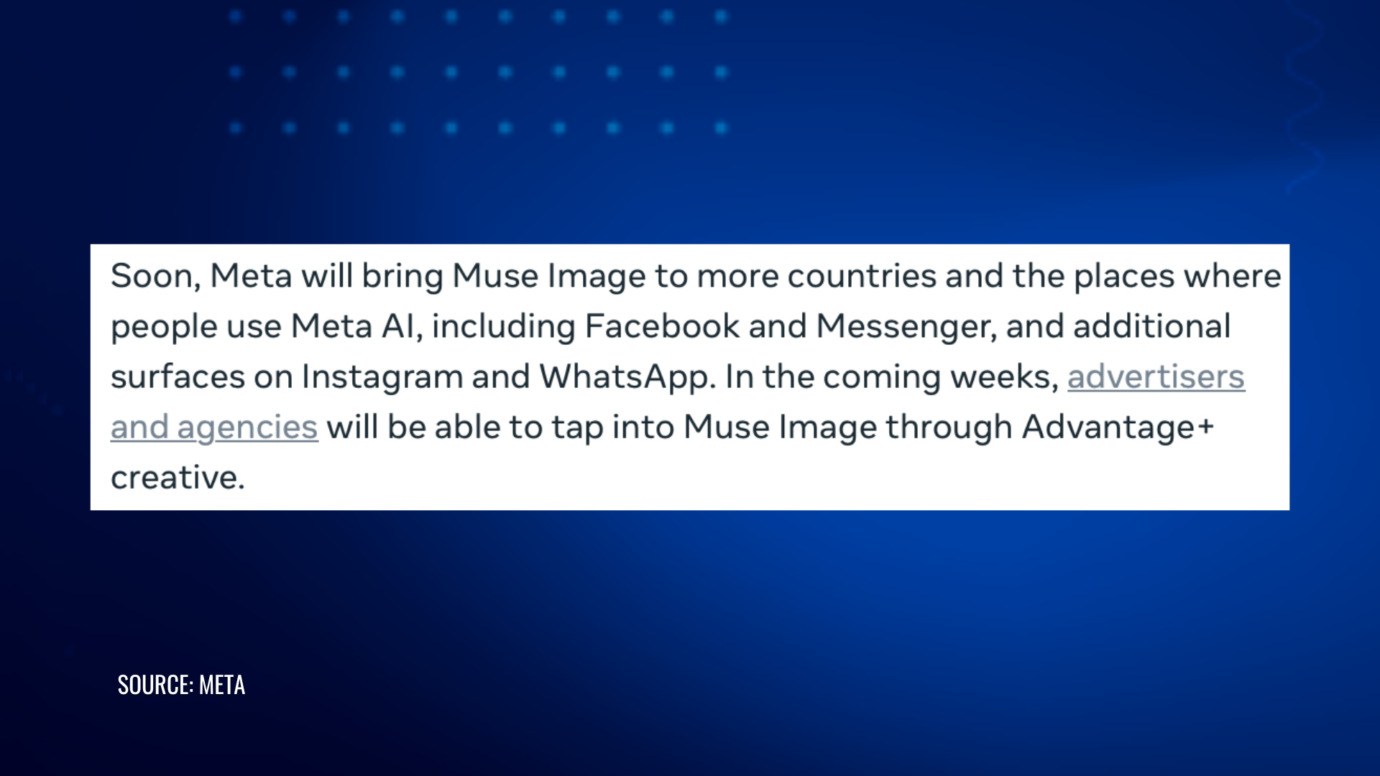
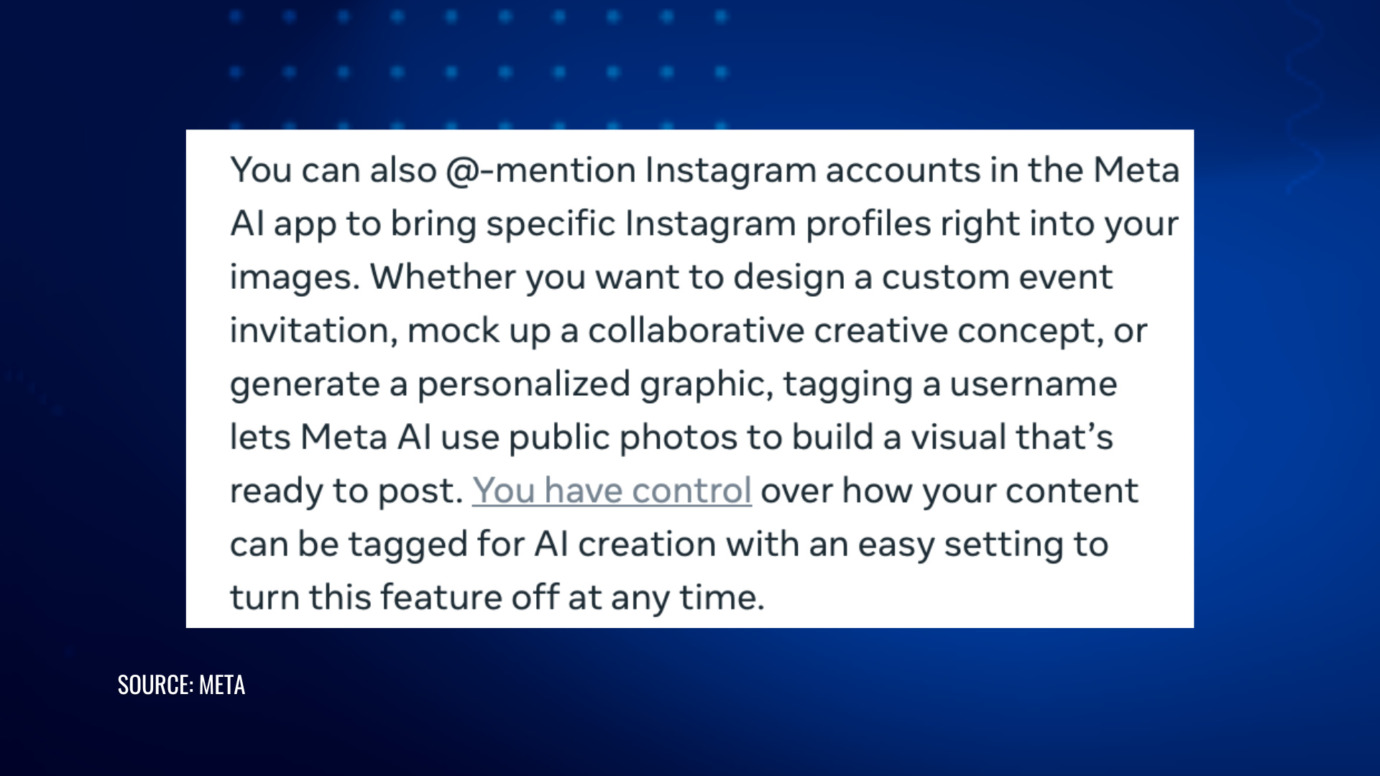
On July 7, 2026, Meta rolled out Muse Image, its first in-house AI image generator, built by Meta Superintelligence Labs and available through the Meta AI app, Instagram Stories, and WhatsApp. The feature was internally code-named Mango before launch. Alongside the usual text-to-image capabilities, one function has drawn immediate attention from creators, agencies, and privacy advocates alike: anyone can @-mention a public Instagram account inside a Muse Image prompt and pull that account’s photos into an AI-generated image.
We’ve already had creator and brand clients this week ask us how to get their content out of Meta’s AI pipeline, which is part of why we’re laying out what’s actually going on and what your options are.
What Muse Image Actually Does
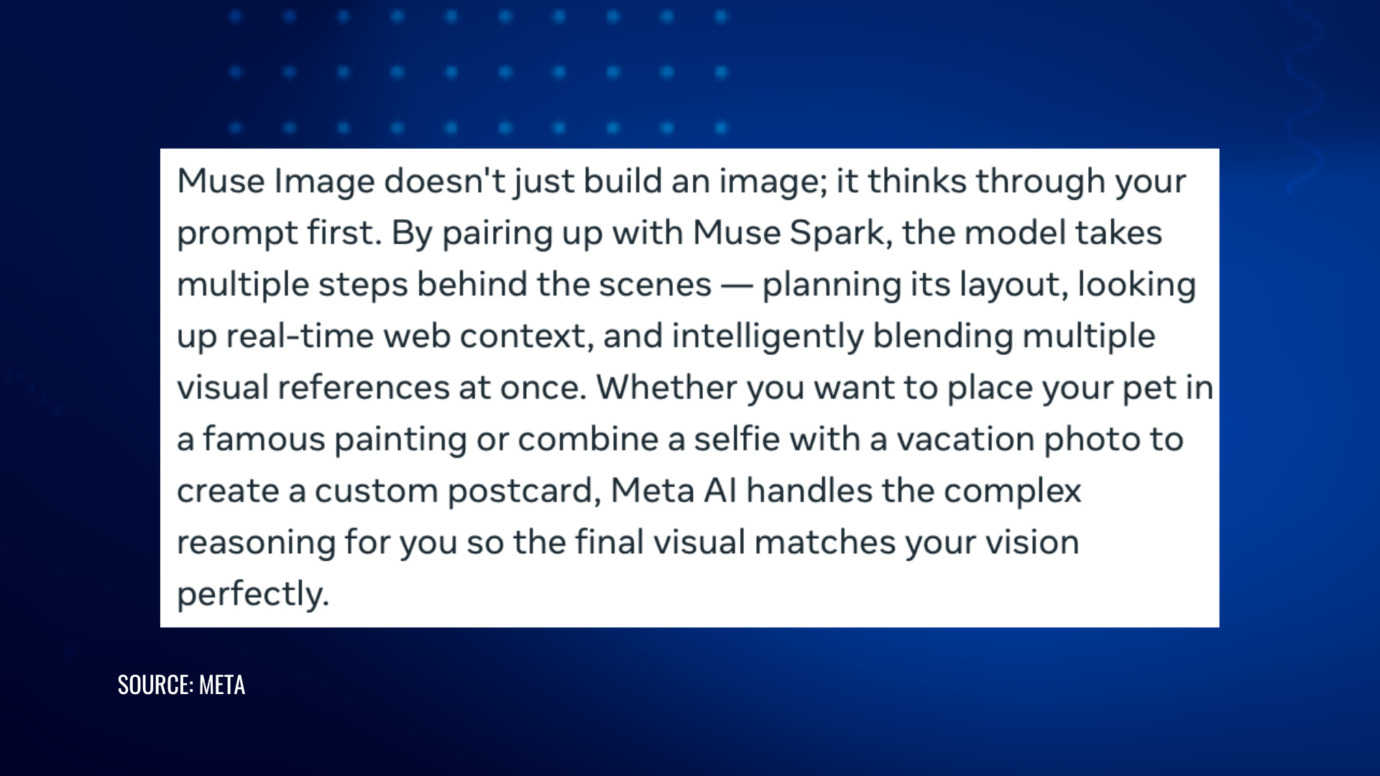
Meta describes Muse Image as a tool “rooted in your world”: you describe what you want in plain language, and the model builds the image, drawing on real-time web context and blending multiple visual references at once. Meta positions the feature around everyday, arguably harmless use cases: designing a custom event invitation, mocking up a creative concept, or building a personalized graphic to post.
The mechanism that makes this possible for other people’s photos is the @-mention. Muse Image is described as “rooted” in the user’s social circle, or anyone publicly on Instagram, and is able to add people into an image if they’re @-mentioned. The system pulls only from accounts that are set to public.
Who Is Affected
If your Instagram account is public, which for most creators and brand accounts it needs to be for discoverability, this setting is relevant to you. Meta added a setting that, by default, allows anyone to generate AI content using your images and videos if your account isn’t private.
Private accounts are not included in the feature. There is currently no way to see AI content that was generated using your photos, and you won’t be notified if someone uses your content this way.
Why This Matters for Creators and Businesses
For someone whose livelihood runs through Instagram, being pulled into Muse Image prompts raises a few distinct concerns:
- Loss of control over your likeness. Your face, your product photography, or your brand imagery can be recombined into new visuals without your involvement, and potentially without your knowledge.
- Brand and reputational risk. An AI-generated image built from your content could place your likeness or product in a context you’d never approve, from a competitor’s mockup to something outright embarrassing.
- Commercial confusion. If your photos are the visual basis for content that looks like it came from you, but didn’t, that can blur the line between what you actually posted and what an algorithm assembled.
- Unclear downstream use. Once an image is generated, nothing appears to stop it from being shared, reposted, or repurposed commercially by whoever created it.
It’s worth being precise about the legal terrain here, because it’s more unsettled than people often assume. Rights regarding the use of someone’s likeness, or “right of publicity,” vary significantly by U.S. state, and several states have no clear statutory right of publicity at all.
There is, as of this writing, no reported litigation specifically testing Muse Image’s @-mention feature, so how courts would treat an AI-generated composite built from public photos remains an open question rather than settled law. Businesses and creators outside the U.S. face a different, and in some ways more developed, set of rules, particularly in the EU.
The EU Angle
For creators with a European audience or EU-based operations, there’s an additional layer worth watching. Article 50 of the EU AI Act introduces transparency obligations for AI-generated content, including disclosure requirements for realistic synthetic images resembling real people, and those obligations are scheduled to become enforceable on August 2, 2026.
How that interacts with a feature like Muse Image, which is built by a U.S. company but reaches EU users through Instagram, is still being worked out by regulators and legal commentators. Treat this as a developing area to monitor, not a settled rule to rely on.
How to Check and Change Your Settings
Instagram has added a setting that controls whether your public posts and reels can be used as AI training or generation material. Based on current reporting, the general path is:
- Open Instagram and go to your profile.
- Tap the menu (three lines) in the top right.
- Look for a section covering sharing, content reuse, or AI features.
- Find the toggle covering whether others can use your content with Meta’s AI features, and turn it off for both posts and reels.
A few important caveats:
- Turning the setting off only affects future uses of your content. Anything already generated using your photos before you changed the setting will not be deleted.
- The toggle is still rolling out, so you may not see it in your app yet.
- If your account is private, this particular exposure doesn’t apply, though private accounts carry their own trade-offs for creators who rely on public discovery.
Because Meta’s interface is actively changing as the feature rolls out, we’d recommend checking your own settings menu directly rather than relying solely on a screenshot from an article, including this one.
What You Can Do Beyond the Toggle
Turning off the setting addresses future use, but it doesn’t undo anything that already exists, and it doesn’t give you a mechanism to find out if your content has already been used. A few practical steps worth considering:
Document your content. Keeping organized records of your original photos, post dates, and captions strengthens your position if you ever need to show that content is yours and predates an AI-generated copy.
Review your contracts. If you license your image or content to brands, sponsors, or platforms, it’s worth checking whether those agreements address AI-generated derivatives at all. Many older influencer and licensing agreements simply don’t contemplate this scenario.
Register your copyright where it matters. Copyright protection exists automatically once you create original content, but formal registration strengthens your ability to enforce that protection and pursue infringement claims, particularly for high-value photography or brand assets. Our copyright registration and consulting services walk through when registration is worth the effort.
Know your enforcement options if misuse occurs. If an AI-generated image built from your content is used in a way that damages your brand or crosses into clear misappropriation, there are enforcement paths worth exploring, from platform takedown requests to formal legal action. Our IP enforcement team handles these situations regularly, particularly for e-commerce brands and creators whose visual identity is central to their business.
Watch your account status. Disputes over AI-generated content sometimes spill into account-level issues, from flagged posts to suspensions tied to reported content. If that happens, our Instagram account and content reinstatement service is built specifically for creators and brands navigating exactly this kind of platform dispute.
The Bigger Picture
Muse Image is not an isolated event. It reflects a broader shift where major platforms are folding generative AI directly into everyday social tools rather than keeping it as a separate product. Meta has released several AI-powered apps and services over the past year, and further tools, including a video-generation counterpart, are reportedly in development. For creators and small e-commerce businesses whose entire revenue model runs through a public-facing social account, the practical reality is that these platform-level AI changes now arrive with real legal and commercial implications attached, often with limited advance notice and default settings that favor broad use over individual control.
That doesn’t mean panic is the right response. It does mean treating your account settings, your content records, and your contracts as things that need periodic review, not one-time setup.
Key Takeaways
- Muse Image lets users @-mention public Instagram accounts to pull those photos into AI-generated images.
- The setting allowing this is on by default for public accounts, and there is no notification when your content is used.
- Turning off the setting only prevents future use; existing AI-generated content isn’t affected.
- Likeness and right-of-publicity law varies by U.S. state and remains largely untested against this specific feature; EU transparency rules under the AI Act add another layer for European audiences.
- Documentation, updated contracts, and copyright registration are practical steps that strengthen your position regardless of how the legal questions eventually settle.
Where to Go From Here
If your business or content depends on a public Instagram presence, the combination of new AI tools and unsettled likeness law is worth getting ahead of, not reacting to after something goes wrong.
We help creators, influencers, and e-commerce brands review their exposure, tighten up contracts, register copyrights, and respond when content gets misused. If you want a second set of eyes on where you stand, contact our team.
PROTECT YOUR BRAND. GROW YOUR BUSINESS.
Rated 4.9 by 80+ clients on Google Reviews

Top 20
Trademark lawyer in the US*
Top 3
Service providers for Amazon sellers*
96%
Success rate for TM registrations
8000+
Clients Worldwide
Legal Disclaimer: The articles published on our platform are for informational purposes only and do not constitute legal advice in any form. They are not intended to be a substitute for professional legal counsel. For any legal matters, it is essential to consult with us or a qualified attorney who can provide advice tailored to your specific situation. Reliance on any information provided in these articles is solely at your own risk.
Frequently Asked Questions
Did Meta actually pull this feature, or is it still active?
As of July 15, 2026, the @-mention pathway on Instagram has been paused following user and industry backlash. It’s still available through WhatsApp and the Meta AI app, so public accounts aren’t fully in the clear. Meta hasn’t said whether the Instagram pause is permanent, so this is worth checking again in the coming weeks.
Does this affect private Instagram accounts?
No. Based on current reporting, the feature only ever drew from accounts set to public, and that hasn’t changed with the pause.
If I opt out now, does that remove images already made from my photos?
No. Opting out stops future use of your content but doesn’t affect anything already generated, and that’s true whether the feature is active or paused.
Is using someone's Instagram photos this way illegal?
It depends heavily on jurisdiction, the specific use, and facts that haven’t been tested in court yet. This remains an unsettled area of law, and the pause doesn’t change that, since the underlying legal questions apply regardless of whether Instagram’s version is active right now.
Should content creators go private to avoid this?
That’s still a business decision as much as a legal one, since a private account limits discoverability and growth. Worth weighing against how much this specific risk concerns you, and how comfortable you are with the WhatsApp/Meta AI app pathway still being live.
Read the latest from Cabilly & Co.
 Oct 12, 2026
Amazon Brand Registry – Discover for Free if You’re Eligible
Increase Your Chance of Getting a
Trademark to 96%


STAY UPDATED
Subscribe to Our Newsletter
Sign up to receive valuable information on E-Commerce and intellectual property
Have a legal question?