Book a FREE 15-minute consultation with an expert – Book Now

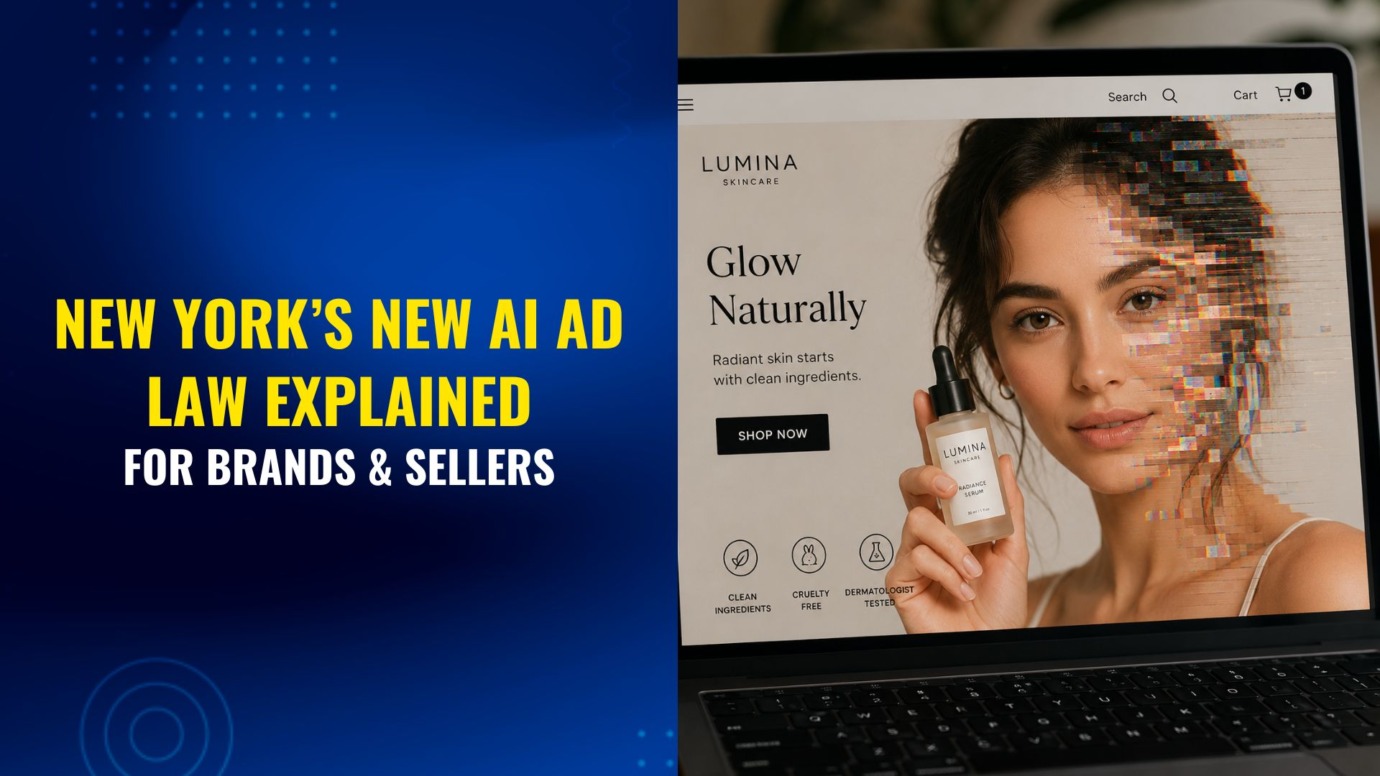
Starting June 9, 2026, if you run ads that feature AI-generated people and those ads are reasonably accessible to New York consumers, you need to clearly tell your audience those people aren’t real. It’s the first law like this in the US, and it doesn’t matter where your business is based.
Here’s what you actually need to know.
What’s Going On?
AI tools that generate realistic images and videos of people who don’t exist have gotten incredibly good and incredibly cheap. Brands are using them everywhere – lifestyle product photos, social media ads, video content. It saves money, it’s fast, and honestly, most consumers can’t tell the difference.
New York’s response: you can keep doing it, but you have to be honest about it.
The law calls these AI-generated people “synthetic performers.” If one appears in your ad and you know about it, you have to include a clear disclosure.
It’s also worth noting that this wasn’t the only AI-related law signed that day. Governor Hochul also signed S.8391, which requires consent from heirs or executors before using a deceased person’s name, image, or likeness – including AI-generated versions – for commercial purposes. Together, these laws signal that New York is taking AI transparency in advertising seriously on multiple fronts.

Here’s the Part Most Brands Get Wrong
The responsibility is on you – the advertiser – not on the platform. Amazon, Meta, Google, TikTok – none of them are liable if your ad breaks this rule. You are.
The law specifically places the obligation on the person or entity that “produces or creates” the advertisement with actual knowledge that a synthetic performer is included. That knowledge element matters. You’re not automatically liable for something you genuinely didn’t know about. But if you’re commissioning creative work and not asking whether AI-generated humans are being used, you’re putting yourself in a gray area that could be difficult to defend. The safer approach is to build the question into your process so you always know the answer.
What Triggers the Law and What Doesn’t
This isn’t about AI in general. It’s specifically about AI-generated humans in advertising.
Needs a disclosure: An AI-generated model wearing your product. A fake person demonstrating your product in a video. AI-generated “extras” or people in the background of your ad. An AI influencer promoting your brand.
Doesn’t need a disclosure: Removing or swapping a product photo background with AI. AI-assisted color correction, lighting fixes, or image cleanup. AI-generated scenery or environments with no people in them. Audio-only ads. Using AI just to translate a real person’s speech into another language.
The rule of thumb is simple: if there’s a fake human in your ad, disclose it. If you’re just using AI to make your product photos look better without adding people, you’re fine.
Why This Is Directly Relevant to You
If you sell on Amazon or run e-commerce ads targeting US audiences, some portion of your audience is almost certainly in New York. The law applies to advertising that reaches New York consumers, and while there’s no formal guidance yet on exactly what that means, any brand running ads nationally or without geographic restrictions should be paying attention.
Now think about how many sellers are already doing this without even thinking twice. You use Amazon’s AI image generation tools to create a lifestyle photo with a person holding your product. Your listing designer uses Midjourney to mock up a model wearing your clothing. Your agency creates a sponsored brand video with AI-generated people. Your social media manager posts an ad featuring an AI-generated face.
Every one of those scenarios could require a disclosure if the ad is accessible to New York consumers.
This is especially tricky because some of these AI tools are baked directly into the platforms and services you already use. It’s easy to generate a synthetic human in your ad without a formal decision to do so. That doesn’t exempt you.
The Penalties – and the Real Risk
The fines start at $1,000 for your first violation and $5,000 for each one after that. The dollar amounts alone may not seem alarming, but the real risk goes beyond the fines themselves.
There’s no enforcement history yet. No one knows exactly what “conspicuous” disclosure looks like because the law doesn’t define it. The first company that gets hit will spend significantly more than $5,000 fighting the case, and they’ll become the cautionary tale everyone in the industry references for years. That’s not a position you want to be in.
There’s an additional wrinkle. This law doesn’t let consumers sue you directly, but a violation could be used as ammunition in a separate deceptive advertising claim under New York’s broader consumer protection rules – and those do allow private lawsuits with real damages.
The Federal Uncertainty
One more thing to be aware of. On the same day Governor Hochul signed this law, the White House issued an executive order calling for a single national AI framework and directing the DOJ to challenge state AI laws that conflict with federal goals.
Will New York’s law survive that challenge? That question is genuinely unsettled at this point. Some legal commentators believe consumer disclosure laws like this one may be different enough from the kind of regulation the executive order targets. Others see it as potentially vulnerable. This is an evolving area of law and none of this should be read as a definitive legal prediction.
The practical takeaway: don’t use the federal uncertainty as an excuse to ignore this. If the law gets overturned, you’ve wasted nothing by being prepared. If it stands and you didn’t prepare, you’ve got exposure.
What to Do Before June 9
Go through your existing ads. Look at your Amazon listings, A+ Content, sponsored brand ads, social media content, and website imagery. Flag anything that uses or could use an AI-generated person.
Understand your content pipeline. Know what tools your team is using and what your vendors are creating. There’s a meaningful difference between AI-enhanced product photography and AI-generated humans, and you need to know which side of the line your content falls on.
Update your vendor agreements. If you work with agencies, designers, or content creators, add a clause requiring them to flag any use of synthetic performers. Include indemnification language so you’re not left holding the bag if they don’t disclose.
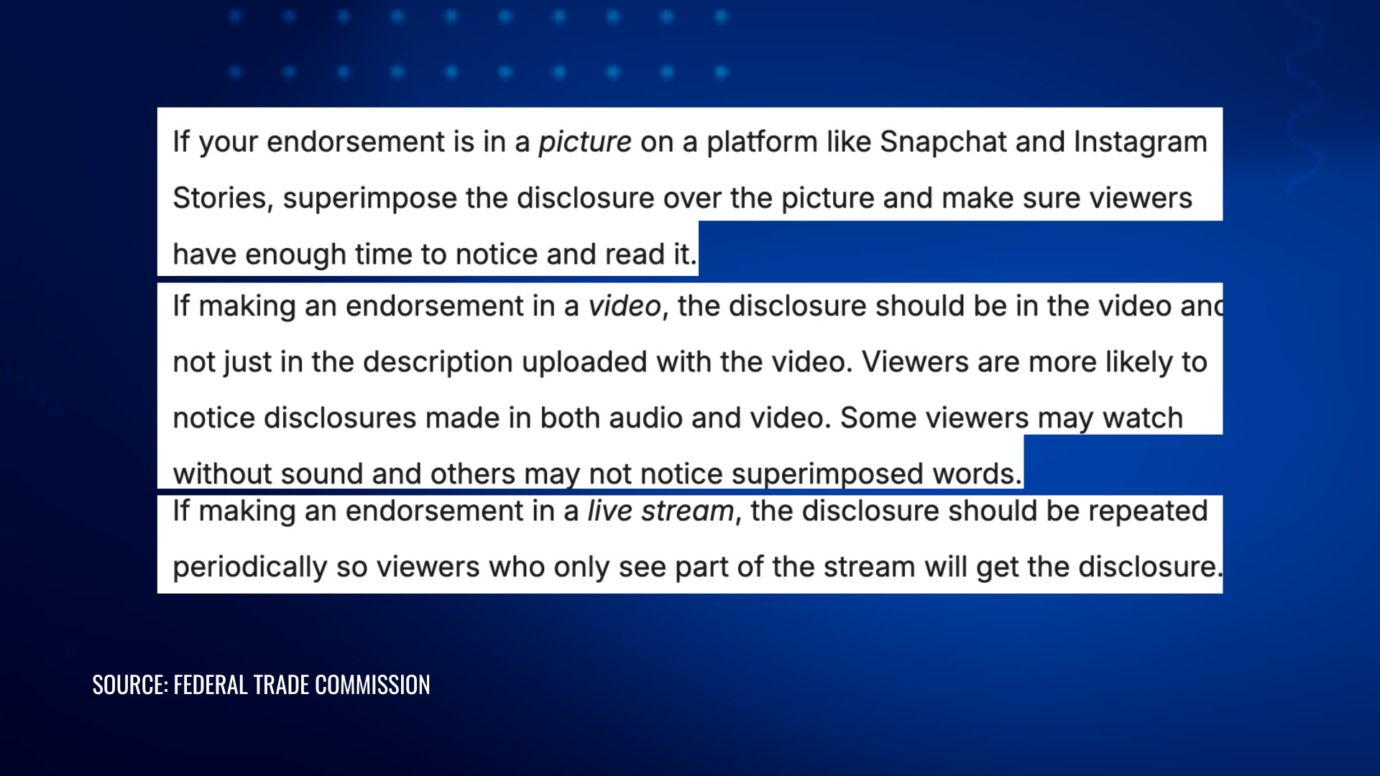
Build a disclosure into your workflow. The law doesn’t prescribe an exact format, so the specifics will likely become clearer as regulatory guidance develops. In the meantime, a visible label such as “This ad features AI-generated imagery” placed where people will actually see it is a reasonable starting point – though brands should consult with legal counsel to determine what will be considered sufficient once enforcement begins.
Brief your team. Everyone who creates, edits, or approves advertising content needs to know this rule exists. Marketing managers, designers, social media managers, listing specialists – all of them.
The Bigger Picture
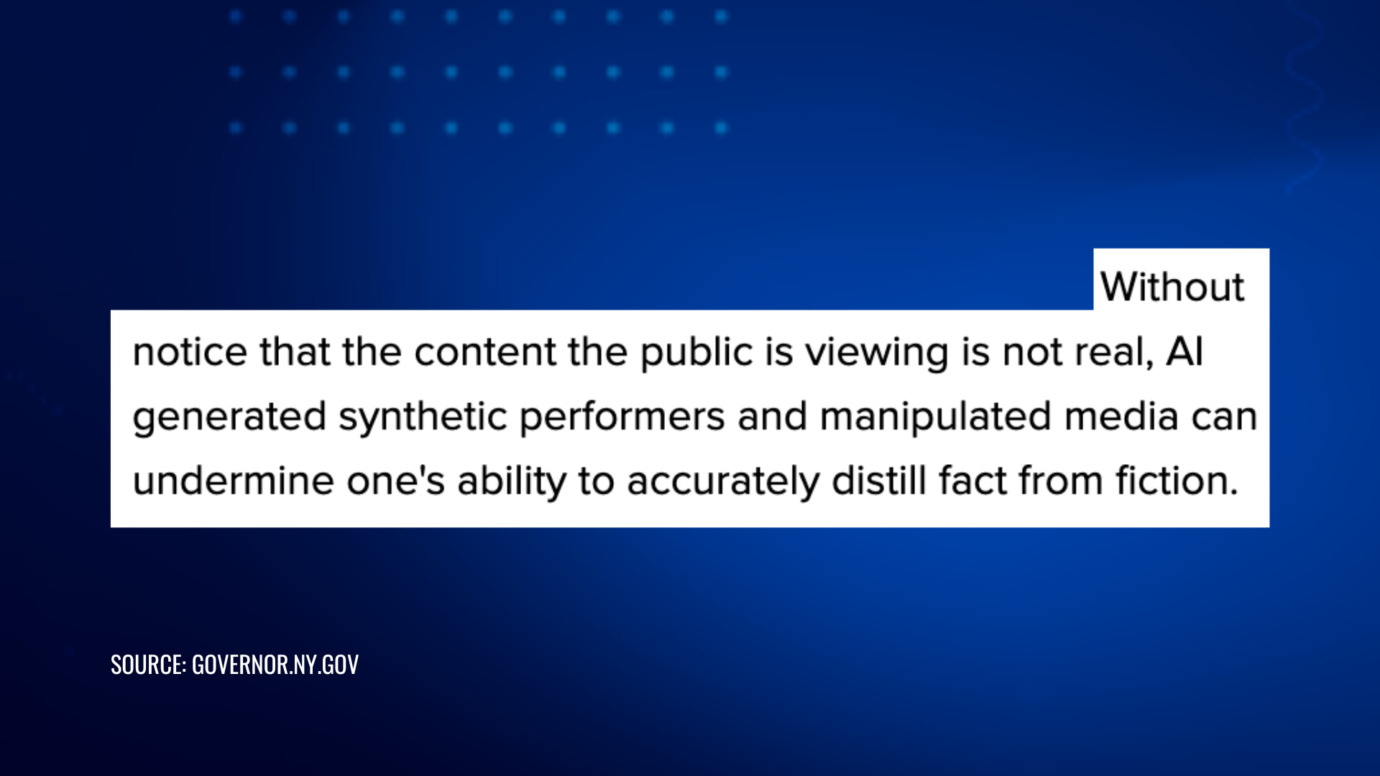
New York is first, but this direction is inevitable. AI transparency requirements in advertising are showing up in state proposals across the US and are already part of the regulatory framework in the EU. The expectation that brands will be upfront about using AI-generated people in their marketing is only going to grow.
The brands that build this into their process now are going to have a much easier time as more rules roll out. The ones that treat this as someone else’s problem are setting themselves up for a scramble later.
Not Sure Where You Stand? We Can Help.
We work with Amazon sellers and e-commerce brands every day on exactly these kinds of issues – where AI, advertising, and intellectual property law overlap. Whether you need help auditing your creative assets, updating your vendor contracts, or building a compliance workflow, our team can walk you through it.
Contact us for a consultation.
PROTECT YOUR BRAND. GROW YOUR BUSINESS.
Rated 4.9 by 80+ clients on Google Reviews

Top 20
Trademark lawyer in the US*
Top 3
Service providers for Amazon sellers*
96%
Success rate for TM registrations
8000+
Clients Worldwide
Legal Disclaimer: The articles published on our platform are for informational purposes only and do not constitute legal advice in any form. They are not intended to be a substitute for professional legal counsel. For any legal matters, it is essential to consult with us or a qualified attorney who can provide advice tailored to your specific situation. Reliance on any information provided in these articles is solely at your own risk.
Read the latest from Cabilly & Co.
 Oct 12, 2026
Amazon Brand Registry – Discover for Free if You’re Eligible
Increase Your Chance of Getting a
Trademark to 96%


STAY UPDATED
Subscribe to Our Newsletter
Sign up to receive valuable information on E-Commerce and intellectual property
Have a legal question?