Book a FREE 15-minute consultation with an expert – Book Now

Instagram Said Your Account Can't Be Restored? That May Not Be Final
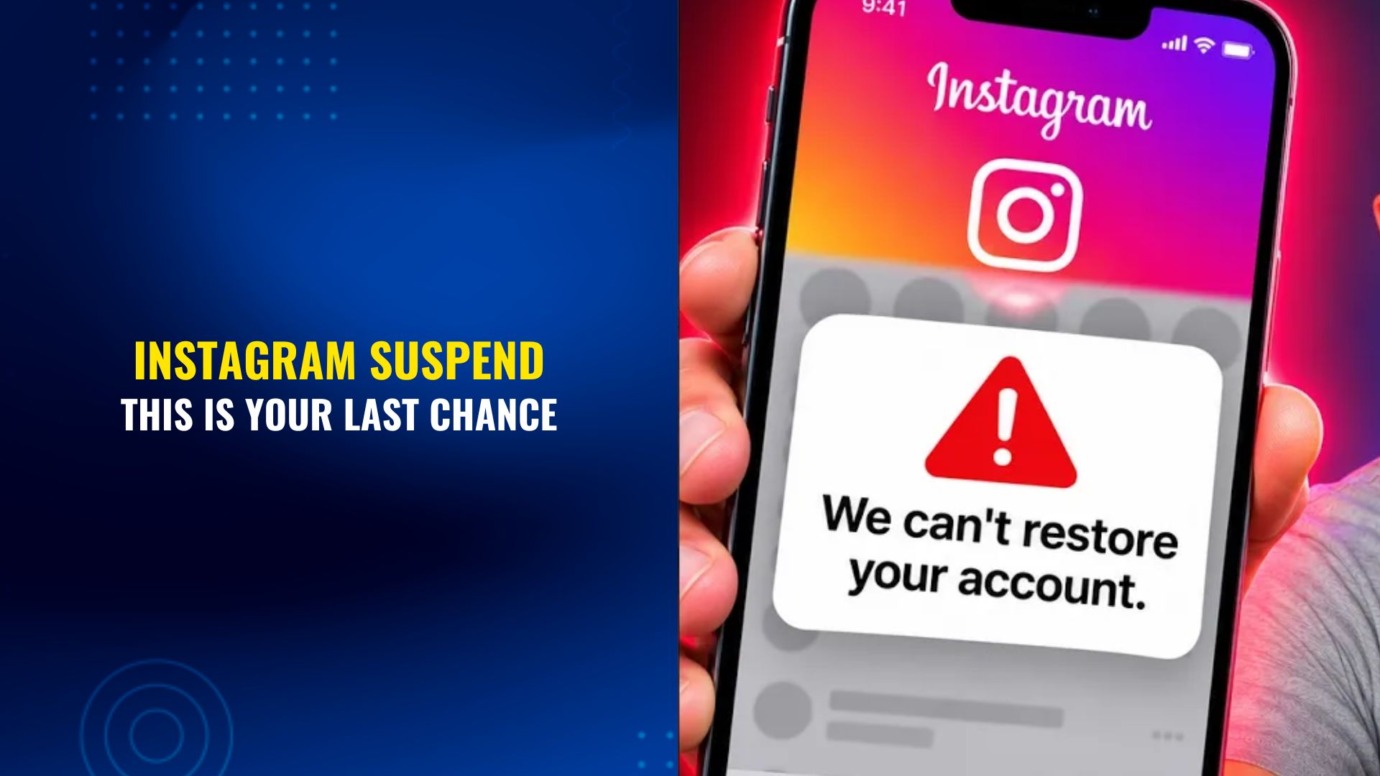
You open the app and see it: Instagram can’t restore your account, and the decision is final.
If that account is how you make a living, the message feels like a closing door. Your customers, your sales, and often your main marketing channel all seem gone at once.
But that message doesn’t always mean what it appears to mean. Our firm regularly handles cases where a revenue-generating Instagram account was denied through the standard appeal process, and in the right circumstances, there are still options.
This article explains what that message actually reflects, why legitimate businesses get caught in it, and what formal paths may exist once the appeal button stops working.
What “We Can’t Restore Your Account” Actually Means
It’s easy to read Instagram’s message as a final legal verdict. It isn’t.
The message comes from Instagram’s support and appeal system, which is largely automated and built to handle enormous volume. What it’s really telling you is this: within that system, using the tools available to a frontline reviewer, the answer is no.
That’s an important distinction. There is a difference between:
- “No one can ever change this decision,” and
- “The standard support process has reached its limits.”
Those are not the same thing.
Why the Standard Appeal Process Fails So Often
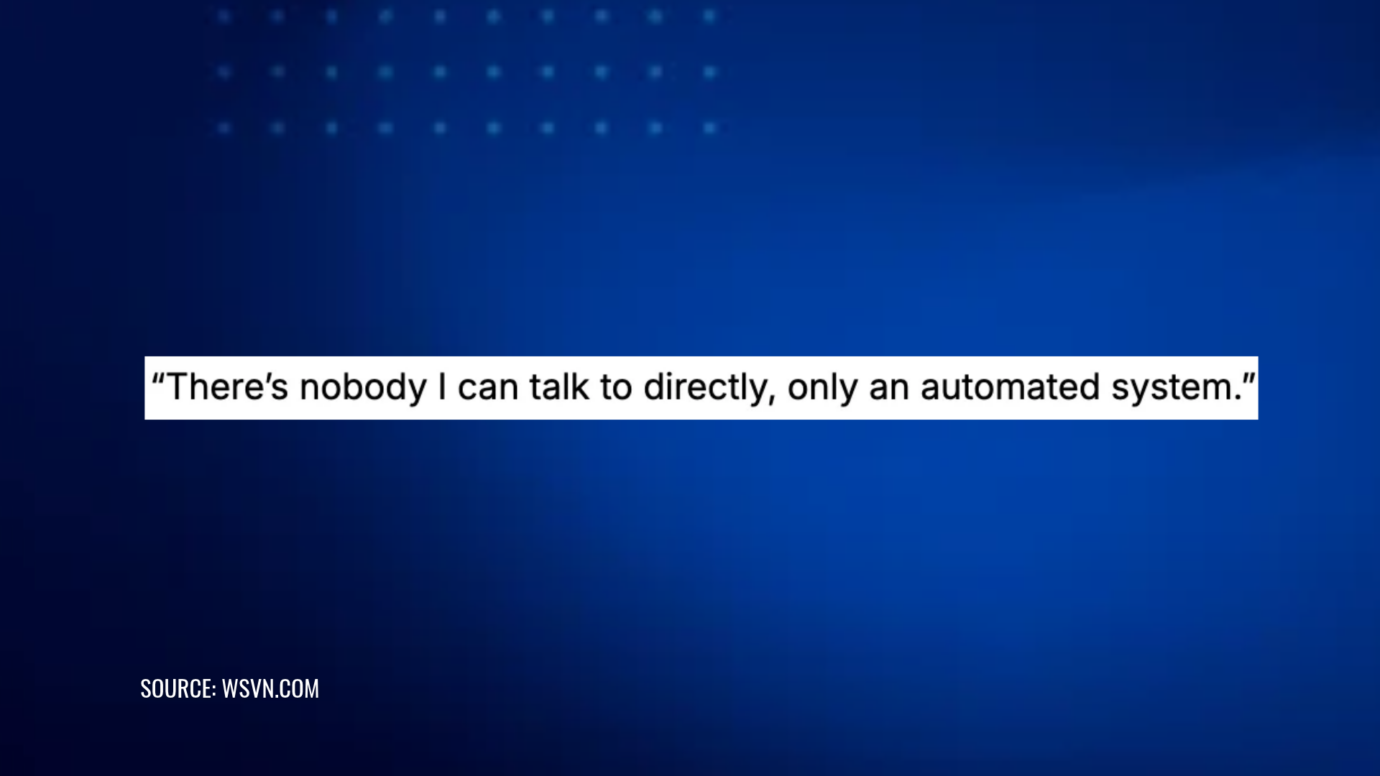
Automated decisions, automated reviews
Many Instagram suspensions start with automated detection. Content gets flagged, the account gets actioned, and the appeal goes back through the same system. Meta says it uses “a combination of human review and technology to process appeal requests,” and that during busy periods it “may not always be able to review everything.
When the system gets it wrong on the way in, it can get it wrong on the way out too. An appeal review may not weigh the full context of your business, especially when the original flag came from automated signals.
Why legitimate businesses get flagged
This is especially frustrating for real businesses. The very signals that prove you’re legitimate can look suspicious to an algorithm:
- High sales and engagement volume
- Team members or contractors logging in from different locations
- Active advertising campaigns
- Sudden changes in how or where the account is accessed
You can be fully compliant and still get caught. So a final denial doesn’t necessarily mean a person carefully reviewed your business and found wrongdoing. In many cases, your appeal never received the human, contextual review you assumed it was getting.
We cover the practical side of this in more detail in our guide on what to do when an Instagram account is permanently disabled, and the appeal is denied.
An honest caveat
Some accounts are suspended for genuine, serious violations, and in those cases there may be very little anyone can do. Not every suspension can be reversed.
The point is narrower: a final message from the support system is not always the end of the road. When your income depends on the outcome, it’s worth understanding your options before giving up.
PROTECT YOUR BRAND. GROW YOUR BUSINESS.
Rated 4.9 by 100+ clients on Google Reviews

Top 20
Trademark lawyer in the US*
Top 3
Service providers for Amazon sellers*
96%
Success rate for TM registrations
8000+
Clients Worldwide
What Exists Beyond the Appeal Button
Instagram’s terms include a formal dispute process
When you created your account, opened a business profile, or started running ads, you agreed to Instagram’s terms and, for business or commercial use, Meta’s Commercial Terms. Buried inside them is language that governs how disputes between you and the platform are resolved.
For many U.S. users, the Instagram Terms of Use and, for business or commercial use, the Meta Commercial Terms generally require binding individual arbitration and waive class actions. Both require written notice of the dispute before arbitration can begin, and Instagram’s Terms of Use also set a 30-day window to try to resolve the matter first. The Commercial Terms apply whenever Instagram is used for a business purpose, such as running ads or selling products, so many business accounts fall under them.
What arbitration is, and isn’t
Arbitration is a formal legal process. It is not another appeal, and it is not a lawsuit in open court. It’s a private proceeding in which a neutral arbitrator hears the dispute and can issue a binding decision.
Platforms include these clauses largely to keep disputes out of court and prevent class actions. But in the right circumstances, that same mechanism can give an individual business a structured way to be heard.
Arbitration also has costs and limits. It takes time and money; the class-action waiver means you proceed on your own, and courts have very limited power to review an arbitrator’s decision. It isn’t the right step for every account.
Not every dispute goes to arbitration
This is where the details matter. Both sets of terms carve out certain categories that don’t have to be arbitrated, including disputes related to intellectual property (IP) such as copyrights and trademarks, and claims involving efforts to use the service in unauthorized or automated ways. Under the Commercial Terms, claims that aren’t arbitrated must be brought in federal or state court in Northern California (the Northern District of California or San Mateo County).
That means the right path depends heavily on why your account was actioned:
- A copyright or trademark takedown may open a different door than a community guidelines suspension.
- A suspected automation or “suspicious activity” flag may raise its own considerations.
- A compromised or hacked account is a separate situation again.
The strategy changes based on the facts, which is why a professional review is often worthwhile before choosing a route. You can learn more about how we approach these disputes on our arbitration services page.
Why a formal process changes the dynamic
Formal legal mechanisms operate under different rules than the support queue. A formal dispute moves the matter out of that queue and into a process with its own rules, where your evidence and losses can be formally presented and considered.
For a business losing revenue every day the account is offline, that matters. The harm is concrete, ongoing, and often possible to document in dollars.
If your Instagram account drives real income and the appeal process has failed, talk to our team about whether a formal path fits your situation.
A Real Example: When “Final” Wasn’t Final
We worked with a client who ran a home and kitchen brand that had been selling for about four years. Instagram wasn’t a side channel for her. It was the engine behind most of her sales.
One morning, the account was gone, suspended with a vague notice about suspicious activity.
What had actually happened was simple. She had recently hired a freelance social media manager overseas, so the account was suddenly being accessed from a new country at unusual hours. To an automated system, that looked like a hijacked account. To her business, it was just another Tuesday.
She did everything right. She filed the appeal, submitted her ID, and waited two weeks while sales dropped sharply. Then she received the message: the account can’t be restored, and the decision is final.
Inside the support system, that was the end. But the support system was never the only avenue.
When the matter was taken through the formal dispute process built into the platform’s own terms, the picture changed. There was now a documented explanation for the logins, a clear record of a legitimate four-year business, and a concrete accounting of losses building every day. Instead of an automated reply, the matter was now in a formal process where the full context could be presented.
In her case, it worked. That outcome was specific to her facts, and no honest lawyer would promise the same result for everyone. But the principle holds: the tools available to a support agent and the tools a formal legal process opens up aren’t the same.
What to Do If Your Instagram Business Account Can’t Be Restored
1. Don’t treat the final message as the final word
It reflects the limits of the support system, not necessarily the limits of your options.
2. Document everything, starting now
Keep a clear record of:
- Screenshots of the suspension notice
- Every appeal you submitted and every response you received
- Your financial impact: lost sales, paused ad campaigns, disrupted customer communication, and revenue before the suspension
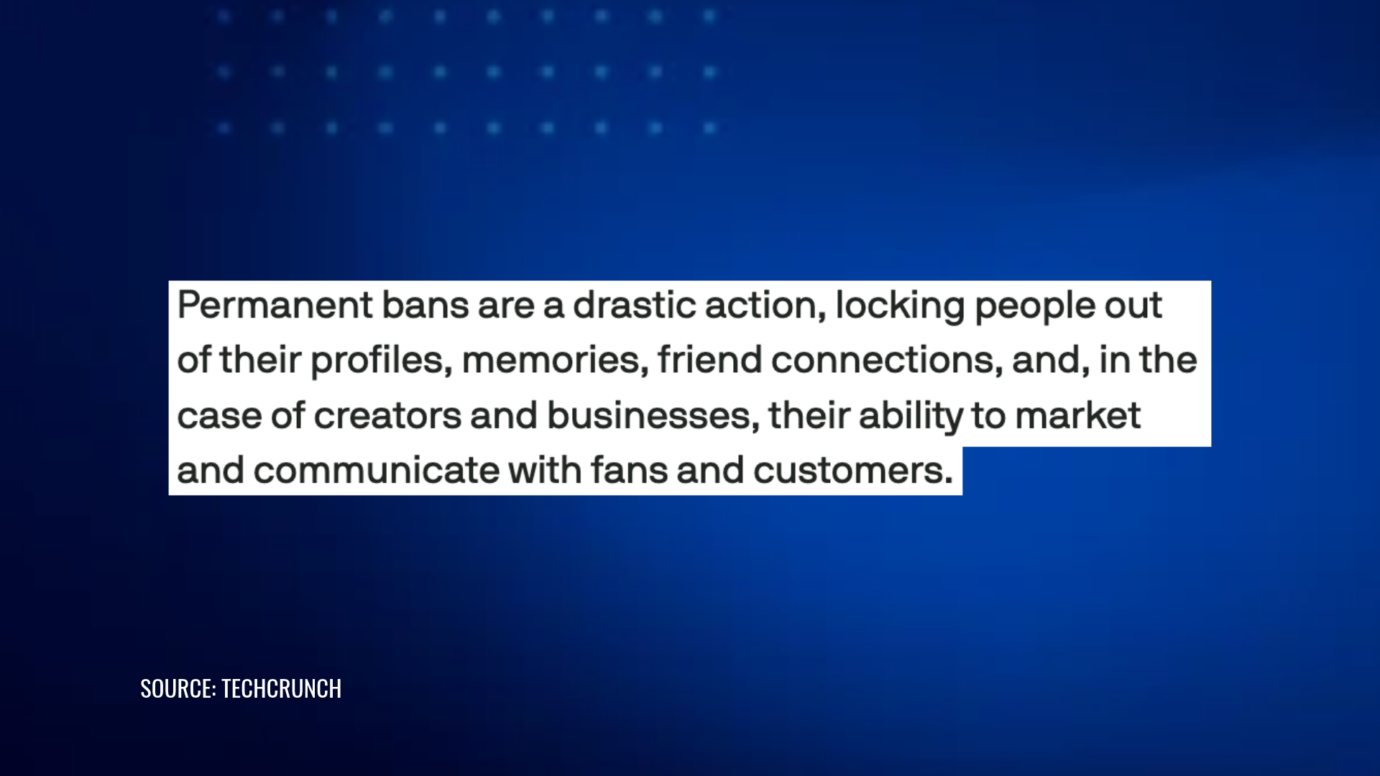
For a business, this record can become the backbone of a case. It turns a vague complaint into provable harm.
3. Identify why the account was actioned
An intellectual property claim, a community guidelines flag, a suspected automation flag, and a compromised account can each lead to very different strategies.
4. Know when self-service has run its course
Sending the same appeal again and again rarely changes the outcome, and it can create an inconsistent record. When your livelihood is on the line and you’ve reached that point, it’s usually time to get professional advice before you weaken your own position or lose more time than you can afford.
Getting Help With a Revenue-Generating Instagram Account
Cases where the normal appeal process has failed, but the account still drives real income, are exactly the situations our firm handles regularly through our Instagram account and content reinstatement services.
Knowing which path fits your case, and how to use it correctly, is difficult. It’s not something most business owners should try to manage alone while revenue is draining away.
This article provides general information about U.S. law and platform terms, which can change. It is not legal advice, and outcomes depend on the specific facts of each case.
Don’t Assume It’s Over
If Instagram has told you it can’t restore your account and that account supports your business, the standard support process may have ended, but your options may not have.
Contact Cabilly & Co. to discuss your situation with our social media law team and find out whether a formal path is available for your account.
Legal Disclaimer: The articles published on our platform are for informational purposes only and do not constitute legal advice in any form. They are not intended to be a substitute for professional legal counsel. For any legal matters, it is essential to consult with us or a qualified attorney who can provide advice tailored to your specific situation. Reliance on any information provided in these articles is solely at your own risk.
Frequently Asked Questions
Does "we can't restore your account" mean my Instagram account is gone for good?
Not necessarily. The message means Instagram’s standard support and appeal process has reached a final decision. It’s not a court ruling. Depending on why the account was actioned, a U.S. business may still have formal options under the platform’s terms. Some accounts, especially those removed for serious violations, cannot be recovered.
Can I keep appealing after Instagram's final decision?
Usually, there’s no further appeal inside the app once a decision is marked final. Repeated or inconsistent submissions rarely change the result, and they can create a confusing record. If the account matters to your income, it’s worth getting advice before sending anything else.
Can I sue Instagram for disabling my business account?
For most U.S. users and businesses, probably not in open court, at least not for most claims. Instagram’s Terms of Use and, for business or commercial use, Meta’s Commercial Terms generally require U.S. disputes to go to binding individual arbitration and waive class actions. Both carve out certain claims, such as those involving intellectual property or unauthorized or automated use of the service, which are handled in court instead. Which terms apply, and which path fits, depends on how you use the account and why it was actioned.
What is a Notice of Dispute?
A Notice of Dispute is a written notice to the platform that sets out your claim and the relief you’re seeking. Meta’s terms require written notice before arbitration can begin, and Instagram’s Terms of Use give the parties a set period to try to resolve the claim before either side can file. Getting this step right matters, because it is often the first time your case is presented in a formal, documented way.
Does Meta Verified help get a disabled account back?
Meta Verified gives subscribers access to account support, but it doesn’t override an enforcement decision. Users who have been banned have reported that the paid service did little to help in those situations.
What should I gather before talking to a lawyer?
Collect screenshots of the suspension notice and the final decision, copies of every appeal and response, your account’s username and the email or phone number linked to it, and records of the account’s role in your business, such as sales data, ad spend, and revenue before and after the suspension.
How quickly should I act?
As soon as possible. Revenue losses keep growing while the account is offline, and the dispute process in Meta’s terms runs on its own steps and timelines. Starting early gives you more options and a clearer record.
Read the latest from Cabilly & Co.
 Oct 19, 2026
Amazon Brand Registry – Discover for Free if You’re Eligible
Increase Your Chance of Getting a
Trademark to 96%


STAY UPDATED
Subscribe to Our Newsletter
Sign up to receive valuable information on E-Commerce and intellectual property
Have a legal question?