Book a FREE 15-minute consultation with an expert – Book Now

Someone Is Filing Fake Copyright Claims on Your Instagram to Extort You. Here Is What to Do.
You post original videos. You built the account. Then one day a stranger files a copyright report against content you created yourself, your post disappears, and a message arrives: pay up, or more reports are coming and your account gets suspended.
When this happens, it is often not a genuine copyright dispute at all. It is extortion using the copyright system as its tool, and it has become one of the more common threats creators face on Instagram and Facebook. Our firm regularly works with creators and brands facing exactly this kind of coordinated abuse of the reporting system, and the good news is that you have more options than the person threatening you wants you to believe.
This article walks through what is actually happening, why it works, and the concrete steps to take, in order, when someone tries to extort you with fake copyright claims.
It is the first in a three-part series.
The second article covers how to fight a false copyright claim and get your removed content restored through a counter-notification.
The third explains how Instagram’s repeat infringer policy works, and how to keep your account from being suspended.
What Is Copyright Extortion on Instagram?
Copyright extortion happens when someone files false copyright infringement reports against content you own, gets it removed through the platform’s automated system, and then demands payment to stop.
The playbook usually looks like this:
- The bad actor files one or more copyright reports against your original posts.
- Instagram’s system, which acts quickly to stay within its legal safe harbor, removes the content.
- The person then contacts you directly, often off-platform through WhatsApp, email, or a phone call, and demands money.
- They threaten that if you do not pay, they will file more reports until your account is suspended for repeat infringement.
The threat has teeth because Instagram, like other platforms, can suspend accounts that accumulate multiple copyright strikes. The extortionist is not really claiming your work. They are exploiting a system built to protect creators and turning it into a pressure point.
This is not a fringe problem. In 2024, Bloomberg reported that scammers were using Meta’s own rights management tools to issue takedowns on content they did not own, then demanding payment, sometimes on a recurring basis, to stop. In response, Meta stated that its Rights Manager terms prohibit users from uploading other people’s content and claiming it as their own, and that it revokes access or disables accounts when it identifies misuse.
Why Does This Scam Work So Well?
Three features of the system make creators feel cornered.
Platforms act first and ask questions later. Under the U.S. Digital Millennium Copyright Act (DMCA), a platform that hosts user content can limit its own legal liability by removing reported material quickly. That is by design. It also means content often comes down before anyone reviews whether the claim was legitimate.
The threat of suspension feels existential. For a creator whose income, audience, or business runs through the account, the possibility of losing it is frightening enough that paying can feel like the safe choice. It usually is not.
The demands come from the shadows. Moving the conversation to WhatsApp or a phone call keeps the pressure personal and off the platform’s record. It also, without the extortionist realizing it, hands you evidence.
Should You Pay?
No. Paying rarely ends the problem, and it often makes you a target. In many cases these blackmailers work together, and we have seen situations where one issue got solved with a payment, only for another one to show up right after.
Someone willing to abuse the reporting system to extort you has little incentive to stop once they learn you will pay. Recurring demands are common. The person now knows the account matters to you and that you respond to pressure.
Beyond that, giving in rewards conduct that may be unlawful and forecloses the stronger position: documenting the abuse, disputing the false claims through proper channels, and, where appropriate, pursuing the person for misusing the system. More on that below.
If you feel physically threatened or unsafe at any point, treat that as a safety matter first and contact local law enforcement.
What Should You Do First? Preserve the Evidence.
Before you respond to anyone, lock down proof. In these situations, the extortionist’s own messages are often the most valuable thing you have, and they are frighteningly easy to lose if an account gets deleted or a chat disappears.
Capture and save, in a place separate from the platform itself:
- Screenshots of every payment demand and threat.
- The full WhatsApp, email, or direct-message conversations, including timestamps and the sender’s details.
- Any recordings of phone calls, where you are legally permitted to record them, along with the phone numbers used.
- The copyright removal notices Instagram sent you, including any claim or reference numbers.
- Proof that you own the removed content: original raw files, project files, camera roll originals with metadata, earlier drafts, or publication dates showing you posted first.
Ownership evidence matters because your entire position rests on a simple fact: the work is yours. The stronger and more organized that proof, the stronger every other step becomes.
How Do You Fight the False Claims Themselves?
You generally have two tracks, and they are not mutually exclusive.
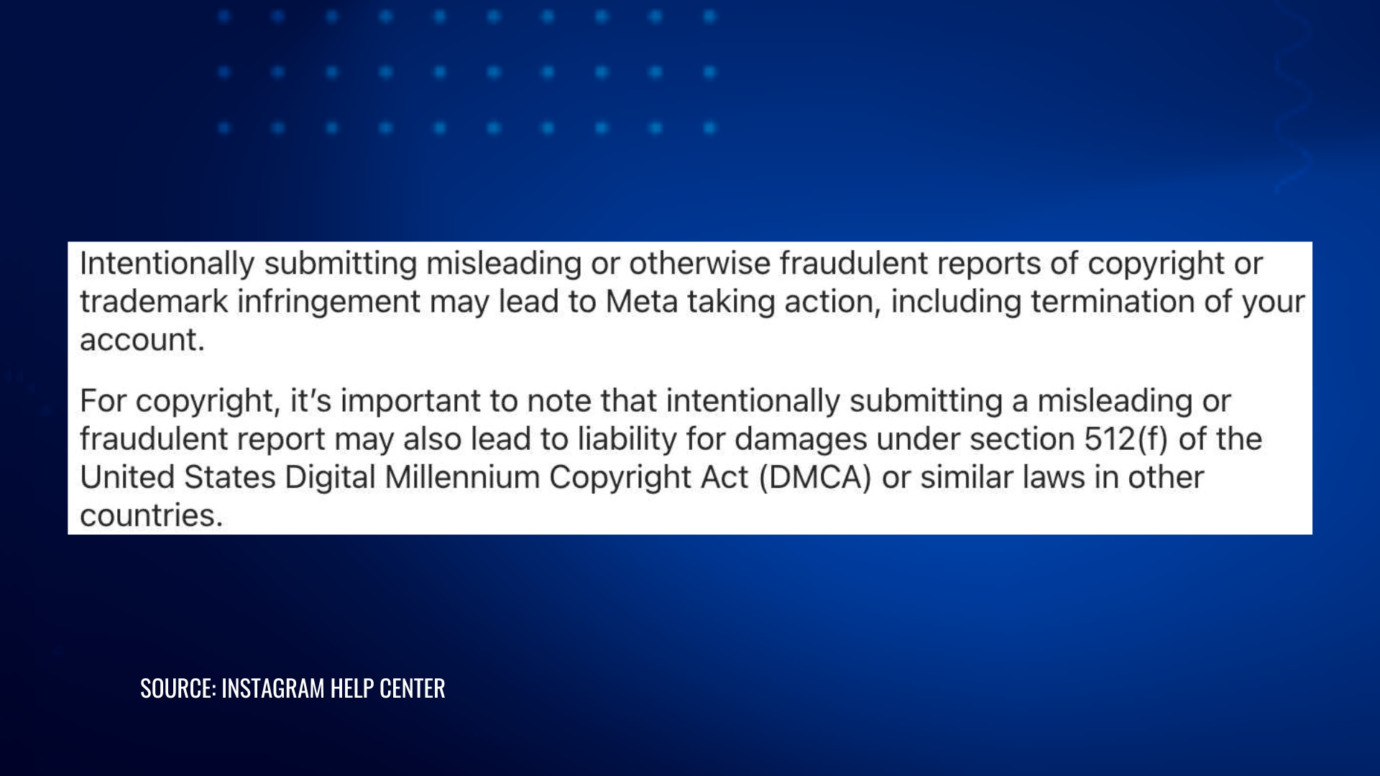
Report the abuse to Meta. Instagram’s own copyright guidance notes that only an intellectual property rights owner or an authorized representative may report a suspected infringement, and that intentionally submitting a misleading or fraudulent report can create liability. When you report the abuse, frame it clearly: this is not a good-faith copyright dispute; it is fraudulent reporting and extortion by someone using the system as a weapon. Attach your ownership evidence and the payment demands.
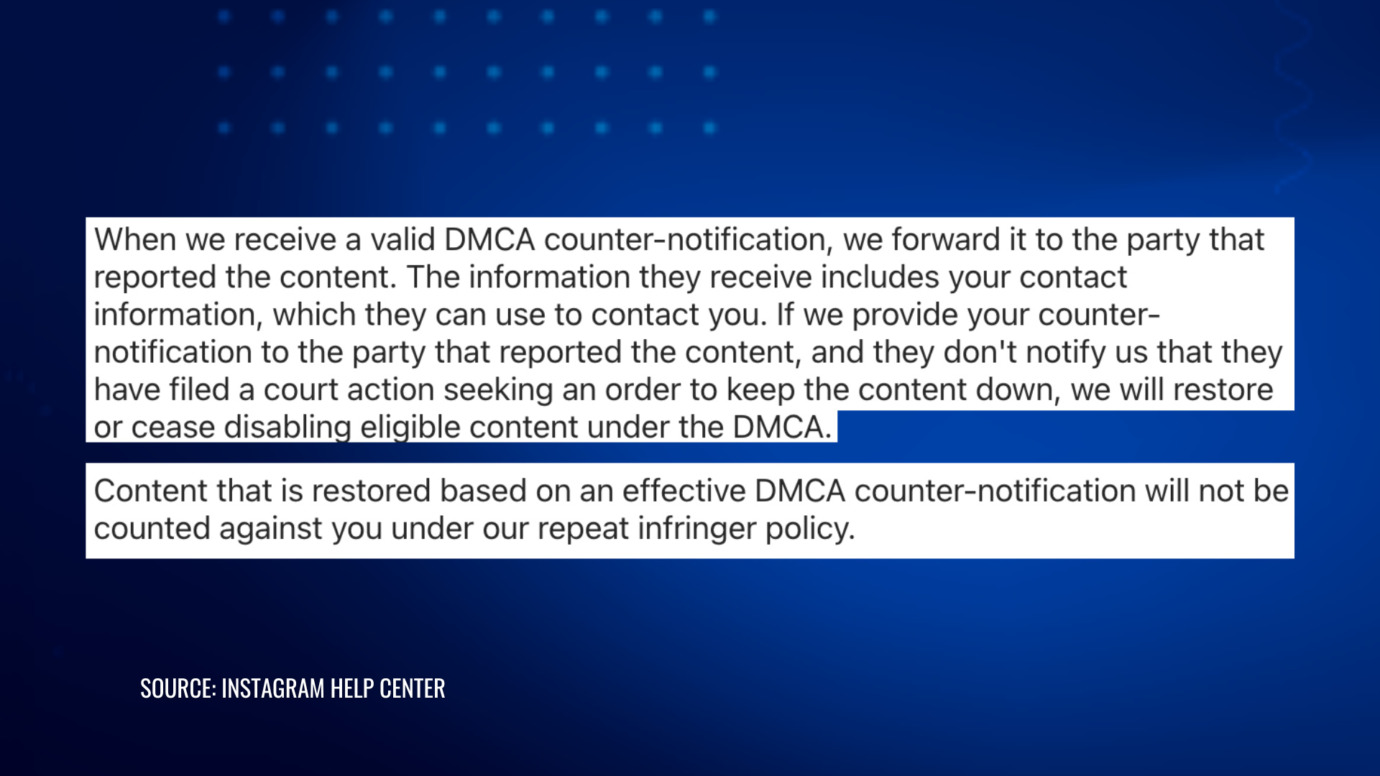
File a counter-notification for the removed content. The DMCA includes a formal process, the counter-notification, that lets you tell the platform your content was removed by mistake or misidentification and ask that it be restored. It is a specific legal mechanism with real requirements and real consequences for misuse, so it deserves its own explanation. This is the focus of the second article in this series, on how to fight a false copyright claim and get your content back.
If your account or specific posts have already been taken down, our team also handles Instagram account and content reinstatement directly, and our overview of what to do when Instagram removes your post is a useful starting point for the removal side of the problem.
Can the Extortionist Actually Be Held Responsible?
In many cases, yes, though the specifics depend on where the parties are and which laws apply.
Under U.S. law, section 512(f) of the DMCA provides that a person who knowingly and materially misrepresents that content is infringing can be held liable for damages, including costs and attorneys’ fees, incurred by the person whose content was wrongly removed. Courts have generally set a demanding standard for this, often requiring actual knowledge that the claim was false rather than mere carelessness, so outcomes vary case to case. But someone who files a report on content they know is not theirs, then admits as much while demanding payment, is squarely the kind of conduct the provision was written to address.
Separately, demanding money under threat can raise extortion and harassment issues under criminal law. Whether a given set of facts crosses that line depends on the jurisdiction and the details, which is one reason your saved messages and recordings matter so much.
The practical point is this: the person pressuring you is betting you do not know these options exist. Often, you do have them.
What About Preventing the Suspension They Keep Threatening?
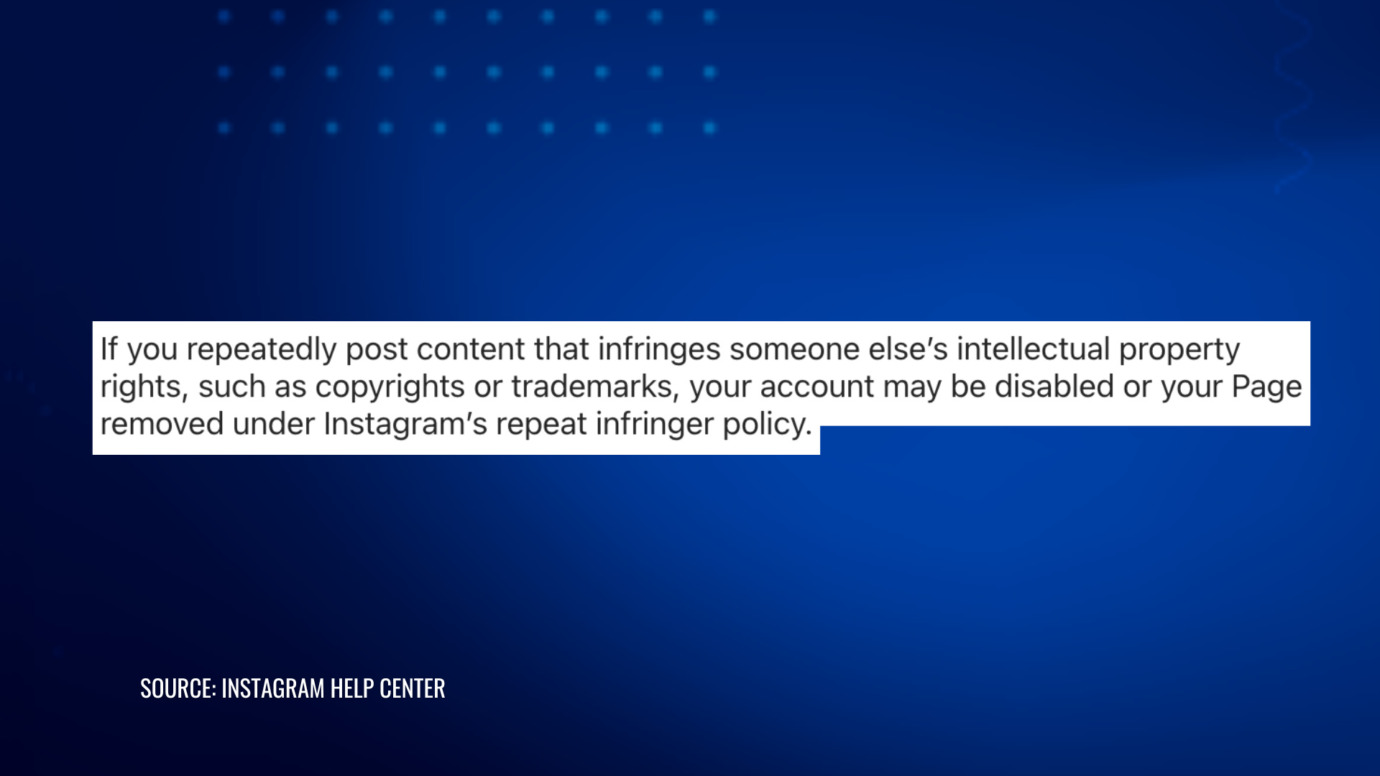
The threat that usually frightens creators most is the promise of more reports piling up until the account is suspended for repeat infringement. That risk is real, but it is manageable, and understanding how strike-based suspension actually works takes most of the fear out of the threat. That is the subject of the third article in this series, on how repeat copyright strikes lead to suspension and how to get ahead of it.
Registering your key original works can also strengthen your hand, both as ownership proof and for enforcement. Our team can advise on copyright registration and consulting if that fits your situation.
The Short Version
If someone is filing fake copyright claims on your Instagram content and demanding payment:
- Do not pay.
- Preserve every message, recording, notice, and piece of ownership proof immediately.
- Report the abuse to Meta as fraudulent reporting and extortion, not as a routine dispute.
- File a counter-notification to restore wrongly removed content.
- Understand your options under U.S. law, including potential liability for the person filing false reports.
- Get ahead of the suspension threat rather than reacting to it.
Talk to Someone Who Handles This
Copyright extortion is stressful precisely because it targets something you built and care about, and because the platform’s automated systems can feel like they are working against you. They do not have to.
If your Instagram content is being targeted by false copyright reports, or someone is demanding payment to stop reporting your account, the team at Cabilly & Co. can help you document the abuse, dispute the false claims, and weigh your options for holding the person responsible. Contact us to talk about your specific situation.
Legal Disclaimer: The articles published on our platform are for informational purposes only and do not constitute legal advice in any form. They are not intended to be a substitute for professional legal counsel. For any legal matters, it is essential to consult with us or a qualified attorney who can provide advice tailored to your specific situation. Reliance on any information provided in these articles is solely at your own risk.
Read the latest from Cabilly & Co.
 Sep 6, 2026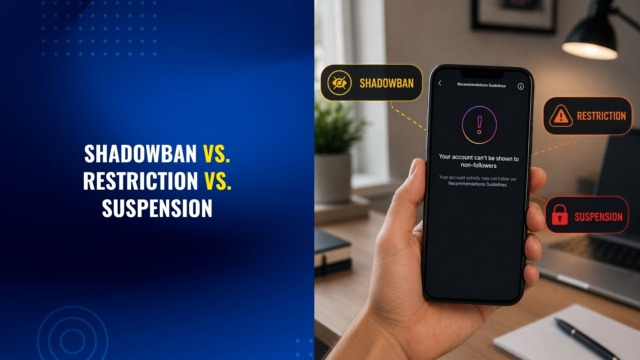
Amazon Brand Registry – Discover for Free if You’re Eligible
Increase Your Chance of Getting a
Trademark to 96%


STAY UPDATED
Subscribe to Our Newsletter
Sign up to receive valuable information on E-Commerce and intellectual property